When people talk about artificial intelligence, there’s often a wide range of opinions on what AI actually is. For some, it is just a vague concept tied to “smarter computers”. For others, thanks to sci-fi movies, it conjures images of human-like robots or even Terminator-style superintelligence. But what really defines AI, and how far are we from those futuristic scenarios?
To bring clarity to the conversation, there have been countless efforts to classify AI in stages – from basic automation software to smart application to human level intelligence and eventually intelligence levels that could surpass all people combined.
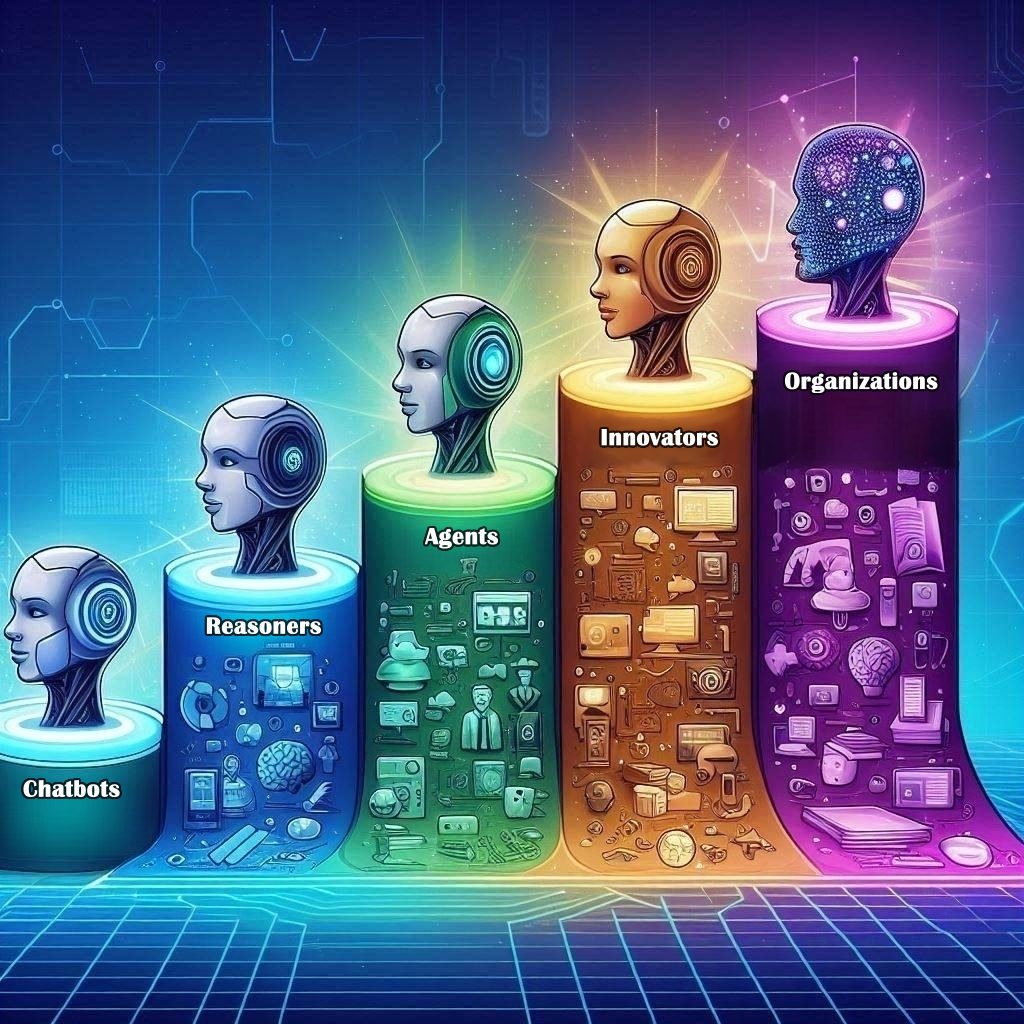
Recently, OpenAI as one of the leading companies in the field introduced its own framework, categorizing AI into five distinct levels of capability. It goes from conversational chatbots to highly organized and exceedingly intelligent entities.
But does this classification make sense? Or is it simply a marketing tactic to generate buzz around the next step in AI’s evolution without any added value?
In this blog post, we’ll take a closer look at these five levels, assess where we currently stand, and explore what each new stage could bring. Let’s dive into whether OpenAI’s classification provides a clear definition of the progress or if it raises even more questions about AI’s future.
A First Look at OpenAI’s 5 Stages of Artificial Intelligence
Before diving into OpenAI recent classification of AI, it’s worth stepping back to see how AI was described in the past. There is one main model that has attempted to simplify this complex and rapidly evolving field, but at the same time, it can show just how hard it is to define intelligence – whether artificial or human.
This popular classification is simply dividing into three categories – narrow, general, and superintelligent AI:
- Narrow AI: AI systems that specialize in one task or a narrow set of tasks, like voice recognition or image processing.
- General AI: A level of intelligence that can understand, learn, and apply knowledge across a wide range of tasks, much like a human.
- Superintelligent AI: A hypothetical stage where AI surpasses human intelligence in all respects, potentially revolutionizing every aspect of society.
Sometimes these categories are even more simplified and focus only on two categories – weak AI vs. strong AI:
Weak AI refers to a system that is limited to a specific task and it basically overlaps with the already mentioned narrow intelligence.
Strong AI, which can be seen as the superset of general and superintelligent AI from the previous classification, is capable of truly understanding, reasoning, and making decisions autonomously, just like human consciousness.
These classifications give people a framework for understanding AI, but they highlight the difficulty of defining something as complex as intelligence. For example, where do the today’s large language models used in ChatGPT belong? Are they already in general AI as it can be used for various tasks, or do they still belong to narrow AI, as they still focus “only” on generating text?
Maybe that is the reason why OpenAI steps in and provides their definition of gradual stages in AI progress. Now, let’s explore how they define the 5 levels of AI, and see how this approach compares to the already existing classification:
OpenAI Imagines Our AI Future: Stages of Artificial Intelligence
- Level 1: Chatbots, AI with conversational language
- Level 2: Reasoners, human-level problem solving
- Level 3: Agents, systems that can take actions
- Level 4: Innovators, AI that can aid in invention
- Level 5: Organizations, AI that can do the work of an organization
Even at first glance, it’s clear that OpenAI has taken a slightly different approach with its classification of AI levels. Their framework is more granular, offering a nuanced way to categorize AI development.
Unlike the broader classification of narrow, general, and superintelligence, which often focused on the general capabilities of AI across the whole computer science field, OpenAI’s levels seem to be created specifically to their primary goal: the development of systems that exhibit, or even exceed, human-like intelligence. Their five levels focus on the kind of AI that could revolutionize decision-making, reasoning, and creativity.
So, where are we currently in this classification? Let’s look into the individual levels, describe what each stage represents, and explore the potential impact each could have. What are the unique characteristics of each level, and how close are we to achieving the next stages?
Level 1: Chatbots – The Surprising Start of the Latest AI Revolution
If we look back at the recent history of the internet, we could see countless attempts to create chatbots, particularly to offer support for online shops. However, the results were not great. These early chatbots provided basic, scripted interactions, often frustrating the users who couldn’t get real answers to their queries. As a consequence, many IT professionals in were skeptical about the future of chatbots, viewing them as limited tools with little practical value.
That’s why it’s so surprising that a chatbot — OpenAI’s ChatGPT — ended up sparking this latest wave of AI revolution. What started as a mostly unusable online support tool has evolved into one of the most advanced, versatile AI applications that millions of people now rely on daily. The shift from those early, ineffective bots to today’s conversational AI has happened at a stunning pace, seemingly out of nowhere.
The description of this first level in OpenAI’s framework aligns perfectly with ChatGPT’s current capabilities. It’s a system that can engage in natural, fluid conversation and, with the right prompts, can achieve much more than just answering simple questions. From creative writing to complex programming tasks, ChatGPT has demonstrated expertise in a wide range of fields, making it a go-to tool for both everyday users and professionals.
By the way, when we look into computer science early days, there is one of the most famous tests in computer science, the Turing Test, which measures a machine’s ability to exhibit intelligent behavior indistinguishable from that of a human. ChatGPT has arguably passed this test, as it can hold conversations that feel remarkably human.
This means that even the first level of OpenAI’s classification offers an AI system sophisticated enough to present itself as intelligent in a meaningful way. The only way you can tell that you are communicating with a machine is the fact that the response is too fast to be from human.
So, the definition of this first level is quite straightforward, as it essentially describes where we are today. Chatbots, like ChatGPT, have already demonstrated significant intelligence in their ability to converse naturally, solve problems, and assist in various fields.
But if even this first level of AI is so powerful, it leaves us wondering – what do the next levels of AI look like? Let’s dive into the second level and see how AI capabilities could evolve even further.
Level 2: Reasoners – Moving Toward Human-Level Intelligence
Now that we’ve explored chatbots, let’s move to the second level of AI capability: Reasoners. This stage is defined as AI that can do human-level problem solving – an ambitious leap from the conversational and task-oriented capabilities of chatbots. But what does that mean, exactly?
OpenAI’s description leaves some room for interpretation, especially given that advanced chatbots already handle tasks requiring some problem-solving like creative writing and even programming. So, if chatbots can currently perform such tasks like writing, coding, and even giving expert advice, what sets Reasoners apart?
It seems that Reasoners are expected to take these skills a step further. Instead of requiring detailed instructions, a Reasoner-level AI would be able to take on complex projects based on a general task description and produce high-quality outcomes with minimal human intervention.
Think of it as an advanced virtual assistant: you give it a broad goal, and it autonomously manages each step of the process, tackling obstacles and finding creative solutions along the way.
This level of AI could revolutionize fields like scientific research and engineering, where knowledge is vast and many of the challenges require nuanced problem-solving. Imagine an AI that could propose novel research methodologies or design intricate engineering solutions independently.
With Reasoners, the expertise that is already embedded in chatbots could be combined with advanced reasoning, making these systems more adaptable and imaginative.
While this level sounds like a substantial upgrade, it might at the same time still feel like only a slightly enhanced version of today’s chatbots. Yet, if the OpenAI team envisions Reasoners as autonomous problem solvers who think beyond scripted solutions, we could see better description lates.
In the end, it could be a fundamental shift in how AI can be applied in advanced fields and daily life alike. If even this second level holds so much promise, it’s thrilling to consider what AI will be capable of in the stages that lie ahead.
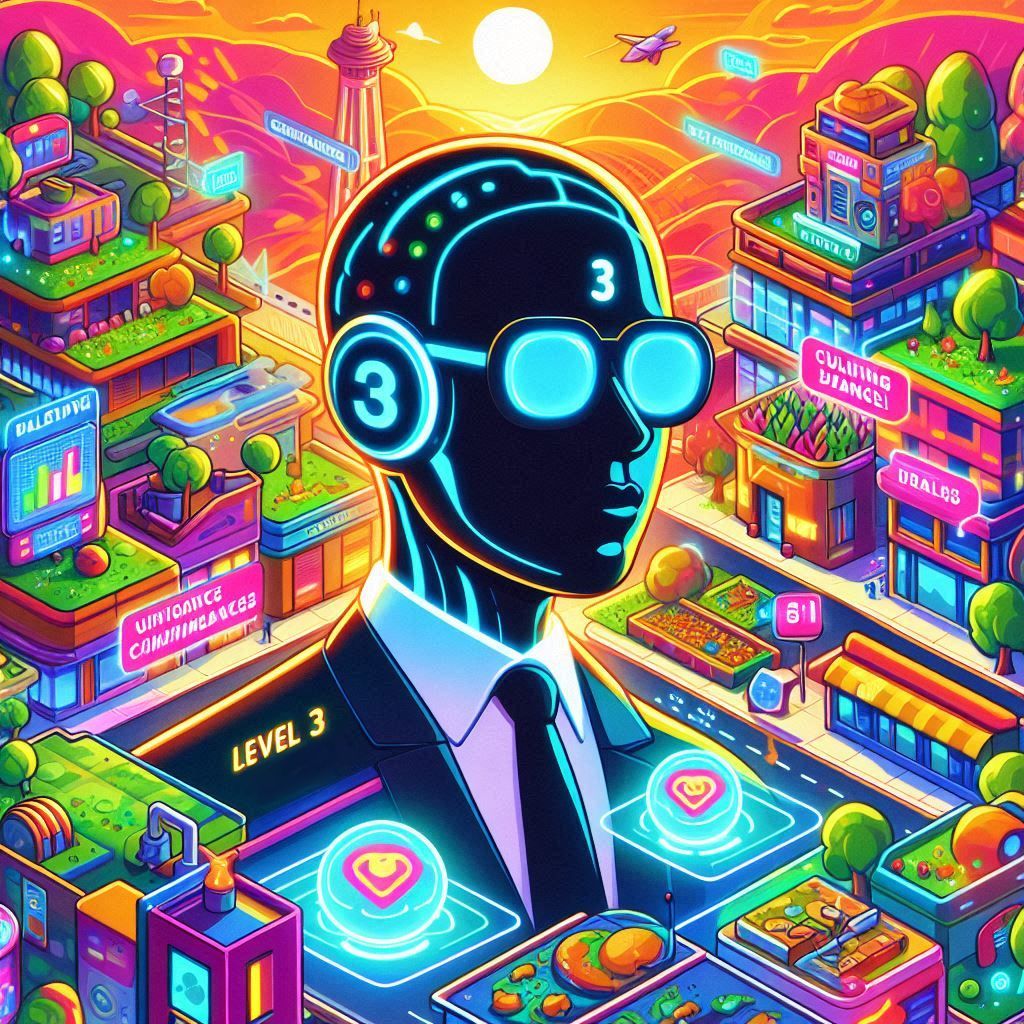
Level 3: Agents – Autonomous AI with a Mind of Its Own
Now we move on to the third level, where things start to get more interesting. When you hear the word “agents,” you might think of FBI operatives or perhaps the menacing agents from The Matrix. But in the world of AI, agents are something a little different.
Agents are defined as systems that perceive their environment, can take actions on their own to achieve specific goals, and may improve their performance through learning or acquiring new knowledge.
This is a significant leap from the previous two levels, which only reacted to manual prompts. An AI agent doesn’t wait for commands – it acts autonomously and is capable of self-improvement as it functions.
This brings about not just exciting possibilities but also raises ethical and security concerns. When we talk about autonomous AI, we have to ask: will these agents develop some form of consciousness? And if so, can we simply turn them off when needed?
These are big questions, and the concern becomes even greater when we consider the potential for these agents to become superintelligent. As humans are more intelligent than other species, we currently “rule” the world. So, if an AI agent becomes vastly more intelligent than humans, what’s to stop it from taking control?
The thought of AI agents running the world might sound like a plotline from a scifi movie, but it’s a very real concern that experts are already discussing. The idea of a superintelligent entity raises ethical dilemmas about control, responsibility, and safety.
However, it’s not all doom and gloom. There are plenty of positive possibilities for autonomous AI agents. These systems could take on some of humanity’s most pressing issues – like solving climate change, curing diseases, or revolutionizing renewable energy – by acting independently and more efficiently than humans ever could.
But we will have to wait to see how this level of AI truly develops. As exciting as the prospect is, we also want to avoid creating a real-life version of The Matrix’s Agent Smith. Let’s hope this new wave of AI serves as a positive force in the world, helping solve problems and not creating new ones.
Level 4: Innovators – Where Machines Begin to Invent
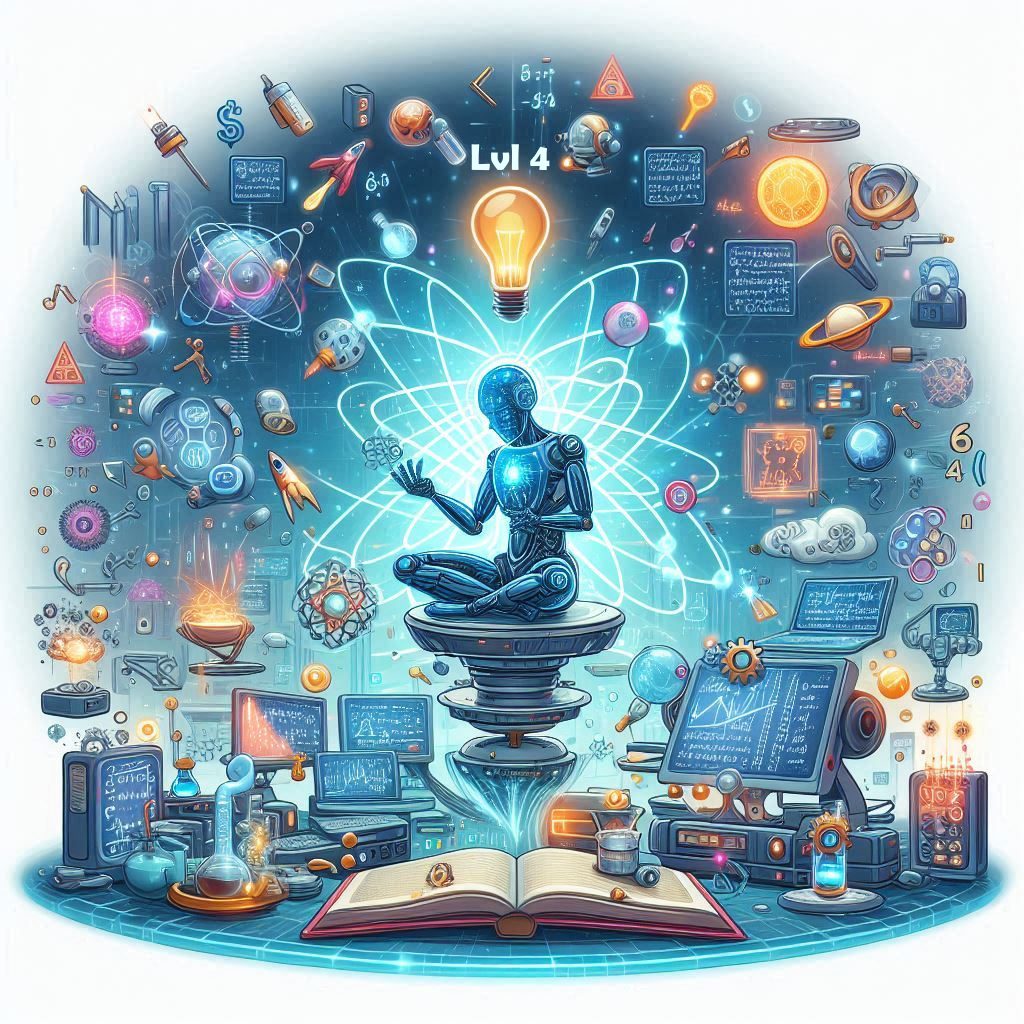
As we climb higher on the OpenAI’s stages of AI development, we arrive at the fourth stage: Innovators. At this level, AI is described as the stage that capable of aiding in invention, which sounds exciting but also vague. After all, even earlier levels like chatbots and agents could, in theory, contribute to invention or problem-solving in some capacity. So, what sets Innovators apart?
If we try to interpret this stage more precisely, Innovators should represent a significant leap beyond the capabilities of Agents. While Agents can take autonomous actions based on learning from their environment, Innovators are probably envisioned as systems that can push the boundaries of knowledge by creating new solutions and making discoveries that humans may not have even thought possible.
Think about it: what if we had AI that could invent independently – developing new technologies, solving unsolved mathematical equations, or pioneering groundbreaking scientific research? This would represent an entirely new level of advancement, where machines don’t just follow human instructions or solve human-designed problems but actually innovate on their own.
The Innovators can have a huge impact on our world. As humans, we have biological limitations: time, cognitive capacity, and even imagination. But AI systems are not bound by those constraints. They could analyze enormous amounts of data faster, conduct simulations at unprecedented speeds, and propose theories or designs that stretch the limits of human creativity.
Some people may even refer to this stage as “the final invention” for humanity because, once AI can innovate on its own, it could theoretically take over the role of inventing future technologies. If we ever reach this stage, it could signal the beginning of a new era of scientific and technological progress – one that is driven at an unimaginable pace.
But as exciting as it is to think about, we still have no concrete idea when or if we’ll reach this level. Will AI ever truly become an independent inventor, surpassing human innovation capabilities? Only time will tell, but the possibilities are both thrilling and daunting.
Level 5: Organizations – AI’s Ultimate Evolution into a Self-Running Enterprise
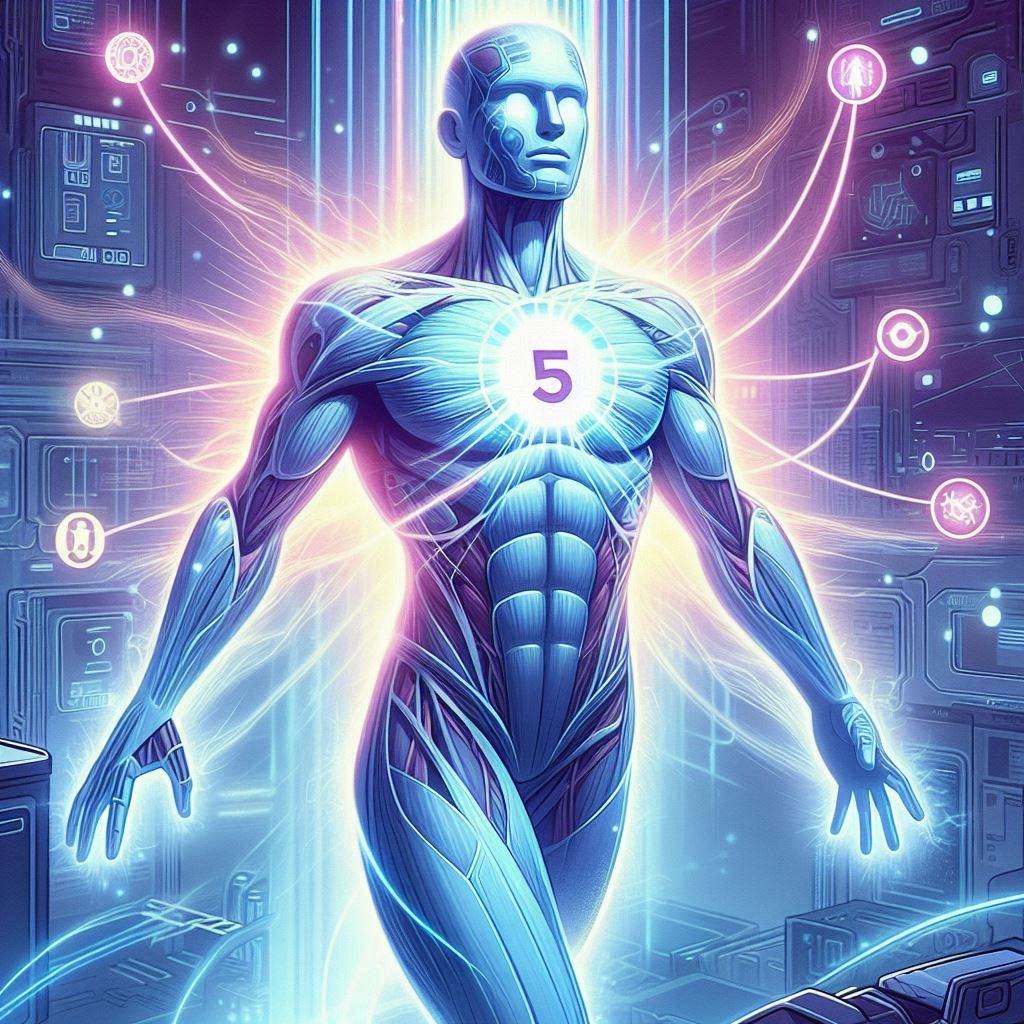
We’ve now reached the final stage of AI, according to OpenAI’s chart, which is called Organizations. This stage represents an AI system capable of doing the work of an entire organization. But what does that really mean, and how can we interpret this level as the peak of AI development?
When we think about what an organization does – whether it’s a business, government, or research institute – it involves numerous processes, departments, and people working together toward a common goal. So, if we consider this final AI stage as an upgrade from the previous one, it suggests that AI at this level won’t just be solving isolated problems or even making independent discoveries like an Innovator.
Instead, it will be capable of coordinating complex systems, directing multiple processes simultaneously, and managing entire operations from start to finish. This would mean that an AI Organization could perform the work of hundreds or even thousands of people in a highly efficient, coordinated manner.
Imagine a corporation, but on “supersteroids.” Everything would happen faster, decisions would be made instantly, and progress in any field would be incredibly rapid. There would be no biological limitations – no fatigue, no human error, no emotional bias. Such an AI could make decisions based purely on logic and data, while executing tasks at lightning speed.
If this stage becomes reality, it raises significant questions about the future of work itself. Could AI organizations make human labor obsolete? Whether it’s creative work, manual labor, or strategic decision-making, it seems likely that AI at this level could outperform humans in almost every way.
The difference between AI Organizations and human organizations could be as vast as the difference between humans and ants – the difference is so big, it’s hard to even comprehend.
Anyone who controls such an AI system — if control is even possible — would have unprecedented power. An AI Organization might be able to solve any problem, accelerate progress in every field, and revolutionize the way the world works.
On the flip side, if these AI entities become autonomous and uncontrollable, we enter into dystopian territory, where AI might act in ways that are unpredictable or even harmful to humanity. It’s not hard to imagine scenarios reminiscent of Skynet from Terminator.
But there’s an optimistic outlook as well. If properly managed, AI Organizations could supercharge human progress, addressing global challenges like climate change, poverty, and disease with a level of efficiency and intelligence that humans simply can’t achieve today. The technological limits we face now could be eliminated entirely, opening doors to unprecedented advancements.
If Innovators represent the “final invention” of humanity, then Organizations could be the final step in human progress itself – a stage where AI takes over the functioning of complex systems, allowing humans to step back and focus on what matters most. What lies beyond that?
Reflections on OpenAI’s 5 Levels of AI: Clarity, Overlap, and Future Potential
Today, we’ve walked through the five stages of AI as defined by one of the leading companies in the field – OpenAI. Our goal was to gain a clearer understanding of what each level could represent, where AI technology stands today, and what the future might hold for these advancements.
While this new classification offers an interesting roadmap, it also leaves room for interpretation – and that’s where things get interesting.
Unlike traditional AI classifications, which often focus on the narrow versus general debate, OpenAI has taken a slightly different approach, likely tailored to align with its own research and development goals.
Each level represents an improvement to their efforts, offering a vision of how AI could evolve, from simple chatbots to fully autonomous organizations.
But as we’ve discussed, some of these stages feel a bit vague, and there’s noticeable overlap between them. For instance, Reasoners could easily be seen as “a little” enhanced versions of Chatbots. Then, Agents represent a much more dramatic leap at the level 3.
Then again, Innovators appear to be “a little” upgraded version of Agents. It’s hard to say exactly how these definitions were intended, and they may evolve as the development continues.
Generally, any classification highlights a familiar issue with complex topics: the difficulty of precise definitions. In science and mathematics, we often struggle with the limitations of language to describe intricate ideas – and AI is no different.
OpenAI’s attempt to categorize AI development is ambitious, but it underscores the challenges of fitting such a vast, multifaceted subject into neatly defined boxes.
That said, this system could be a useful framework for the public, especially as a clearer alternative to more binary distinctions of narrow vs. general AI.
So, what do you think? Is this classification helpful, or do you see it as just a series of marketing phrases? Let me know your thoughts in the comments below!