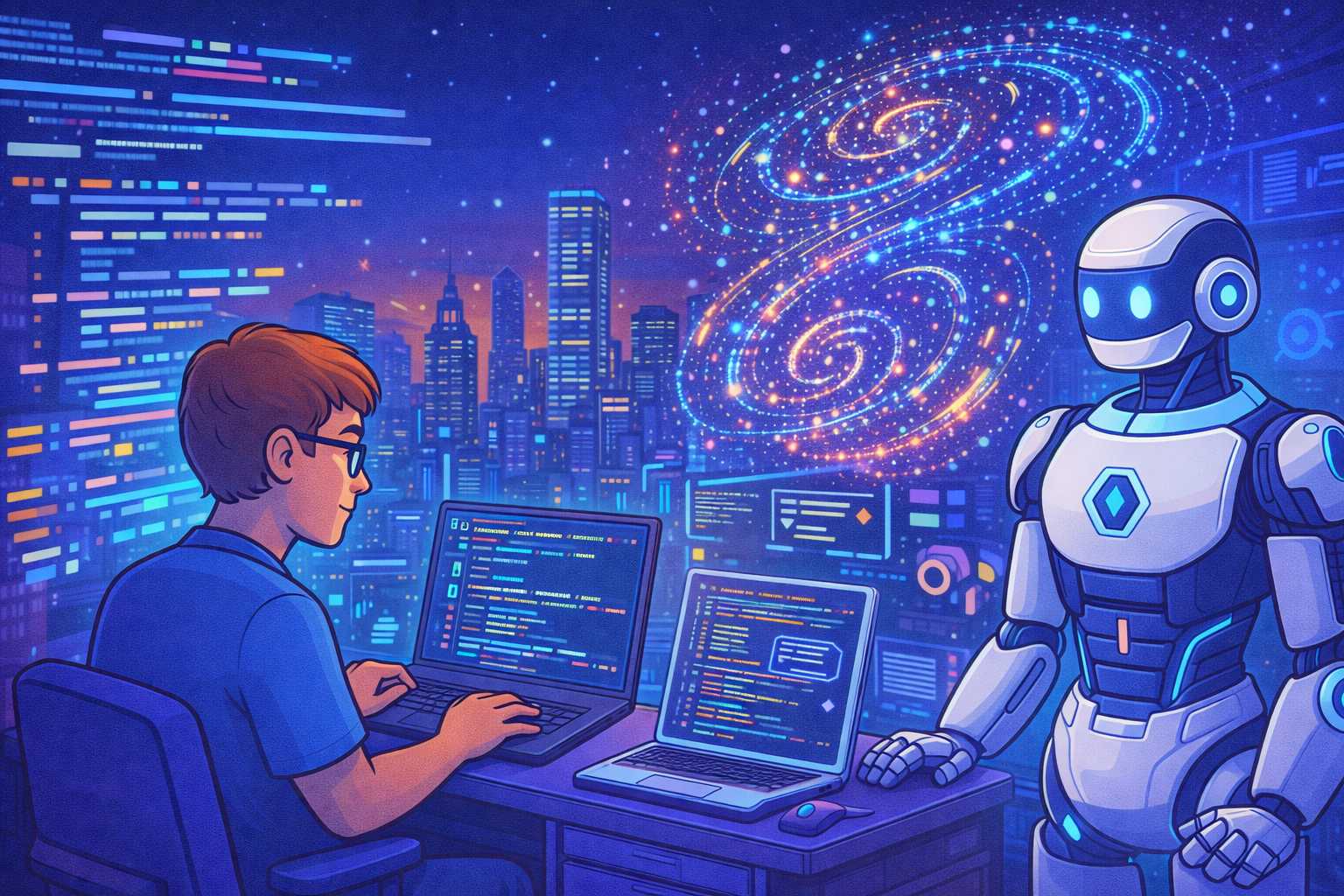
Industry leaders are shifting roles toward “AI builders” and shrinking tech teams, raising questions about the future of developers and software companies in the face of AI-driven automation. Many people predict the end for software engineers, but this may not be the case.
Software engineers will still be in demand, but their role will change significantly. They will work closely with AI systems to design, develop, and deploy applications. This collaboration will enable them to create software more efficiently and effectively, which may lead to a decrease in the demand for large software companies.
As AI takes over routine and repetitive tasks, software developers will be able to focus on high-level tasks that require creativity, problem-solving, and critical thinking. This shift in focus will enable them to deliver projects more efficiently and effectively.
The AI impact on software future is undeniable, but it also presents opportunities for growth and innovation. With the help of AI, software developers will be able to create more complex and sophisticated applications, which will drive technological advancements and improvements in various industries.
Software will become a craft, and software developers will be capable of delivering projects independently. This shift will also lead to a more decentralized and democratized software development process, where individuals and small teams can create and deploy software applications without the need for large software companies.
The future of software development is exciting and uncertain, but one thing is clear: AI will continue to play a crucial role in shaping the industry and the way software is created and deployed.
The Rise of AI Automation
The software industry is on the cusp of a revolutionary shift, driven by the increasing power of AI automation. Gone are the days of tedious coding and repetitive tasks, as AI coding tools now generate large portions of production-ready software at lightning speed. This acceleration of development cycles is not only boosting productivity but also reshaping traditional workflows.
As AI takes over the mundane tasks, developers are now free to focus on what truly matters – design, architecture, and higher-level problem solving. No longer will they be bogged down by the intricacies of coding languages or the tedium of debugging. Instead, they can concentrate on crafting innovative solutions that drive business growth and customer satisfaction.
But what does this mean for the future of software development? The impact of AI on software’s future will be profound. By 2026-2027, AI-generated code is expected to make up a staggering 50-70% or more of routine code. This seismic shift will not only change the way we develop software but also the way we think about it. The lines between human creativity and AI-generated code will blur, as machines become an integral part of the development process.
The implications are far-reaching. With AI handling the grunt work, developers will be able to focus on high-level thinking, pushing the boundaries of what is possible. The AI impact on software future will be a game-changer, driving innovation, efficiency, and competitiveness. As the industry continues to evolve, one thing is certain – the future of software development has never looked brighter.
The Evolution of Developers’ Roles
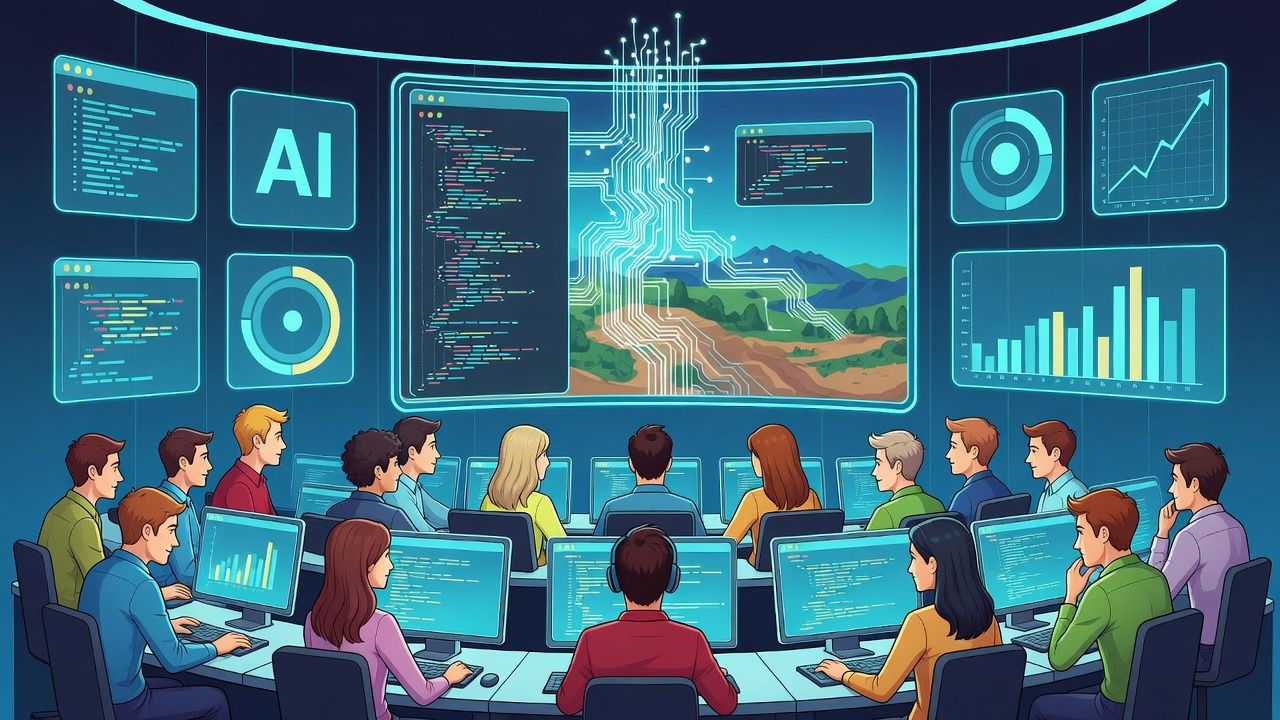
The software development landscape has undergone significant transformations in recent years, with the integration of Artificial Intelligence revolutionizing the way developers create, test, and refine software solutions. As AI technology continues to advance, developers are evolving into key roles that not only harness its potential but also oversee its impact.
Developers are evolving into AI supervisors, reviewers, and integrators, responsible for interpreting complex requirements and refining AI output to deliver optimal results. This shift is not merely about augmenting productivity but about understanding the intricacies of AI-driven software development. Higher productivity doesn’t necessarily equate to the full replacement of developers; rather, it’s about empowering them to work in tandem with AI systems.
As we navigate the AI impact on software future, developers will need to acquire a unique set of skills to thrive in this new landscape. These skills include AI orchestration, architecture, and ethical governance, which will enable them to not only utilize AI tools but also regulate their use. By understanding how to leverage AI while maintaining control over the development process, developers can unlock the full potential of this technology.
The AI-driven evolution of developers’ roles is not just about augmenting their capabilities but also about ensuring that the software they create is not only efficient but also responsible and trustworthy. As we move forward, we can expect to see developers take on more strategic roles, collaborating with AI systems to drive innovation and push the boundaries of what is possible in software development.
The Shift Toward AI-Augmented Services
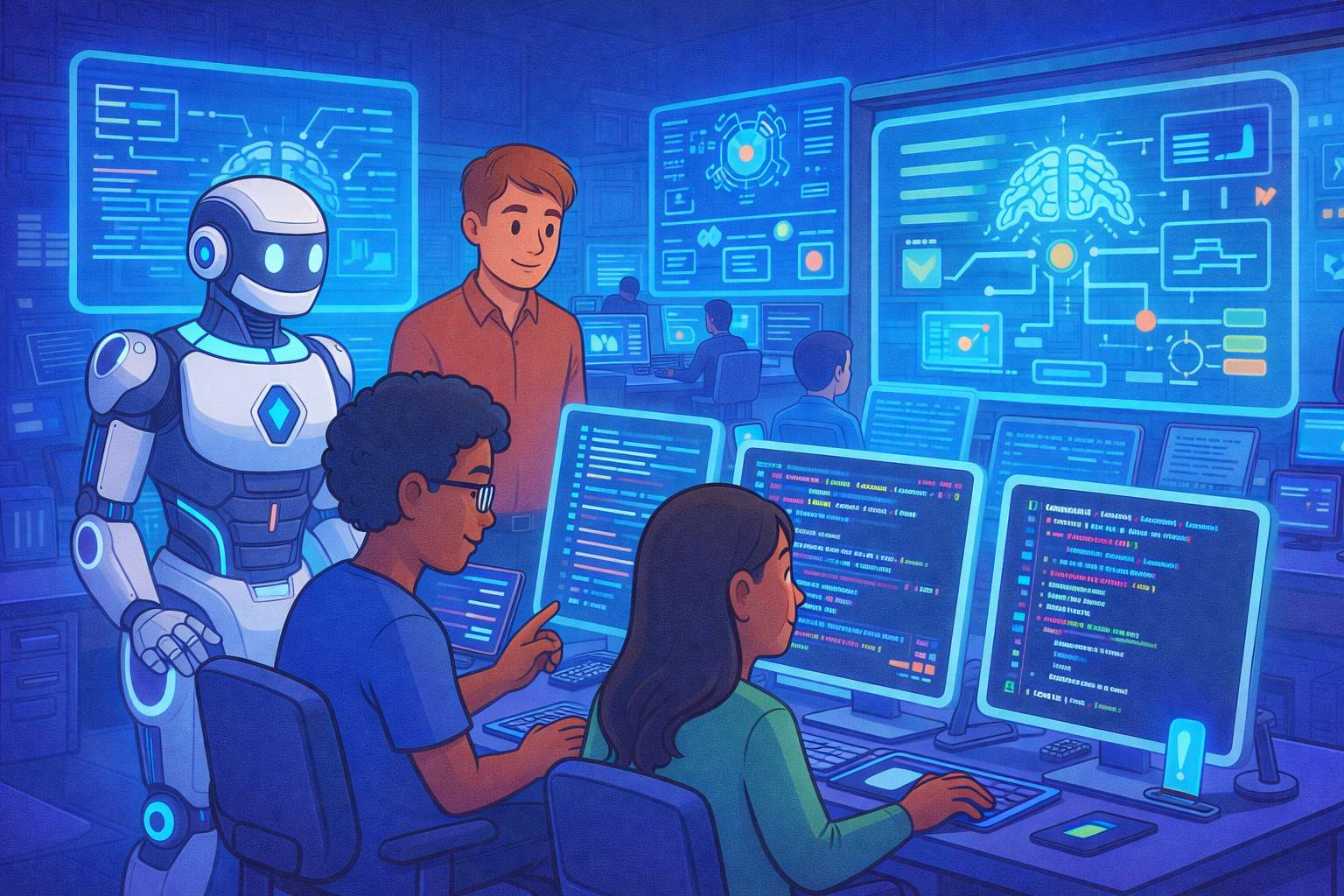
The software industry is at the cusp of a revolution. Entire software companies are unlikely to disappear, but their business models will shift toward AI-augmented services. This transformation is inevitable, driven by the increasing demand for personalized experiences, real-time insights, and automated processes. As technology advances, the lines between humans and machines will continue to blur, leading to a new era of collaboration.
As we navigate this shift, AI governance and product strategy will become crucial in the software industry. Companies will need to establish clear guidelines for AI development and deployment, ensuring that these technologies are used responsibly and ethically. This will involve developing robust risk management frameworks, data governance policies, and regulatory compliance strategies.
But what does this mean for businesses? AI-augmented services will redefine market differentiation. Companies that successfully integrate AI into their services will be able to offer unparalleled value to their customers, driving loyalty and retention. On the other hand, those that fail to adapt will risk losing ground to their competitors.
The AI impact on software future is a double-edged sword. While it presents opportunities for growth and innovation, it also poses significant challenges. Companies will need to invest in re-skilling their workforce, developing new skills and competencies to work effectively with AI systems. They will also need to rethink their business models, exploring new revenue streams and partnerships that leverage the power of AI.
As we embark on this journey, it is essential to remember that AI is not a replacement for human expertise, but a powerful tool that can amplify our capabilities. By embracing AI-augmented services, we can unlock new levels of productivity, creativity, and innovation, ultimately transforming the software industry into a more agile, responsive, and customer-centric landscape.
The AI Impact on Software Future
As artificial intelligence takes center stage in software development, we’re witnessing a seismic shift in the way code is generated, maintained, and secured. While AI has the potential to revolutionize the software industry, it’s not without its challenges. The quality, security, and maintainability of AI-generated code are emerging concerns that require immediate attention.
The rapid growth of AI-powered tools has led to a surge in automated code generation. However, the resulting code often lacks the nuance and depth that human developers bring to the table. This has sparked debates about the role of humans in software development. Can AI truly replace human developers, or do we need to rethink our approach to code creation?
The truth lies somewhere in between. Human oversight and domain knowledge are crucial in production systems, where the stakes are high and the consequences of failure can be catastrophic. While AI can generate code at an unprecedented scale and speed, it’s still a machine, prone to errors and biases. It’s our responsibility as developers to ensure that the code we produce is not only efficient but also secure, maintainable, and reliable.
As we navigate the AI impact on software future, it’s clear that developers will need to adapt and evolve their skills. We can’t simply rely on AI to generate code and expect it to work seamlessly. Instead, we need to collaborate with AI, leveraging its strengths while addressing its limitations. By doing so, we can unlock the full potential of AI and create software systems that are truly transformative. The future of software development is bright, but it will require us to think differently, work together, and push the boundaries of what’s possible.
Industry Trends and Projections
The software development landscape is on the cusp of a revolution, driven by the rapid advancement of Artificial Intelligence. As AI technologies continue to mature, we can expect significant changes in how software is built and who builds it.
One of the most striking trends is the growing adoption of AI-powered tools by industry leaders. Companies like Amazon are at the forefront of this movement, mandating the use of AI tools and repositioning their teams toward higher-order AI collaboration. This shift is not just about automating repetitive tasks, but about leveraging AI to drive innovation and stay ahead of the competition.
The implications of this trend are profound. As AI assumes a greater role in software development, the traditional role of the developer will evolve. Long-term projections suggest that developers won’t become obsolete, but they will need to adapt to a changing landscape. To remain relevant, developers will need to develop skills that complement AI, such as human-centered design, creativity, and critical thinking.
The AI impact on software future will be multifaceted, with both positive and negative consequences. On the one hand, AI will enable developers to build more complex and sophisticated software systems, leading to breakthroughs in fields like healthcare, finance, and education. On the other hand, the increasing reliance on AI may lead to job displacement, particularly for developers who are not able to adapt to the changing landscape.
Ultimately, the future of software development will be shaped by the intersection of human creativity and AI capability. As developers, we have a unique opportunity to shape this future, by developing skills that complement AI and driving innovation in the industry.
Disruption Everywhere in Software
As we wrap up our exploration of the rapidly evolving landscape of software development, it’s clear that one thing is certain: the future of software development is inextricably linked with AI-driven automation. We’ve seen how AI is transforming the way we design, develop, and deploy software, making it faster, more efficient, and more effective.
But what does this mean for developers? The truth is, developers will need to upskill and reskill to remain relevant in the industry. The traditional role of a developer, focused on writing code from scratch, is slowly giving way to a new breed of developer who can work alongside AI systems. This new generation of developers will need to understand how to integrate AI-driven tools, manage AI workflows, and troubleshoot AI-related issues.
The AI impact on software future will be profound, but developers will thrive in new roles as AI supervisors, reviewers, and integrators. They’ll be responsible for ensuring that AI-driven systems are working as intended, identifying areas where AI can be improved or optimized, and deploying AI-driven solutions to meet the needs of their organizations.
As we move forward, it’s essential for developers to stay adaptable and agile, embracing the opportunities and challenges presented by AI-driven automation. By doing so, they’ll be able to stay ahead of the curve, capitalize on new opportunities, and shape the future of software development. The future is bright, and with AI by our side, the possibilities are endless.