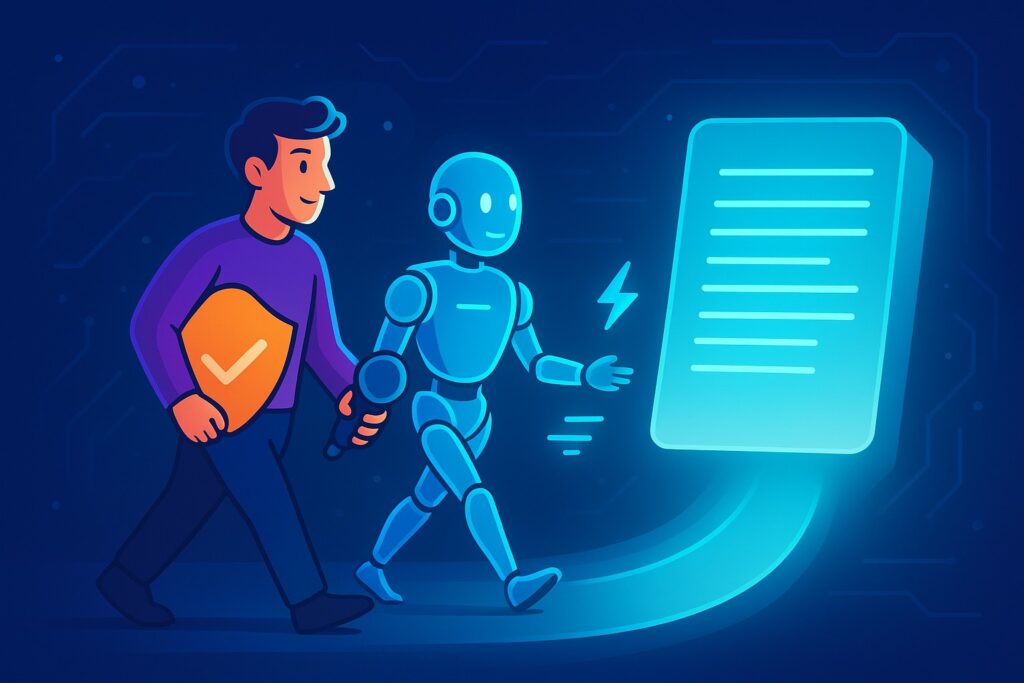
Is using AI to write content fundamentally different from ghostwriting? Is it fair? And is generative AI simply the next natural step in how written work will be created?
These questions are becoming increasingly relevant as AI tools move from novelty to everyday companions in creative and professional work. To answer them properly, we need to zoom out.
In some cases, writing has never been a purely solitary act. From ancient scribes to modern ghostwriters, collaboration has in some way shaped how ideas reach the page. AI didn’t invent this – it accelerated the process at unimagined pace.
In this post, we’ll explore how ghostwriting evolved, where AI fits into that long tradition and what AI can / cannot replace today. We will also check why the future of writing is more about transformation than displacement.
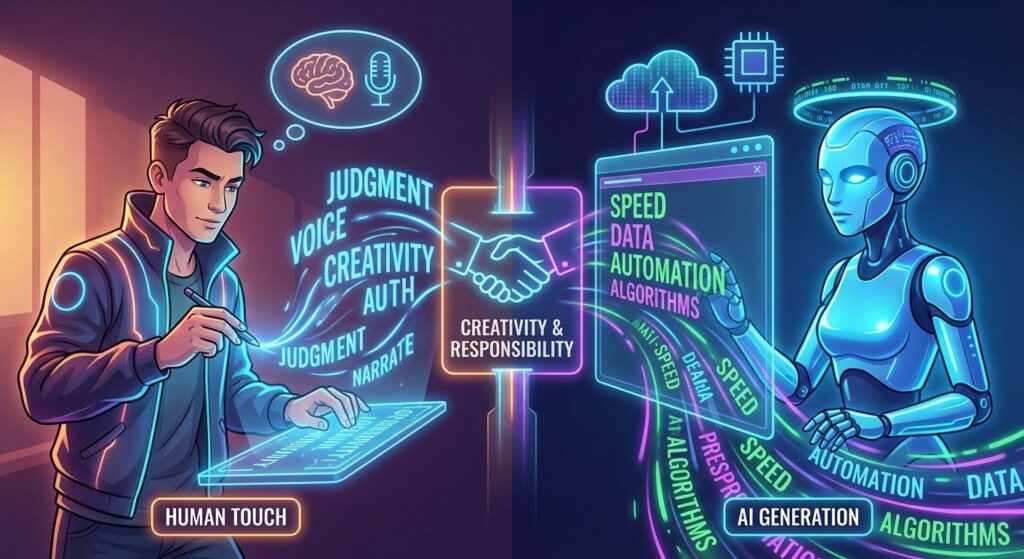
The Evolution of Ghostwriting
At first glance, ghostwriting and AI-generated content may seem very similar. While one involves a human writer working behind the scenes and the other relies on algorithms trained on massive datasets, the goal is basically the same: helping someone express ideas more clearly and at scale.
Ghostwriting has always been about delegation. A leader, expert or public figure provides direction and insight, while a skilled writer translates those ideas into compelling text. The voice may not be the ghostwriter’s, but the craft is.
AI enters this picture as a new kind of collaborator. It can draft, summarize, restructure and accelerate writing in ways no human assistant ever could.
The key question isn’t whether AI is “different,” but whether that difference matters in practice.
Can AI replace ghostwriters entirely? Will it simply support them? Or will it quietly become part of the process without changing the domain at all?
To answer that, we need to understand how ghostwriting became normal in the first place.
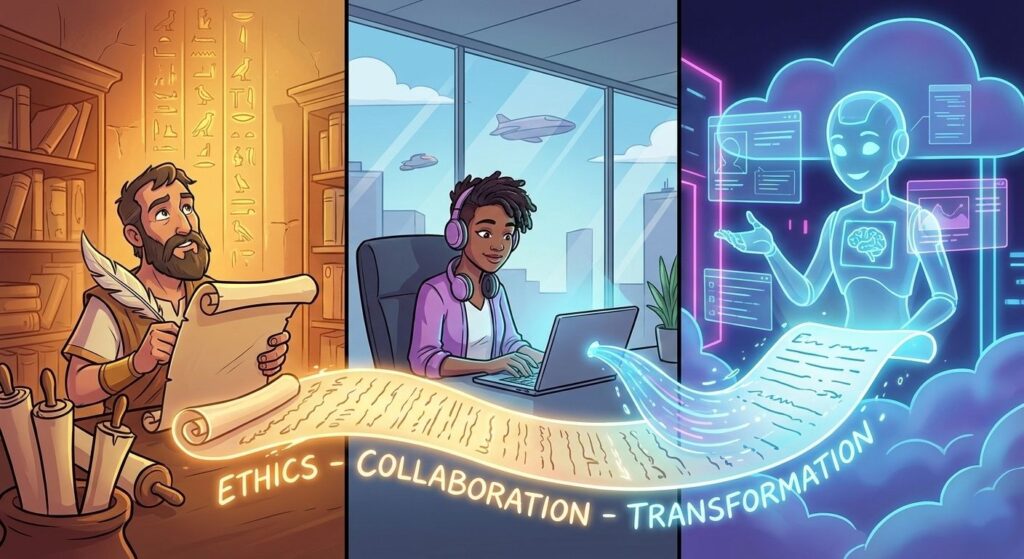
A Longstanding Practice of Ghostwriting in History
Ghostwriting is far older than most people realize. In times when literacy was rare, even kings and philosophers dictated their thoughts to scribes. Authorship was about ideas, not who physically held the pen.
As literacy spread, delegation didn’t disappear-it evolved. Business leaders dictated letters to assistants. Politicians relied on speechwriters. Authors collaborated with editors and co-writers.
Over time, ghostwriting became not only accepted, but basically an expected evolution of this typical practice in many fields.
What mattered was credibility, judgment and responsibility – not mechanical authorship.
Seen through this lens, generative AI isn’t a radical break from history. It’s a continuation.
Where humans once provided speed and transcription, AI now offers instant drafts or structural suggestions. The difference is scale and velocity, not intent.
Every major leap in communication technology – from printing presses to computer processors – raised similar concerns. Yet each became normal once society adapted its expectations.
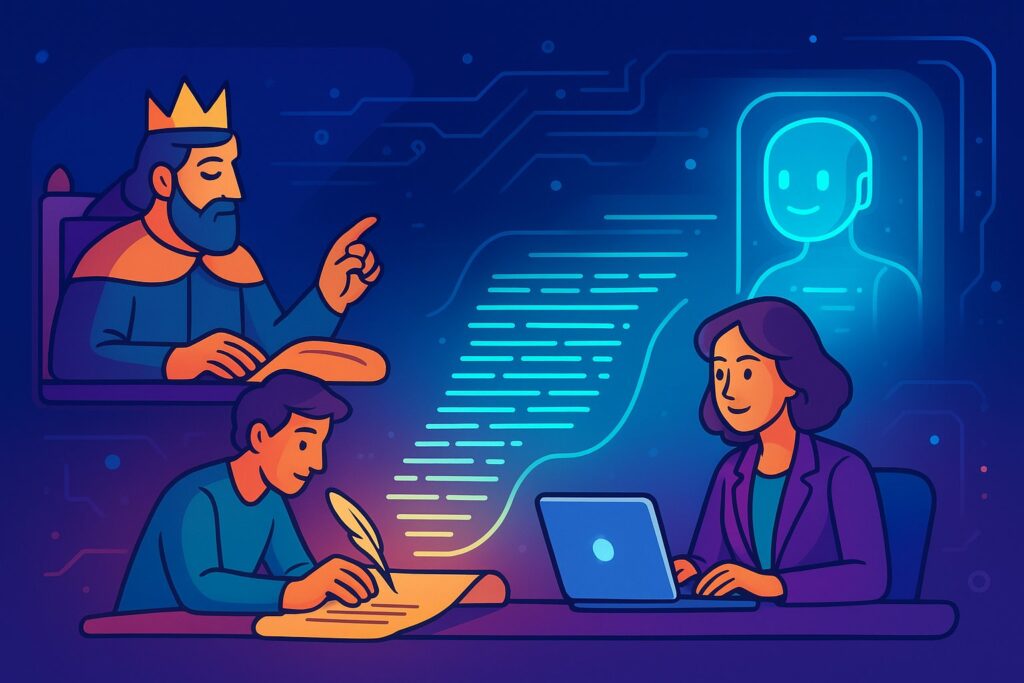
The Role of AI in Content Creation Today
There’s no denying AI’s strengths. It brings unprecedented speed and efficiency to content creation.
Articles, outlines, emails and summaries that once took hours can now be produced in minutes or even seconds.
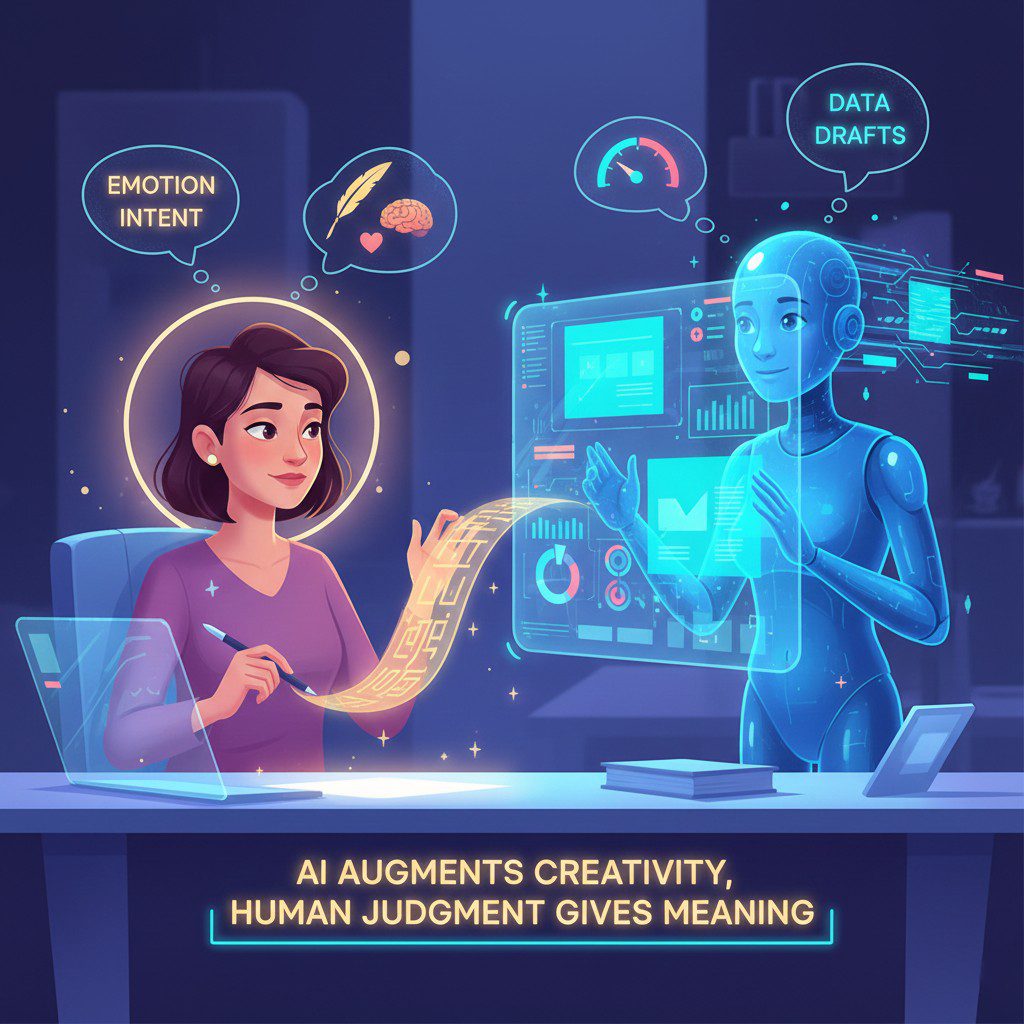
For ghostwriters and content professionals, this is transformative. AI can handle first drafts, idea generation, research synthesis and repetitive tasks. Freeing humans to focus on strategy, nuance and refinement.
However, speed is not the same as quality.
AI still struggles with consistent voice, lived experience, emotional resonance and original storytelling.
It can imitate patterns, but it doesn’t understand why a story works or when to break the rules. That intuition remains human.
This is why today, AI is not fully replacing writers – it’s augmenting them. The best results come when human judgment guides AI output, shaping it into something meaningful and authentic.
The Limitations of AI: Ethics and Responsibility
One of the most overlooked aspects of ghostwriting is responsibility. Ghostwriters don’t just write – they make judgment calls.
What should be said? What should be avoided? How will this land with the audience?
Clients rely on ghostwriters for discretion and contextual awareness. These are deeply human skills, shaped by experience and accountability.
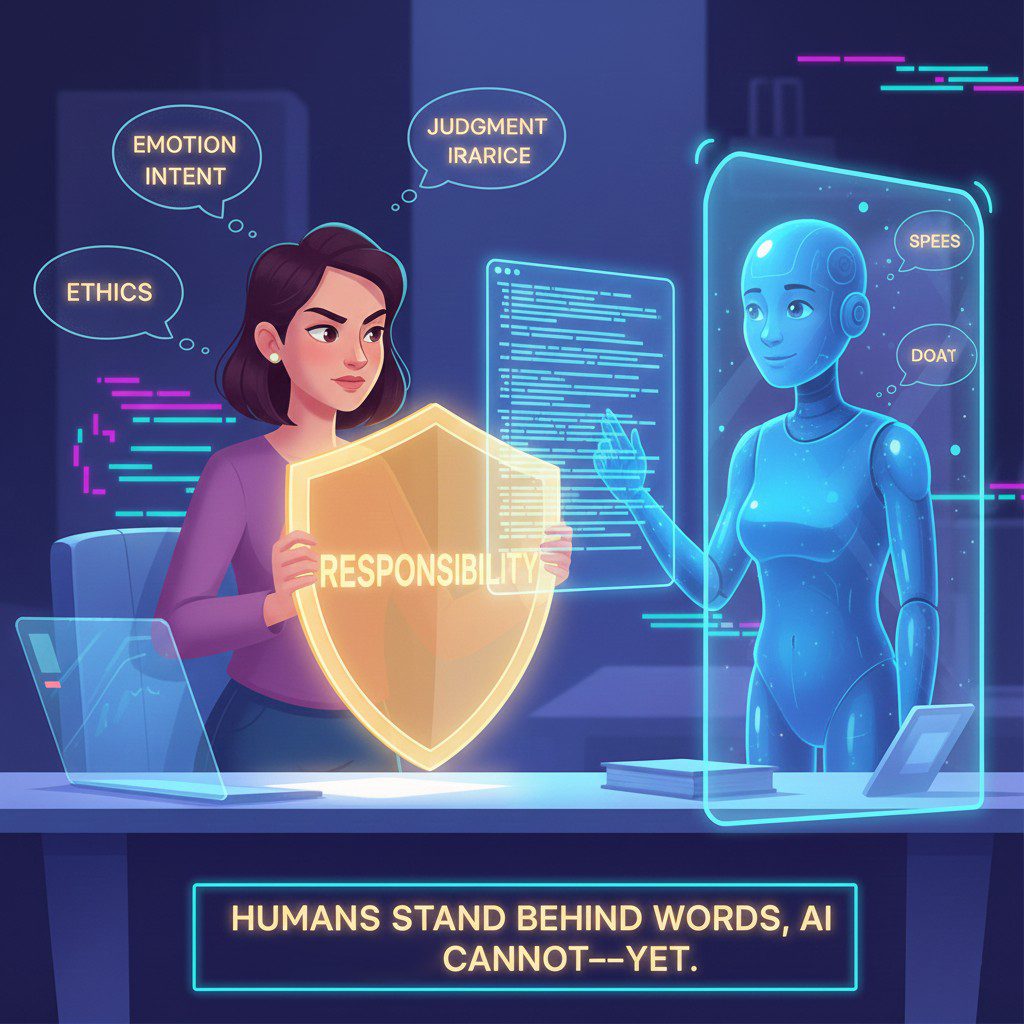
AI, at least for now, cannot take responsibility for its output. It doesn’t understand consequences, reputational risk or moral nuance. It can generate text – but it cannot stand behind it.
Could that change one day? Possibly. But today, end-to-end delivery where ideas, ethics, voice and accountability align still belongs firmly to humans.
Conclusion: Is Using AI Fair – and Inevitable?
So, is it fair to use AI to write? Because we cannot pretend the technology doesn’t exist and that it has great strenghts when it comes to content creation.
History suggests the answer is clear. When tools become widely available and demonstrably useful, they don’t disappear, instead they become normal.
Just as ghostwriting became mainstream, AI-assisted writing is already doing the same.
This doesn’t mean creativity is dying. It means the process is changing.
AI is transforming yet another creative domain. Not by replacing humans outright, but by redefining how ideas move from mind to page.
For now, voice, authenticity, judgment and responsibility remain human strengths. But ignoring AI entirely is neither realistic nor productive.
The real question isn’t whether AI belongs in writing, but how thoughtfully we choose to use it.
What do you think? Let me know in the comment section!