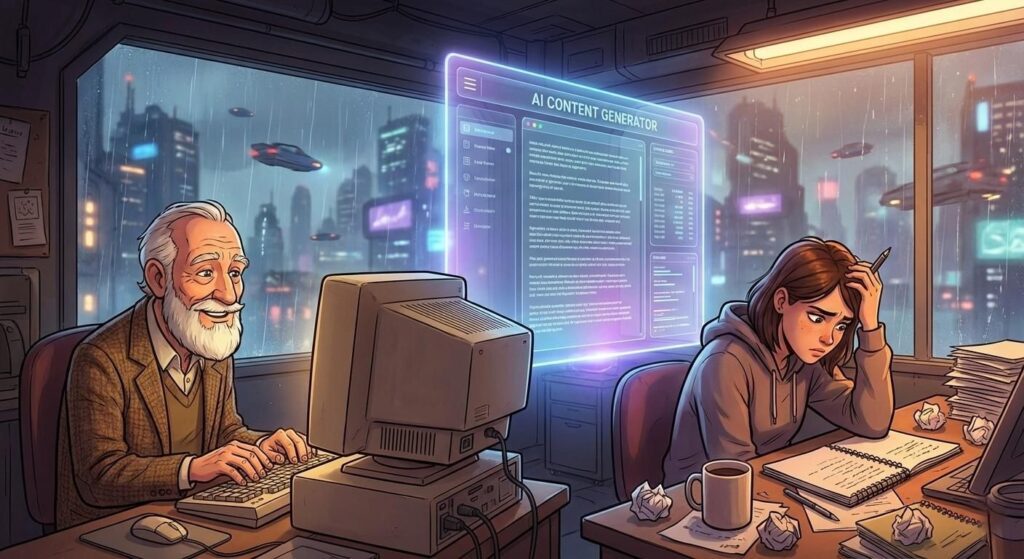
AI generated content is rising, but people react to it vastly differently. As AI technology advances, the lines between human-generated and AI generated content are increasingly blurring.
What was once a straightforward distinction is now becoming a complex issue, with more and more people expressing concerns about the implications of AI generated content on our daily lives.
Based on the latest research, it’s clear that people are more concerned than excited about AI’s growing role in daily life. A large share of the population views AI’s impact with skepticism, and it’s not hard to understand why.
As AI generated content becomes more prevalent, there’s a growing fear that it will replace human writers, artists and creatives, leading to job losses and a automation of ideas.
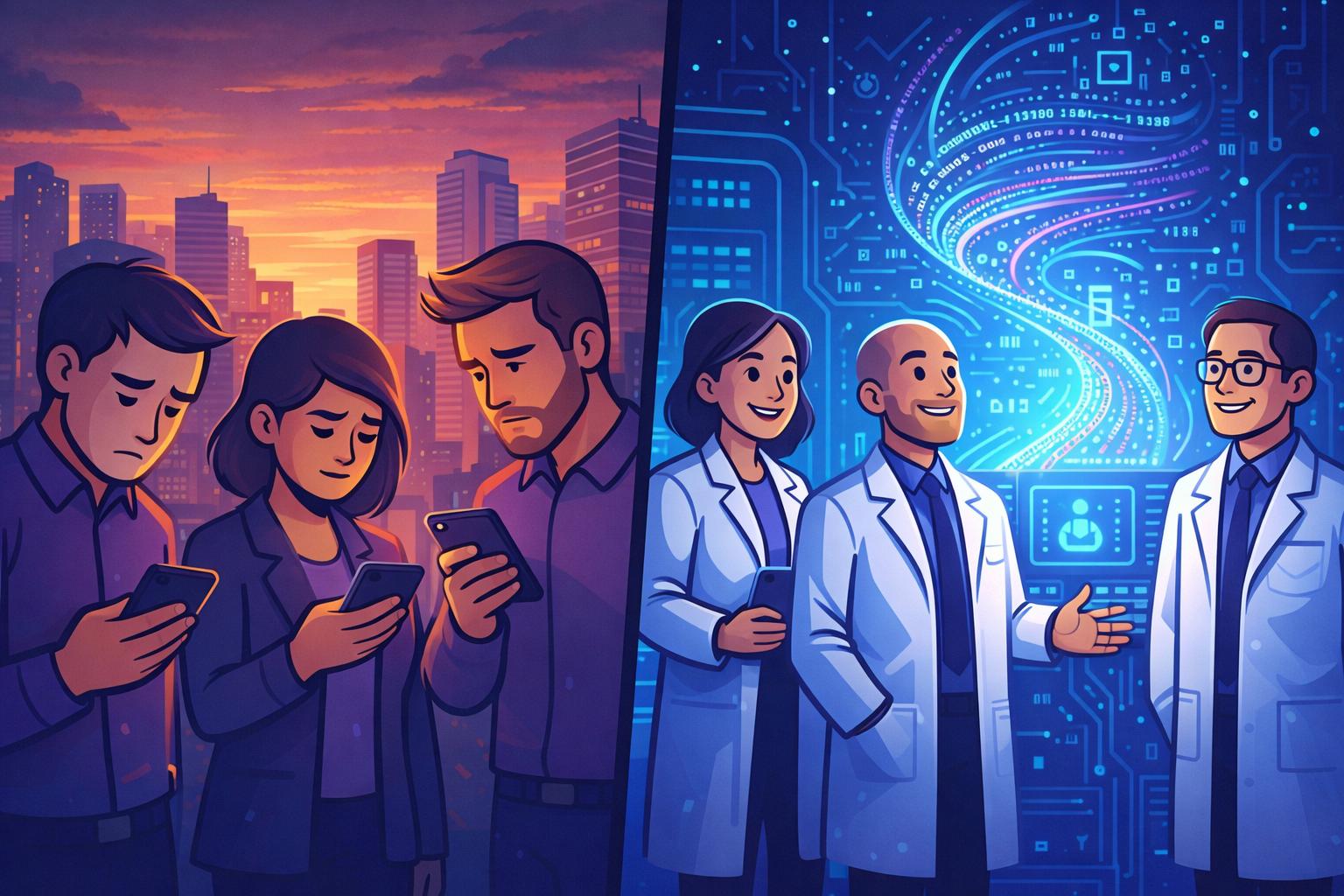
A sharp optimism gap exists between AI experts and the general public, with experts far more positive about AI’s benefits than everyday users. While experts see it as a revolution in creativity and efficiency, the general public is more worried about the potential consequences.
Many people are worried about the impact of AI on their daily lives, with a large share expressing skepticism about AI’s role. They’re concerned that AI content will be indistinguishable from human generated content and that it will be used to manipulate and deceive people.
In our increasingly digital world, it’s more important than ever to have a nuanced understanding of the role AI plays in our lives. In today’s post, we’ll delve into the current status of AI generated content and explore how people perceive it compared to traditional content.
Trust and Control Issues
Most people want greater control and transparency regarding how AI is used in their lives and content they consume. The age of artificial intelligence has brought a significant shift in the way we interact with technology and many are left wondering about the role of AI in shaping our digital experiences.
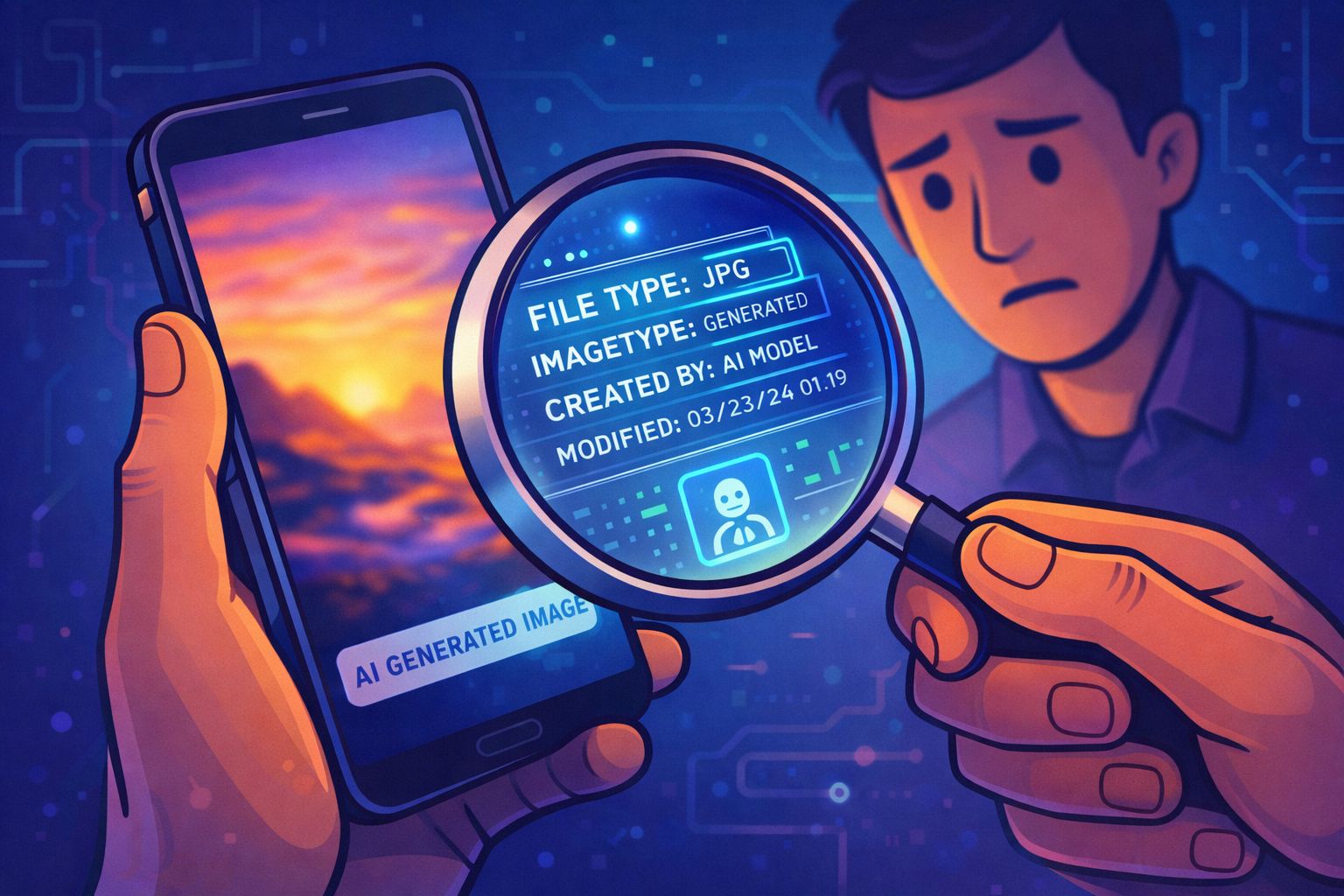
A substantial majority of people say it’s very important to know whether content (text, images, video) was made by AI or humans. But why though? Why is this so important to many?
The answer probably lies in trust and control. When we’re unsure about the authenticity of the content we’re consuming, it can lead to feelings of distrust and unease. We’re left wondering if the information is unbiased, reliable and trustworthy.
At the same time, many people doubt their ability to actually detect AI generated content, yet express a desire for more information about its origin. This paradox highlights the complexities of navigating the AI-driven world.
On one hand, we want to be aware of the AI behind the content; on the other, we struggle to identify it. This can lead to a sense of powerlessness, making us more vulnerable to misinformation and manipulation.
The line between AI generated content and human-created content is increasingly blurred, and it’s crucial that we take steps to address these trust and control issues. By being more transparent about AI usage, everyone involved will probably enjoy the content more than questioning its origin all the time.
Public Backlash for Generated Content
Consumers remain skeptical of AI, with only a minority trusting companies to do the right thing. Two main factors drive this distrust: a lack of insight into how algorithms function and the worry that AI strips away the necessary human connection in services.
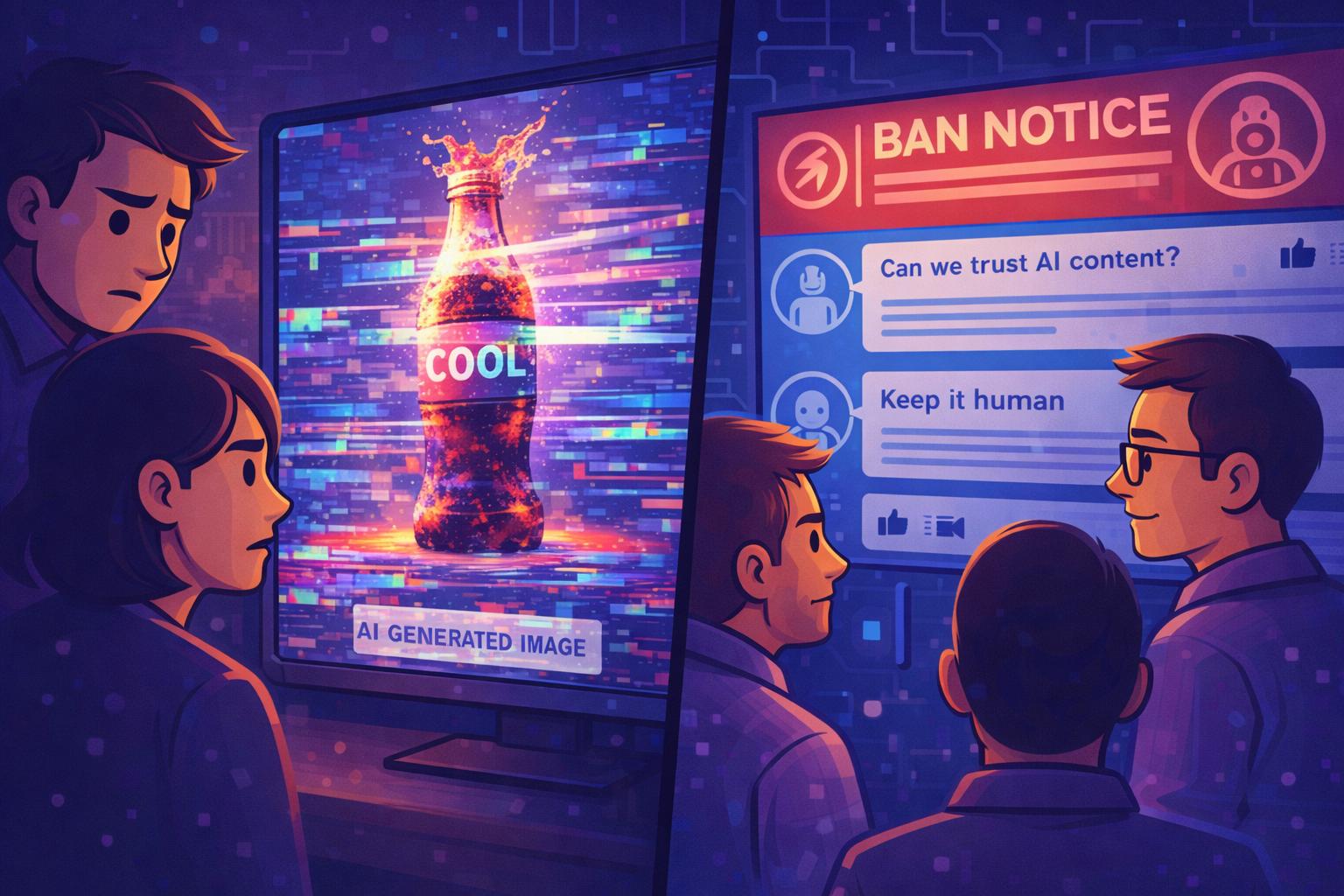
Backlash can be seen in communities and platforms banning or limiting AI generated posts due to quality and authenticity concerns. Users are increasingly vocal about their dislike for AI generated content that appears formulaic or lacks emotional depth. The rise of deepfakes and AI generated videos has also raised concerns about the potential for manipulation and misinformation.
Instances like Coca-Cola’s AI-generated ad faced negative reactions tied to perceived loss of authenticity. The ad, which showcased a generic world where people and animals came together to enjoy a Coca-Cola, was widely criticized for being overly produced and lacking a human touch. Consumers felt that the use of AI had resulted in a product that was more focused on technology than on the emotions and experiences that the brand was trying to evoke.
The backlash against AI generated content is a warning sign for companies looking to leverage this technology. While AI can be a powerful tool for creating engaging content, it must be used in a way that is transparent and respectful of the audience.
Companies must find a balance between using AI to improve the efficiency and effectiveness of their content creation, and maintaining the authenticity and emotional resonance that consumers are looking for.
Cultural Differences in Acceptance
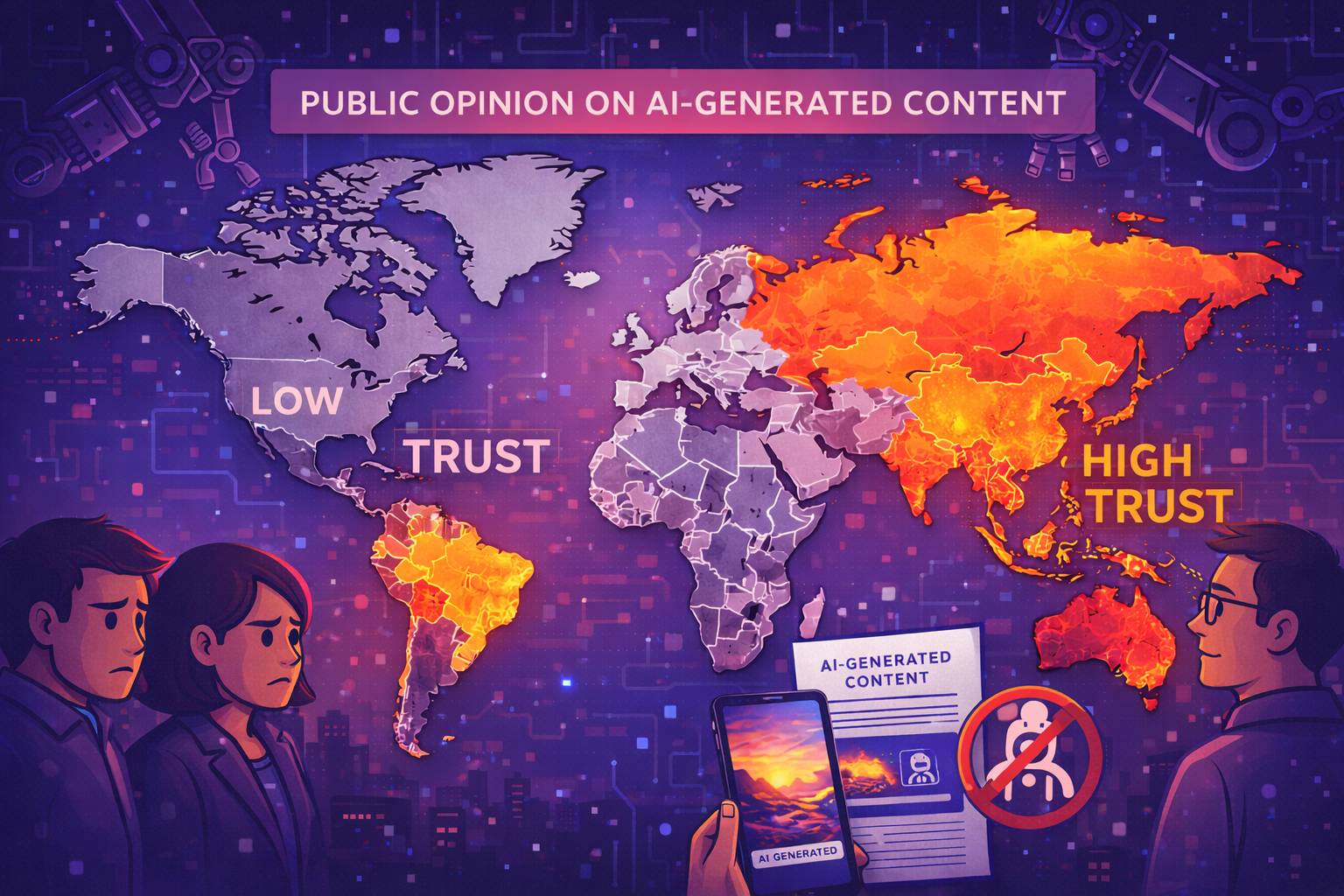
Global trust in AI varies widely by region, with much lower trust in some Western countries compared to places like China or Brazil, showing cultural differences in acceptance. This disparity in trust levels is a crucial aspect to consider for companies operating globally. While regions like China and Brazil may be more open to embracing the benefits of AI, others might be more hesitant due to cultural or socio-economic factors.
As a result, businesses need to be mindful of these differences and adapt their strategies accordingly. For instance, in regions where there’s high trust in AI, companies might focus on showcasing the innovative applications of AI technology. On the other hand, in areas with lower trust, they may need to take a more cautious approach, emphasizing transparency and the potential risks associated with AI generated content.
However, even in regions with high trust in AI, concerns about AI generated content may still exist. The increasing popularity of AI has raised questions about authorship, ownership and the role of human creators. To address these concerns, companies need to be proactive in communicating their technology usage and limitations. This is particularly crucial in creative industries, where authenticity and originality are paramount.
At the moment, it seems that companies need to make sure to let the public know precisely how they use AI and actually limit its use in creative industries. Otherwise, currently people don’t appreciate the use of AI generated content.
By adopting a more transparent approach, businesses can mitigate potential backlash and build trust with their audience. Ultimately, navigating cultural differences in acceptance will be key to successfully integrating AI into various sectors and applications.
The Preference for Authenticity
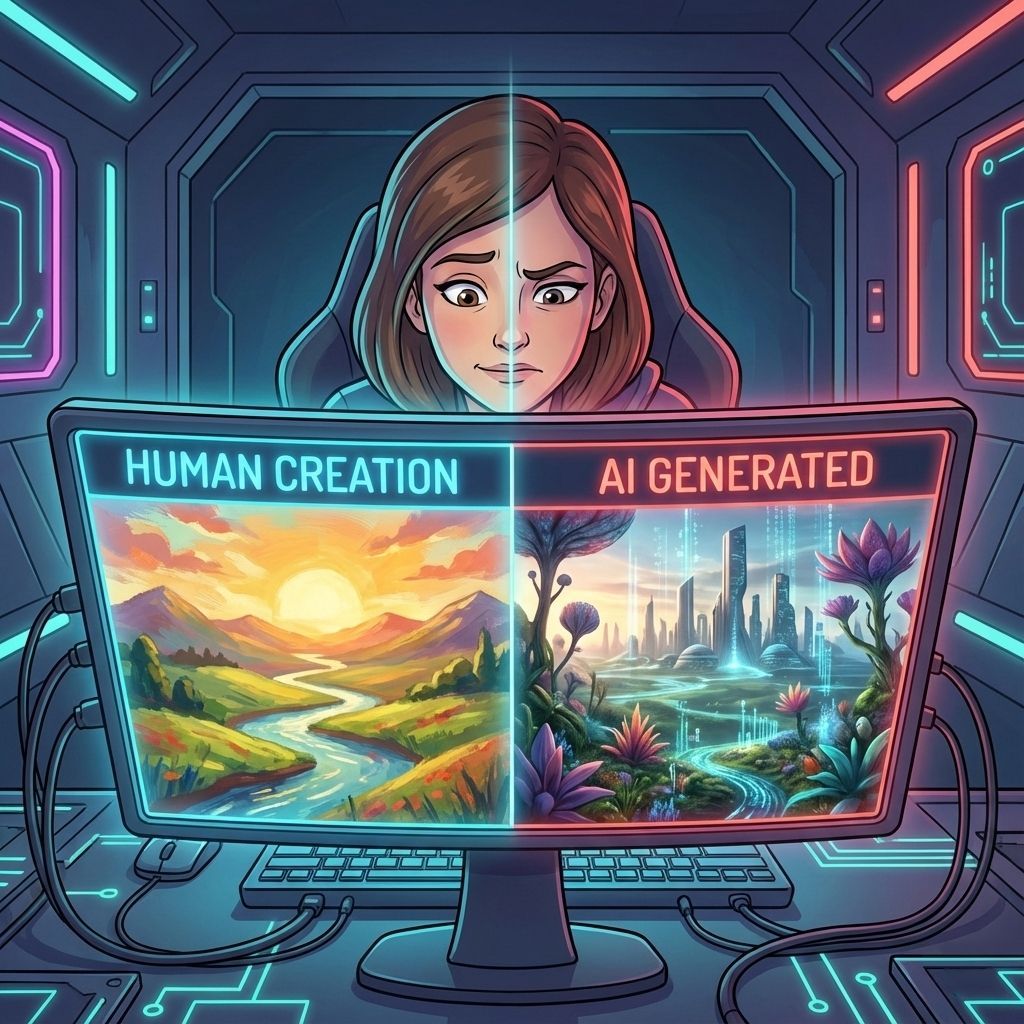
Another research shows people often prefer AI content when unaware of its origin, but trust and perception drop once they know it was AI generated. Which is a very interesting psychological trait – why is it important to know the origin? Why does the creation process affect how people like or not like the result?
In any case, this highlights the importance of labeling AI generated content and providing transparency about its origin. When we’re presented with information, we naturally seek to understand its authenticity and credibility.
In the case of AI generated content, this can be particularly challenging. While AI can produce high-quality content, it often lacks the nuance and emotional depth that human creators bring to the table.
People may prefer human generated content over AI generated content due to concerns about authenticity and trust. Or maybe they felt betrayed when realizing that not “enough” work was put into the content they consumed.
In contrast, content that is transparent about its origin – whether it’s AI generated or human created – can build trust with readers. By acknowledging the role of AI in content creation, we can have a more honest conversation about the value of human insight and expertise.
Ultimately, the preference for authenticity is not just about the content itself, but about the relationship we build with the people and machines that create it.
General Adoption of AI in Content Creation
Artificial intelligence is probably on a clear path forward in many industries that are mainly about content – text, images, video, code. But at the moment, people care a lot about the origin of the content – if produced human they accept it more easily then if produced by AI.
At the same time, most of us cannot say the difference in most cases. And if not provided with labels what was made by who, we can even prefer AI generated content.
This phenomenon can be seen in various platforms where users consume a lot of content every day. While many claim to be able to distinguish between human-written and AI generated content, the truth is that it’s often a challenge.
In fact, as we have seen in this post which was produced by Content Pilot – an AI powered tool, people may even prefer AI generated content without realizing it. Perhaps this is because AI can produce content that is both informative and engaging, often with a level of consistency that’s hard to match with human creations.
And does it truly matter who created the content, as long as it’s informative and enjoyable to read? Some people might feel betrayed by the fact that what they see was automated, but others might see it as a natural step forward. After all, AI can help content creators to produce more high-quality content, faster and with less effort.
The question remains, where is the threshold? When does AI generated content become acceptable and when does it start to feel like less of an achievement? Will there be a day, when we say that AI generated content has at least the same value as human-produced content?
The answer is far from clear. Let me know in the comment what do you think!