

Energy Requirements of Generative AI Models are very high. It is one of the main criticism of AI field.
Generative AI models require substantial energy to train and operate. Smaller language models require much lower amounts of energy to train and infer. Training large models like GPT alone uses over 1,200 MWh, a staggering amount of power that has significant implications for the environment.
This energy is equivalent to powering 120+ U.S. homes for a year, putting into perspective just how much energy these models consume. But, how bad is it really? To understand the severity of the AI energy consumption issue, we will take a closer look at a few comparisons.
The energy requirements of generative AI models are indeed alarming, and it’s essential to consider the broader implications of this trend. As the demand for AI models continues to grow, so does the energy consumption.
This has sparked debates about the sustainability of the current AI landscape and the need for more energy-efficient solutions.
The current trend is clear: the growth of AI energy consumption is outpacing the growth of renewable energy production. This raises concerns about the long-term viability of the AI industry and its contribution to climate change. But the situation is not so simple and AI actually might improve the environment in the end.
In this article, we’ll explore some of the current trends about AI energy consumption and see that similar industries are consuming similar, if not higher, amounts of energy – we just became used to it.
Inference and Real-Time Usage
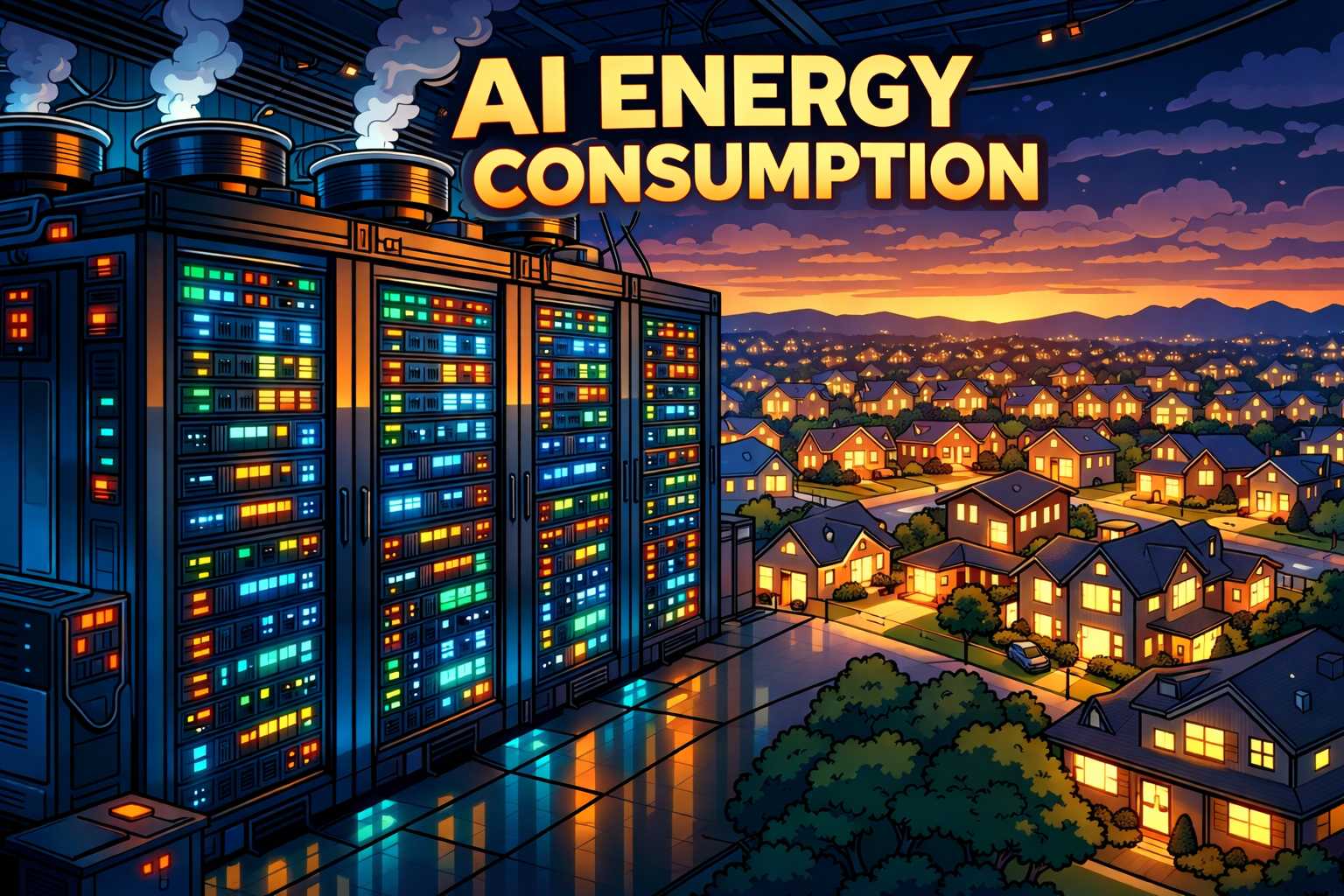
While training large language models is undoubtedly energy-intensive, inference often takes the cake – accounting for the majority of AI energy use. It’s a staggering reality that has significant implications for our planet.
As these models serve billions of daily queries worldwide, their cumulative effect on energy consumption becomes increasingly concerning.
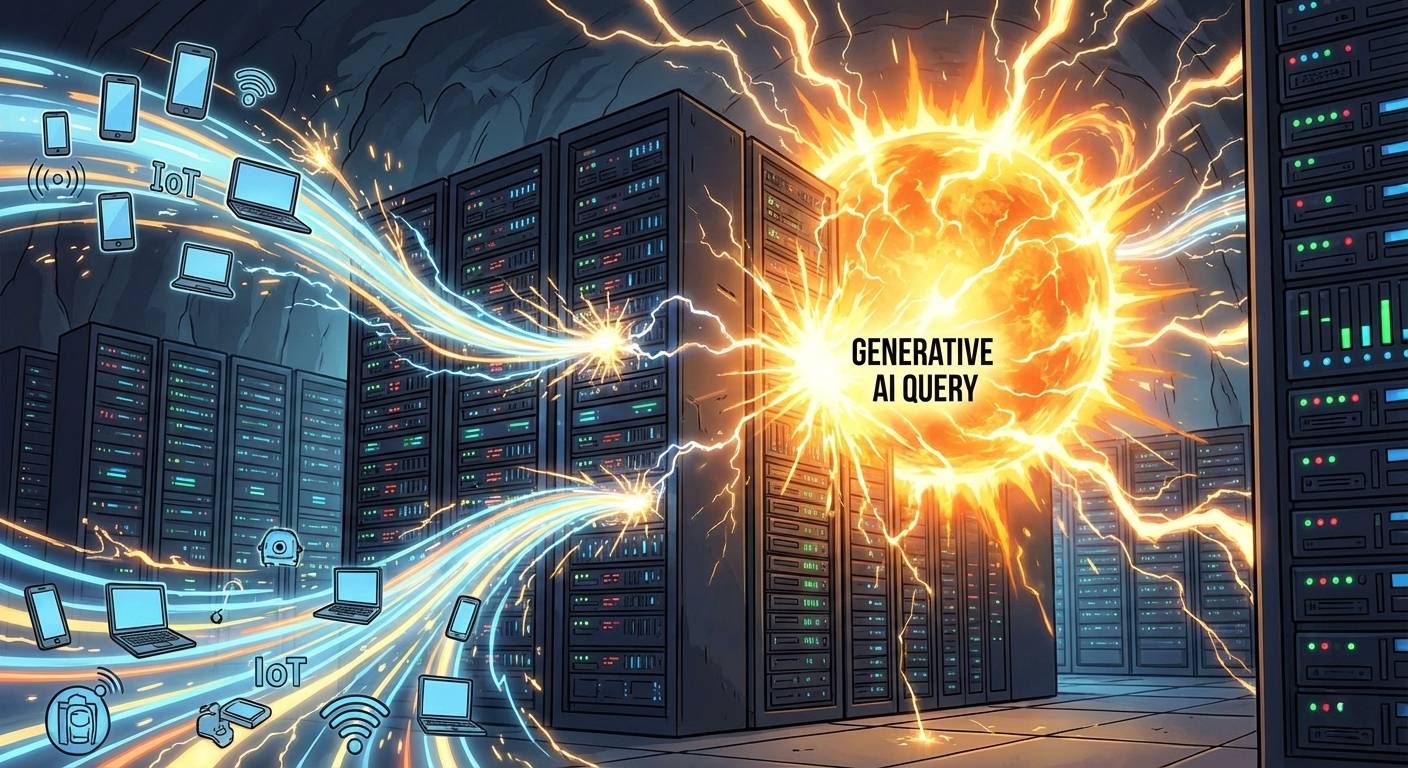
Every time we engage with a chatbot, voice assistant, or text generator, we are contributing to AI energy consumption. But what can be a little alarming is the scale of energy expended by a single generative AI query. In some cases, it can consume multiple times more electricity than a single Google search.
The math is simple: billions of queries per day, multiplied by significant energy consumption per query, equals a substantial carbon footprint.
To put this into perspective, consider the collective impact of our daily interactions with AI-powered tools. From virtual assistants to language translation services, the list of AI-driven applications is endless. And with each query, we’re not only seeking convenience but also contributing to AI energy consumption.
The growth of AI has brought about unprecedented levels of efficiency and productivity, but it also comes with a price tag. As we continue to rely on AI for everyday tasks, it’s essential to acknowledge the environmental implications of our actions.
By understanding the true cost of AI energy consumption, we can begin to explore more sustainable solutions that minimize the ecological footprint of our AI-driven lives.
Ultimately, it’s time to confront the reality of AI’s energy consumption and explore ways to mitigate its impact. By doing so, we can ensure that the benefits of AI continue to outweigh its environmental costs.
Data Center Energy Consumption
The world’s data centers are quietly sipping up a significant chunk of the globe’s electricity. Currently, they already account for 3% of global electricity consumption. This might not seem like a lot, but as the demand for data storage and processing continues to rise, so will the strain on our power grids.
One of the driving forces behind this growing energy demand is the increasing adoption of artificial intelligence within both companies and single users. As more businesses and individuals rely on AI to power their operations, the need for high-performance computing and data storage is skyrocketing. AI workloads are rising rapidly, and with them, the energy required to power these systems.
But here’s the thing: AI energy consumption is not just a minor contributor to the overall energy demand of data centers. In fact, it’s poised to become a major player. According to some estimates, AI could account for nearly half of all data center energy demand, excluding the energy-hungry world of cryptocurrency mining.
This is a significant concern, as the energy required to power AI systems is not only expensive but also contributes to greenhouse gas emissions and climate change.
The good news is that there are steps being taken to reduce the energy consumption of data centers. From more efficient cooling systems to the use of renewable energy sources, the industry is working to reduce its carbon footprint.
However, as the demand for AI continues to grow, it’s essential that we also focus on reducing the energy consumption associated with AI workloads. Only then can we ensure that the benefits of AI are not overshadowed by its negative environmental impact.
Benefits of AI and Energy Efficiency
Not every use of AI means bad outcome for climate. In fact, the relationship between AI and energy efficiency is more complex than you might think. While some AI applications do contribute to increased AI energy consumption, there are also many ways in which AI can actually help reduce our carbon footprint.
One of the most promising areas where AI can make a positive impact is in optimizing logistics. By analyzing vast amounts of data and identifying patterns, AI can help companies streamline their supply chains, reducing the number of miles their trucks have to drive and the amount of fuel they burn. This not only saves money but also helps to reduce greenhouse gas emissions.
Another area where AI can make a real difference is by reducing idle industrial energy waste. Many industrial processes, such as manufacturing and processing, use vast amounts of energy even when they’re not actively producing anything. AI can help identify these areas of waste and optimize energy usage, leading to significant reductions in energy consumption.
But perhaps the most significant benefit of AI in terms of energy efficiency is its ability to automate tasks. By taking over routine and repetitive tasks, AI can enhance productivity and reduce energy demands.
This is particularly true in industries where manual labor is a significant contributor to energy consumption, such as construction and manufacturing.
In short, the benefits of AI and energy efficiency are clear. While AI energy consumption is a concern in some areas, it’s also a powerful tool for reducing waste and increasing efficiency.
As we continue to develop and deploy AI technologies, it’s essential that we prioritize sustainability and look for ways to minimize AI’s environmental impact.

Comparing Energy Usage of Different Technologies
There are many similar industries that have high energy demands as well. An hour of Netflix streaming can consume far more energy than a typical text AI task. On a per-use basis, AI prompts are far less energy intensive than media streaming or long video conferencing.
Digital activities like Netflix and TV have a much larger energy footprint per hour for users than single AI queries. The reality of AI energy consumption has sparked conversations about the sustainability of our digital habits.
A single generative AI query (e.g., ChatGPT) can consume about 0.24-0.3 Wh, comparable to ~9 seconds of TV energy use. This contrasts sharply with the energy-hungry nature of media streaming, where an hour of Netflix HD streaming consumes roughly 0.077 kWh (77 Wh). This is far higher than a single AI prompt, highlighting the significant disparity in energy usage between digital activities.
It’s true that AI power demand is on the rise, with estimates suggesting it may be ~23 GW, potentially surpassing Bitcoin’s energy use. The global AI energy consumption is expected to drive data center electrical demand, which may exceed the electricity consumption of entire nations. In comparison, a typical Google search uses about 0.3 Wh per search, roughly one order of magnitude less than complicated AI queries.
One hour of Zoom meeting uses about 0.05 kWh (~50 Wh) – more than many individual AI requests but still lower than an hour of video streaming. TVs in 4K streaming mode can use hundreds of watt-hours per hour (device + network combined), significantly more than AI requests.
The energy usage disparity between digital activities and AI queries is stark, with AI energy consumption poised to play a significant role in shaping the future of data center electrical demand.
You can check some of the mentioned technologies and their energy consumption in the following table:
| Activity | Energy Consumption | Notes |
|---|---|---|
| Google search (1 query) | ~0.0003 kWh | Extremely low energy footprint per request |
| AI prompt (text) | ~0.00024-0.0003 kWh | Comparable to a few seconds of TV usage |
| Zoom call (1 hour) | ~0.05 kWh | Lower than most video streaming services |
| Netflix streaming (HD, 1 hour) | ~0.077 kWh | High data transfer and continuous encoding |
| Watching TV (1 hour) | ~0.08-0.6 kWh | Depends heavily on screen size and resolution |
| Social networks (1 hour) | ~0.3-6 kWh | Highly variable. Video-heavy usage dominates consumption |
| Electric car travel (100 km) | ~11-30 kWh | Real-world transportation energy benchmark |
| Combustion car travel (100 km) | Tens of kWh equivalent | Total fuel energy vastly exceeds digital activities |

AI Isn’t the Villain-Scale and Efficiency Decide the Outcome
When it comes to the environmental impact of AI, the narrative often leans towards the villainous. But is that really the case? As we took a closer look at the numbers, the real challenge behind environmental footprint lies between many different industries and technologies.
On a per-task basis, generative AI often consumes less energy than everyday digital activities like streaming or video calls. Yes, you read that right – AI might actually be more energy-efficient than your favorite Netflix show. This challenges the conventional wisdom that AI is the main contributor to climate change.
The real challenge is scale, not individual usage. As AI becomes increasingly integrated into our daily lives, its collective energy consumption grows. However, this is where efficiency gains and clean energy sourcing come into play. By focusing on optimizing AI systems, automating tasks, and leveraging greener infrastructure, we can minimize its carbon footprint.
In fact, AI already enables net energy savings through optimization, automation, and productivity gains across industries. For instance, AI-powered predictive maintenance can help manufacturers reduce energy consumption and waste, while AI-driven agriculture can optimize crop yields and reduce water usage.
The future impact of AI depends less on stopping usage and more on responsible deployment, better models, and greener infrastructure. By prioritizing these factors, we can ensure that AI contributes to a more sustainable future – rather than exacerbating the problem.
So, will AI make the climate worse, or will it surprise us with a positive outcome? Share your thoughts in the comments section below.

Resources:
https://www.forbes.com/sites/johnkoetsier/2025/12/03/new-data-ai-is-almost-green-compared-to-netflix-zoom-youtube
https://www.theguardian.com/environment/2025/may/22/ai-data-centre-power-consumption
https://www.theverge.com/climate-change/676528/ai-data-center-energy-forecast-bitcoin-mining
https://arxiv.org/abs/2508.15734
https://www.portal.hr/cs/novosti/trisedma/98047-jedan-ai-upit-potrosi-energije-kao-devet-sekundi-tv-a?utm_source=chatgpt.com