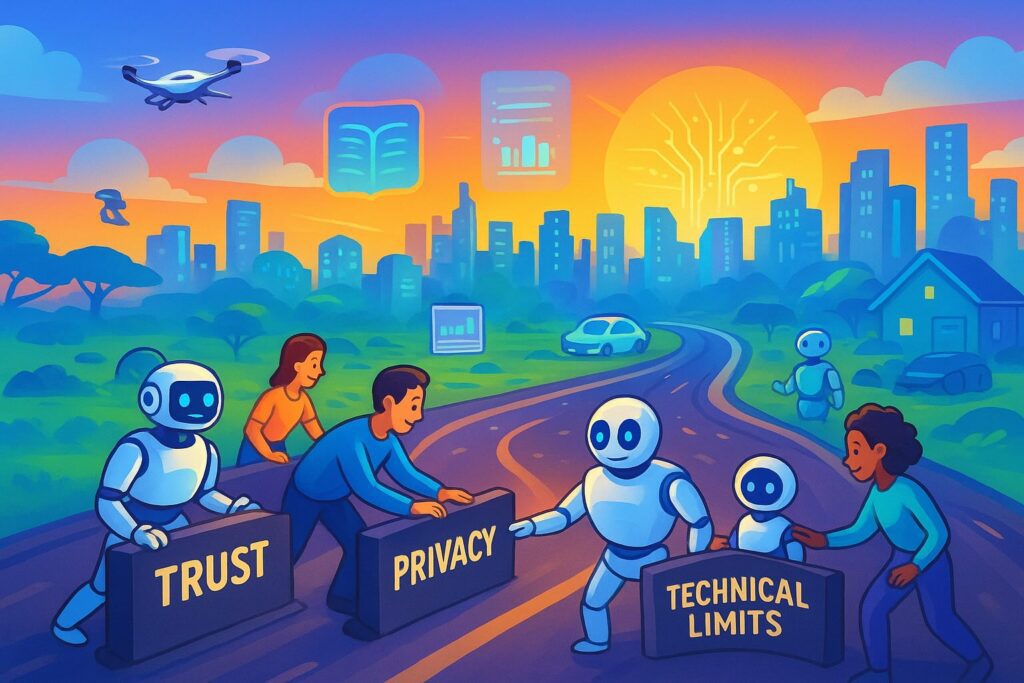
Artificial Intelligence has made incredible strides in recent years, reshaping industries and becoming a daily tool for millions. From automating tasks to generating content, AI is undeniably impactful.
Yet, despite this remarkable progress, it still hasn’t reached the level of universal adoption many predicted. So, what’s holding it back?
While AI is a driving force in many fields like content creation and it is used for automation of simple tasks, many other industries remain hesitant. The potential for transformation is immense, yet many sectors have barely scratched the surface when it comes to harnessing AI’s full power.
For instance, the world of software development uses Generative AI to produce new code, but still grapples with concerns about sharing already created sensitive company code back to the machine learning models, fearing issues with copyright laws.
In healthcare, many doctors are reluctant to hand over critical decisions to AI systems that function as unexplainable black boxes, making it hard to trust their conclusions. At the same time, patients themselves are often uncomfortable with the idea of being diagnosed or treated solely by machines, preferring the reassurance of human judgment.
Other fields, like law, film-making, and self-driving technology, face similar challenges. The potential for AI to revolutionize these industries is immense. In law, AI could analyze vast amounts of legal data in seconds, while in film-making, it could streamline production workflows and even generate creative content. In self-driving technology, AI promises to reshape transportation entirely.
Yet, concerns loom large. There are fears that AI will take jobs away from people, particularly in sectors like film, where creative roles can be replaced by generative models or even digital avatars. In law services, the idea of legal decisions being made solely by machines feels dystopian and dangerous to many, raising ethical questions about fairness and accountability.
Additionally, the security of AI systems, especially in industries like transportation, is critical – one error or breach could have catastrophic consequences.
In this post, we’ll dive into the biggest obstacles slowing AI’s path to becoming a truly universal tool – one capable of transforming industries that have yet to fully embrace its potential. We’ll explore how these barriers impact a wide range of fields and discuss why AI isn’t yet the default solution in many of them.
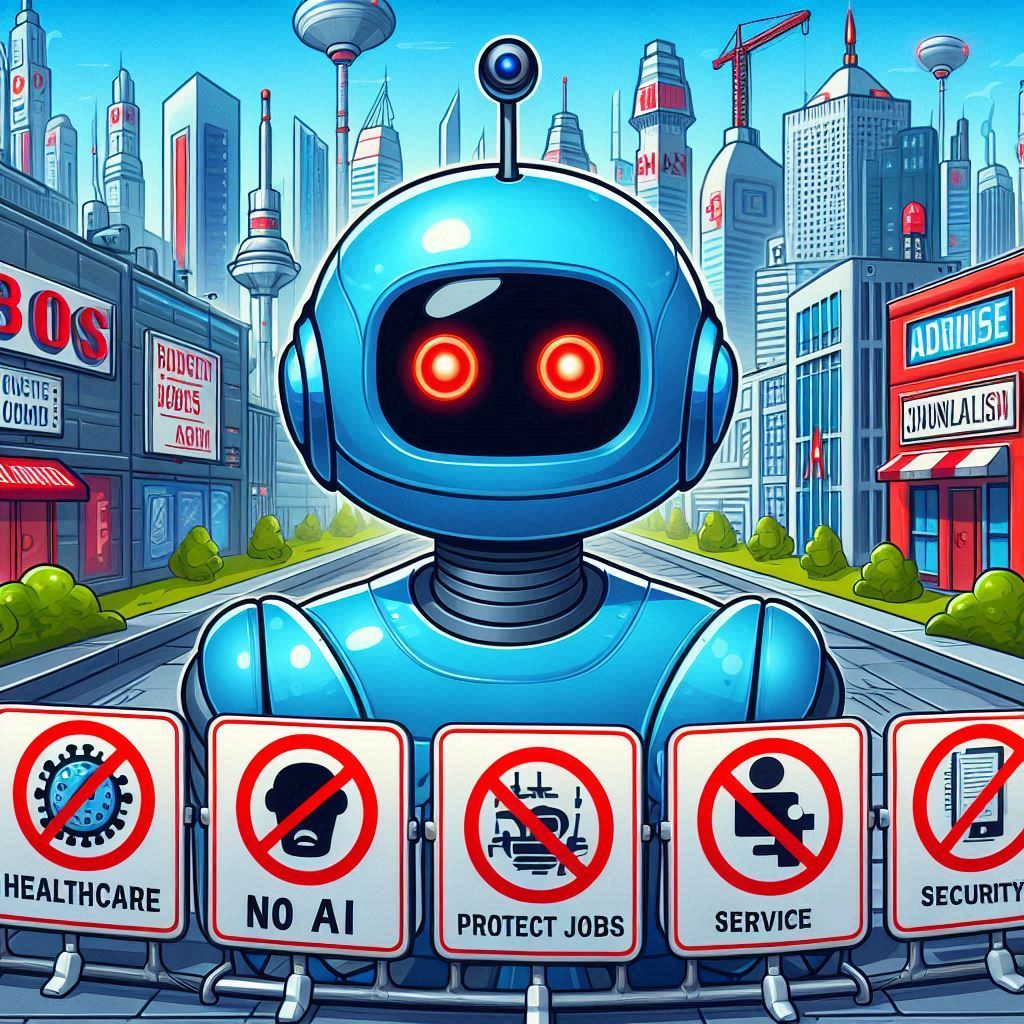
How Technological Advancements Have Always Raised Concerns
Before we dive into the current advancements in AI, let’s take a look at what the past has taught us. Throughout history, technological progress has made transformative changes across industries. And with every leap forward, there’s been one constant: fear. People have always worried about losing their jobs, their sense of security, and, more generally, their place in an unknown future.
So even though we are in a relatively new digital era, the same old fear is coming up again as this isn’t the first time humanity has faced the anxiety that comes with rapid change. We’ve explored this theme before in an earlier blog post, where technological breakthroughs always bring a mix of hope and concern. Technological progress has always brought both anxiety and opportunity, and the modern era is no exception.
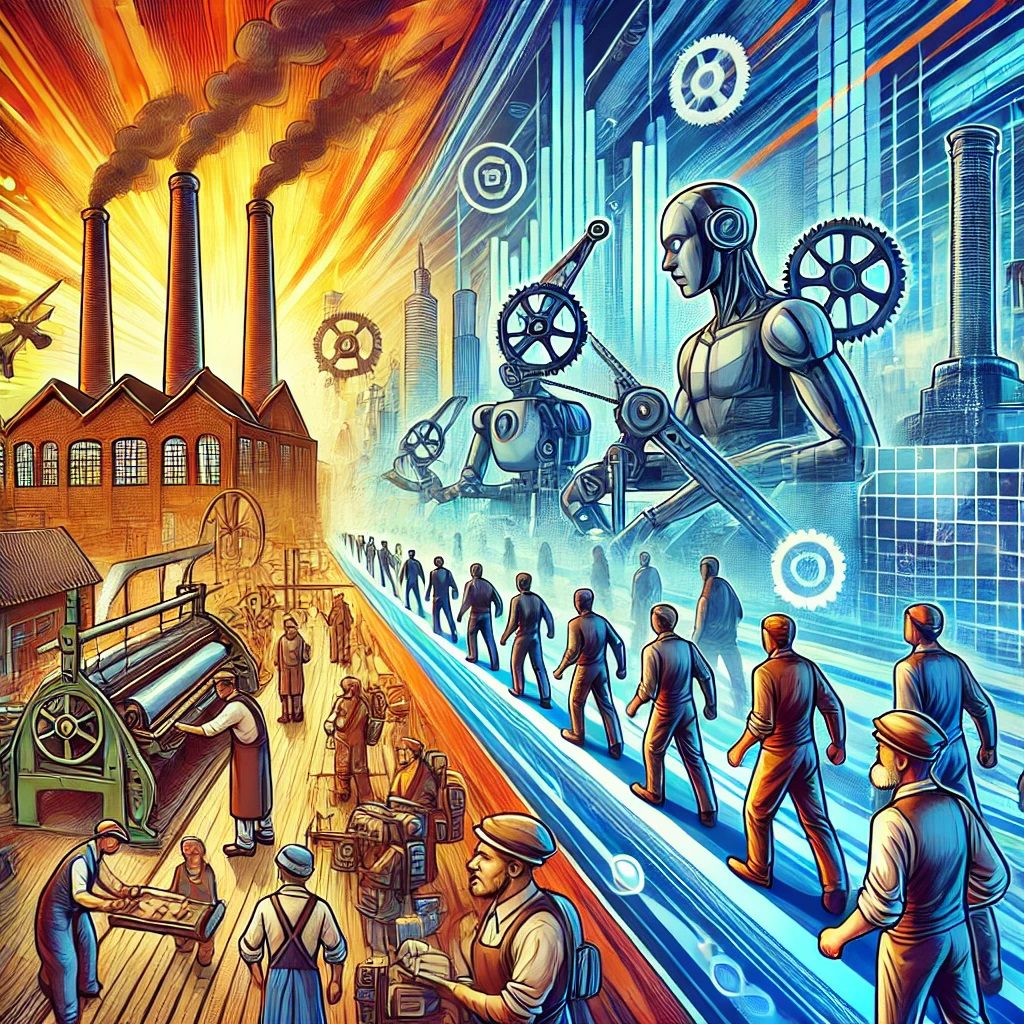
One striking example from history is already the Industrial Revolution. In the early 19th century, the textile industry was completely transformed by the invention of the power loom. Workers, particularly weavers, feared that these machines would replace them, leading to mass unemployment. Their fears weren’t entirely unfounded, as many jobs were displaced by machines.
However, while some roles vanished, new opportunities emerged. The textile industry ultimately expanded, and the demand for different kinds of jobs, like machine operators and technicians, grew rapidly. What was initially seen as a threat to employment ended up creating an entirely new labor market.
This cycle of fear and opportunity has repeated itself time and time again, whether with the advent of automobiles, personal computers, or now, AI. Every new technology threatens the status quo but also holds the potential to reshape industries and create new roles.
Unpacking the Roadblocks: Key Barriers to AI’s Widespread Adoption
Now that we’ve explored how past technological advancements sparked similar concerns, it’s time to look at AI in the present day. AI is already being used by millions, from content creation to voice assistants and recommendation systems. Its potential is immense – possibly one of the greatest in the history of technology. But despite this promise, there are significant obstacles standing in the way of AI’s widespread adoption.
One of the main barriers is that many people simply don’t trust AI. For most users, AI feels like a black box – they don’t fully understand how it works, which makes them hesitant to rely on it for important tasks. Misinformation, sensationalized media coverage, and concerns about job loss have only amplified this distrust. Without more education on what AI actually is and how it works, mass adoption will remain a challenge.
Another issue is brought up, because AI systems require vast amounts of data to train effectively. This reliance on data has raised serious concerns about privacy and security.
Many users, especially in sectors like healthcare and finance, are wary of sharing sensitive information with AI tools. The risk of data breaches or misuse is a significant hurdle, as individuals and companies are increasingly cautious about who has access to their information.
Artificial Intelligence continues to evolve also in legal areas, so regulators are grappling with how to govern its use responsibly. Ethical concerns, such as bias in machine learning models and the potential misuse of AI, have sparked debates about how AI should be implemented across different industries.
Governments and organizations are working to set rules, but without clear regulations, many companies remain hesitant to fully embrace AI. We have already covered some of the ethical challenges in a previous blog post.
Furthermore, some barriers come from AI’s technical limitations. While it’s capable of amazing feats, there’s still much room for improvement, especially in complex tasks.
In areas like self-driving cars or medical diagnostics, AI has not yet reached the level of reliability needed for widespread deployment. Until these systems are more robust and user-friendly, adoption in industries with high stakes will be cautious at best.
And finally, perhaps the biggest obstacle of all – people’s natural resistance to change. Many individuals are simply comfortable with the way things are, and new technologies, no matter how revolutionary, often face skepticism or outright rejection.
Whether it’s fear of the unknown, a reluctance to adapt to new systems, or concerns over the impact on society and daily life, AI, like all disruptive technologies before it, must prove itself many times before gaining widespread trust and adoption.
So how can we responsibly tackle these roadblocks? With public trust and understanding still limited, data privacy concerns growing, and technical limitations holding back AI’s potential, how can we move beyond these barriers?
Can we make AI systems more transparent and secure to build trust? Or is the pace of change simply too fast for most people to embrace? These are the key questions that must be answered as we look ahead to the future of AI.
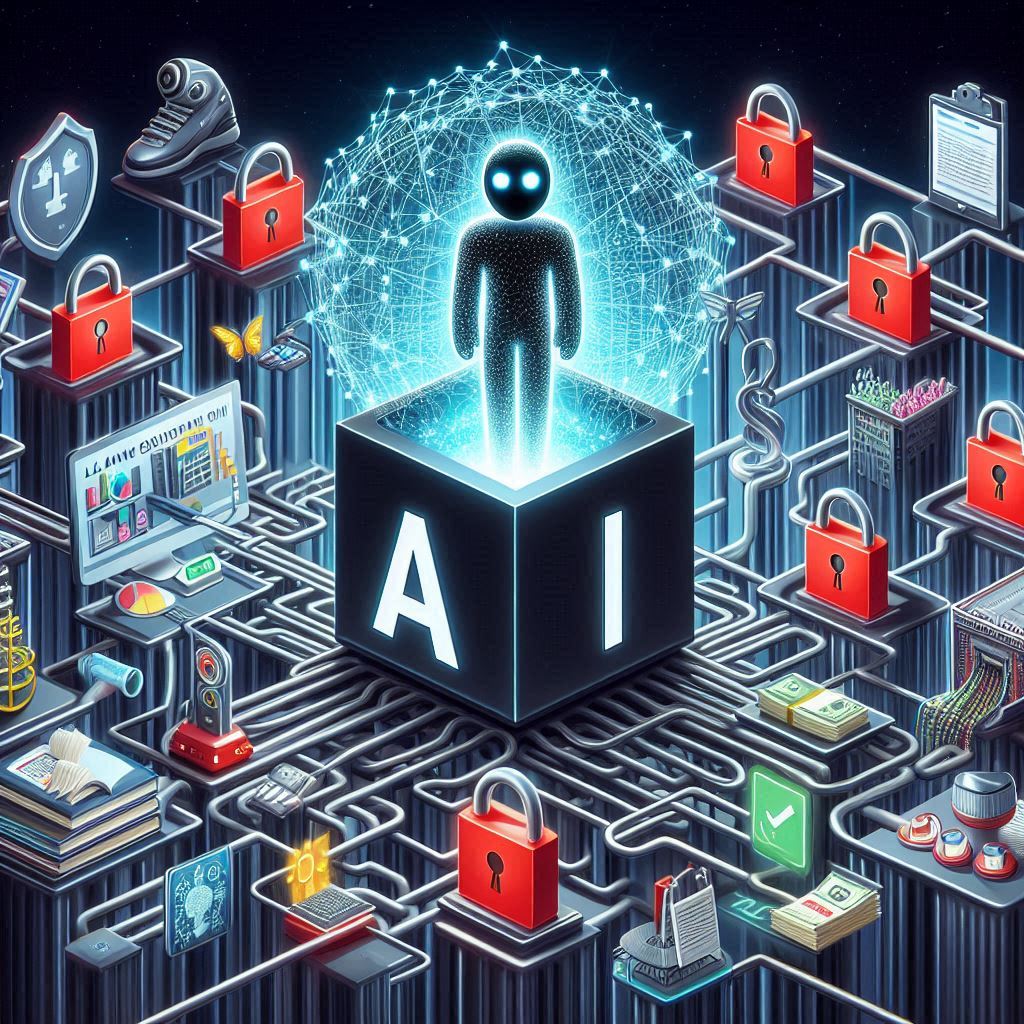
Breaking Down Barriers: How to Pave the Way for AI’s Future
Now that we’ve explored the main roadblocks preventing AI’s widespread adoption, let’s shift focus to how these barriers can be knocked down.
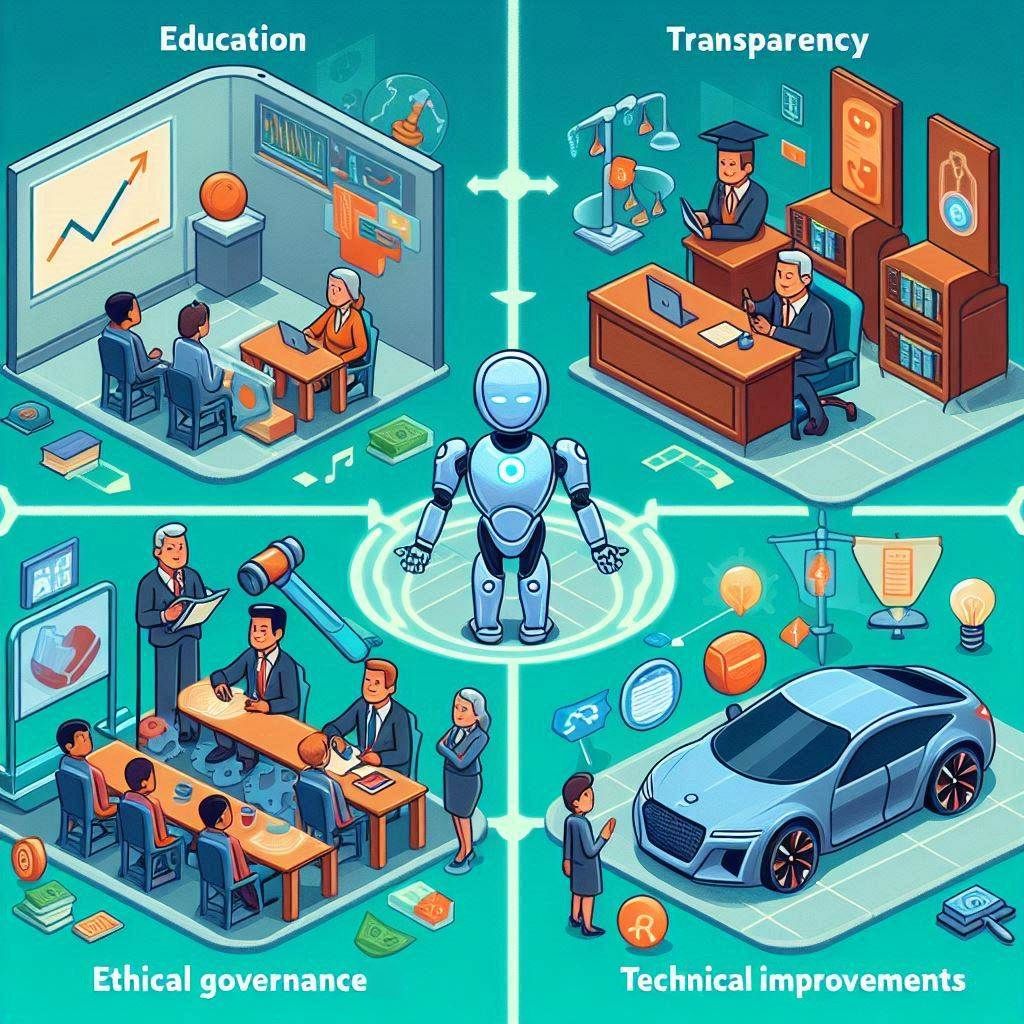
The key to overcoming these challenges lies in combination of education, transparency, ethical governance, and technical improvements. Each of these elements plays a vital role in shaping a future where AI can be trusted and fully embraced across industries.
Let’s start with one of the biggest obstacles to AI adoption, which is the general public’s misunderstanding of what AI really is. Until it seen as a mysterious, all-powerful entity, which fuels unnecessary fear, it will be hard for people to adopt potential usage in their lives.
Educating people about what AI actually is, what it can and cannot do, and its real-world applications can alleviate these concerns. By making AI more accessible and understandable, we can build trust and encourage responsible use.
Another crucial factor for AI’s widespread acceptance is transparency. Whether it’s how data is used or how AI models make decisions, companies need to provide clear, understandable information. While it’s relatively straightforward to explain how data is used, the challenge lies in revealing exactly how AI makes decisions, leaving plenty of room for improvement.
Preventing the misuse in areas like politics – where there’s a risk of deepfakes and misinformation – is critical. By being transparent about AI’s limits and potential risks, organizations can reduce fear and foster greater confidence in AI systems.
Establishing ethical guidelines and regulations is also very important in order to prevent harmful AI outcomes. For instance, the use of AI in self-driving cars must be regulated to avoid accidents. It will be very challenging to create such regulations, because politicians don’t have the best track record when it comes to novel technology regulations.
But the public needs to trust that AI systems are being used within law and that there are safeguards in place to prevent dangerous scenarios. Clear ethical governance will ensure that AI is deployed in a way that benefits society while minimizing harm.
And finally, despite its rapid growth, AI still has technical limitations. The technology needs to become more reliable before it can be fully integrated into high-stakes industries like healthcare or transportation. Preventing accidents, such as the already mentioned self-driving cars, is essential to gain public trust.
Continuous improvements in AI development, coupled with advancements in data handling and computational power, will make AI safer and more efficient. This technical progress is necessary for AI to reach its full potential.
Only by addressing these challenges head-on can we unlock the full potential of AI and integrate it more fully into industries and lives that have yet to embrace it.
As we make progress in educating the public, ensuring transparency, establishing ethical guidelines, and advancing the technology itself, we can begin to break down the barriers standing in AI’s way.
In Summary: Why AI Will Eventually Be Everywhere
As we’ve seen throughout history, the adoption of new technology is rarely sudden. It takes time for people to fully integrate innovations into their daily lives. And AI is no different.
In this post, we’ve explored some of the major roadblocks that are slowing its widespread adoption, from lack of public trust to technical limitations and privacy concerns. Each of these obstacles presents a unique challenge, but we’ve also discussed ways to address them, such as promoting transparency and ethical governance to build trust.
The potential for AI to eventually be everywhere is undeniable. As infrastructure improves, and as internet and smartphones continue to become more accessible, the barriers to AI adoption will weaken.
While the road to mass adoption may be slow, it seems inevitable that AI will become a ubiquitous tool in industries, businesses, and everyday life.
Looking ahead, it’s hard not to be optimistic. Even though AI needs to address many different challenges, we can continue to break them down – through education, transparent development and technical advancements. The technology has the power to change how we work, live, and interact in profound ways.
So, what do you think are the main roadblocks for AI adoption? Will we overcome these obstacles, or will AI remain an underused tool with vast untapped potential?
Share your perspective on this fascinating journey in the comment section below.