In the span of just few years, artificial intelligence has leaped from impressive to extraordinary. What used to be slow, incremental progress over the course of decades has suddenly accelerated into rapid, groundbreaking advancements.
For many years, AI seemed like a futuristic promise, showing flashes of brilliance but delivering largely mediocre results. Now, it’s as if AI has hit its stride, advancing at a speed that’s left even the most optimistic experts in awe.
But how can these improvements happen so quickly? Is this the typical S-curve we often see in technological breakthroughs, where after years of gradual progress, a tipping point is reached, and exponential growth follows? Or is AI benefiting from something entirely new—an explosive combination of big data, powerful algorithms, and vast computational power?
What’s clear is that AI is no longer just a topic for geeks and tech enthusiasts. It’s now a mainstream tool, one that’s helping businesses and individuals at an unprecedented pace. Consider this: AI platforms have become some of the fastest-growing technologies in history, with the most famous one, ChatGPT, reaching one million users in record time for ANY online platform in history.
And the crazy part? Everyone can only expect today’s AI to gradually become better. As mind-blowing as AI is right now, it’s only going to get faster, smarter, and more capable with every passing day.
So, in today’s blog post, let’s dive into how and why AI is improving at such an extraordinary pace, and what that means for the future of technology. We will first briefly look on general advancements in AI during last few decades and then we will focus specifically on Generative AI.
The Leap from Limited to Limitless: AI Finally Breaks Through
Let’s quickly summarize the general development of AI from the inception of this field. For decades, Artificial Intelligence has been a technology surrounded by big promises and high hopes. Since its early days, experts have predicted that AI would revolutionize industries, solve complex problems, and transform our daily lives.
But the journey has been far from smooth. AI has experienced its fair share of ups and downs, with periods of hype followed by disappointment, often leaving the general public wondering if its potential would ever be realized.
During these years of fluctuation, AI certainly found some interesting applications—autonomous systems, machine learning models, and data analytics were powerful tools, but they remained niche, used mostly in specialized industries and research labs.
The broad public, while hearing about AI, rarely interacted with it directly. It was still a technology for the future, not something integrated into everyday life.
However, everything seems to have changed in the past few years. Today, not only are tech companies pushing AI as a top priority, but ordinary people are also embracing it in ways we hadn’t imagined before.
From chatbots and virtual assistants to AI-powered photo editing tools and content generation platforms, AI is now part of the daily routine for millions. Managers in nearly every industry are discussing the vast possibilities AI presents, while consumers are adopting it at record rates.
How did this happen? How did AI go from being a specialized tool to one of the most used technologies in the world, practically overnight? The answer lies in the incredible acceleration AI has experienced over the last few years.
Breakthroughs in computational power, the availability of vast datasets, and the refinement of algorithms have pushed AI forward at an astonishing pace. What once seemed like distant potential has now become a tangible reality, with AI applications evolving so quickly that it’s hard to keep up. And it shows no signs of slowing down.
The AI that once had limited practical use in specialized tech companies is now demonstrating limitless potential in many new fields. Its ability to solve common issues in everyday life has reached a level that few could have predicted just a few years ago. AI has truly made the leap from being a technology of the future to a driving force of today’s world.
The Rise of Generative AI: The Driving Force Behind Transformation
As we’ve explored AI’s rapid rise as a field, it’s time to shift our focus to the real catalyst behind its explosion in recent popularity – generative AI. It’s no exaggeration to say that this technology is the main reason why AI has captured the public’s attention in the last few years.
The launch of ChatGPT marked a pivotal moment, introducing a new digital era. With its ability to generate human-like text, ChatGPT demonstrated the incredible potential of generative AI, making it accessible to millions.
However, when you take a closer look at the field, you’ll find that large language models (LLMs) like GPT (Generative Pre-trained Transformer) have been in development for years. Early iterations, such as GPT-2, hinted at the possibilities, but they were far from the game-changer that GPT-3 and later versions became.
So, how did we go from GPT-2 – useful, but not revolutionary – to GPT-3 and beyond, which seemed to change everything overnight? The leap in capabilities can be attributed to two major factors: massive computational power and the enormous datasets used to train these models.
Generative AI, especially LLMs like GPT-3, requires an astonishing amount of computational resources. Advances in hardware, such as the development of specialized hardware, allowed for the kind of deep learning and training that earlier models couldn’t achieve.
In parallel, the sheer volume of data available for training exploded. The internet was already massive and served as an invaluable source, providing the variety and complexity of information needed to create a model capable of generating coherent and contextually accurate outputs.
This sudden leap in capabilities follows the pattern of the S-curve, a common phenomenon in technology adoption. For years, AI remained in the research phase, slowly building momentum. Then, as breakthroughs in data availability and computational power aligned, the field hit its tipping point—moving from slow growth to exponential advancement. Generative AI, with its creative potential, is now riding the steepest part of the S-curve, and there’s no sign of it slowing down.
In just a few short years, generative AI has gone from a niche research area to a tool that anyone can use. Whether it’s for content creation, customer service, or even coding, the possibilities are limitless – and this is just the beginning.
Practical Examples: How GPT and DALL-E Improved at Lightning Speed
Let’s now take a closer look at some real-world examples of how AI has evolved over the past few years. The progress is nothing short of astonishing, and the most remarkable part is how quickly these transformations have occurred. In many cases, the leap from one generation of AI to the next happened in a matter of months.
The Text Revolution with GPTs
When we compare the quality of text generated by GPT-2 versus GPT-3 and beyond, the difference is like night and day. GPT-2 could produce some coherent sentences, but it often struggled with longer passages, context, and relevance. The generated text lacked depth and would quickly fall into repetitive or nonsensical patterns. It was useful for small, simple tasks but felt limited.
For example, when prompted with: “This is a very short story about a dog who becomes a superhero,” GPT-2’s response looked something like this:
“This is a very short story about a dog who becomes a superhero. This story was originally posted here. It is a story I’ve had kicking around in my head for a while. I wanted to tackle a superhero, which is more difficult and not always as exciting a subject than most of the others I’ve had in mind. I don’t want to give too much away, but I wanted to try something a little less standard than most, and hopefully give it a little something extra. I have a couple of other characters that I’ve created, and there are others I would love to do.
However, I think that the story has to be something unique, and I don’t feel like I’ve got the story I’d be happy with for a sequel. I know that there are many out there looking for their superhero story, and I’m sure there are more here with no connection to my characters and their world. I’m actually interested in writing a non-superhero story, if it’s something different and more personal.”
While this is a grammatically correct response, it’s basicaly just bunch of words without deeper connection, it lacks the creativity or detail you’d expect from a compelling story.
Fast forward to GPT-4, and the same prompt yields something much more sophisticated:
“Max, an ordinary golden retriever, lived a simple life chasing sticks and playing in the park. One day, while digging near an old tree, he unearthed a glowing stone. The moment he touched it, everything changed. Max suddenly gained incredible strength, the ability to run faster than the wind, and even communicate with humans!
Determined to use his newfound powers for good, Max donned a red cape and became “Barkman,” the city’s silent protector. From rescuing lost children to stopping runaway cars, Barkman’s legend grew. Though he never asked for fame, everyone in the city knew they could count on their four-legged hero to be there when danger struck.”
The difference is like night and day — GPT-4 not only understands narrative structure but also adds depth, detail, and character development that GPT-2 simply couldn’t match.
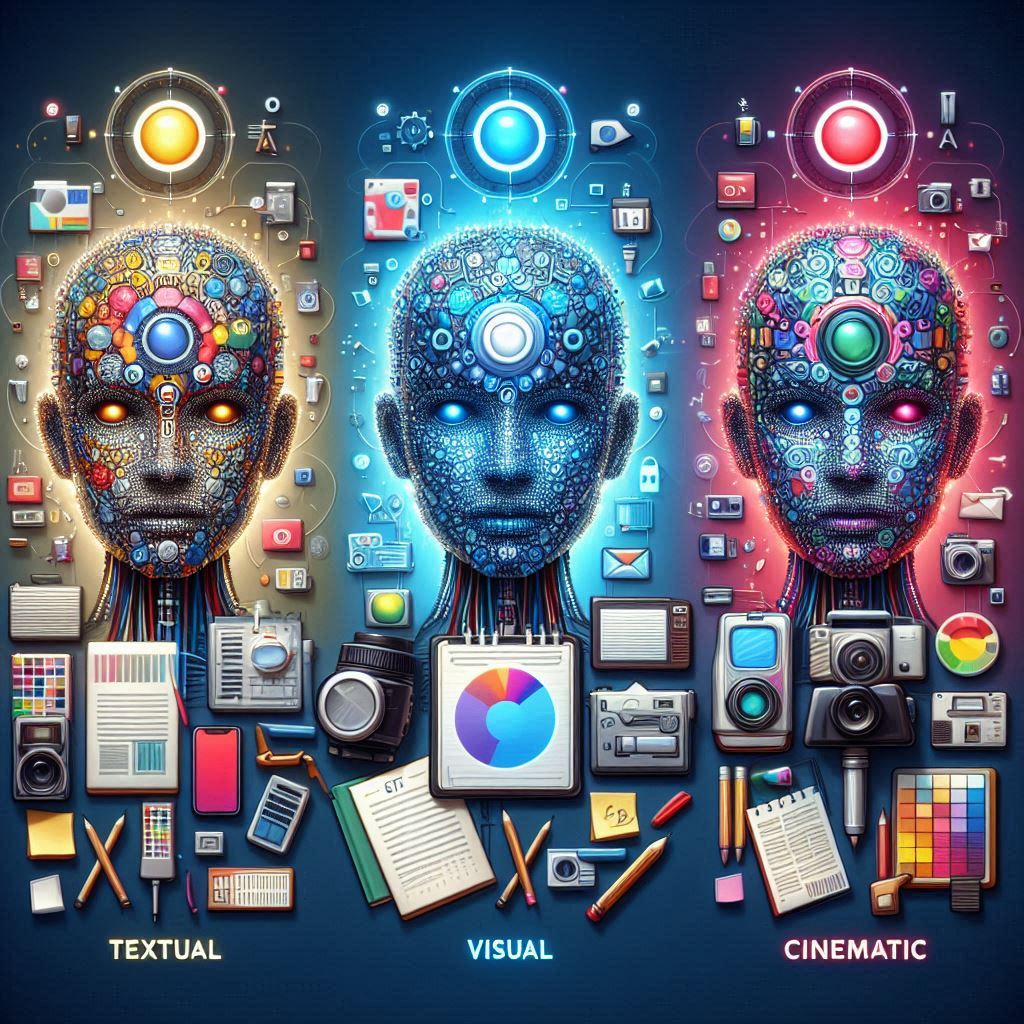
DALL-E: Image Generating Powerhouse
Moving from text to images, the advancements between DALL-E 2 and DALL-E 3 are not that dramatic, but still noticeable. When DALL-E 2 launched, it was an exciting tool, but its limitations were evident. The images it produced were sometimes blurry, distorted, or simply unusable. Fine details like faces, hands, and backgrounds were difficult for the model to handle and the provided prompts weren’t sometimes followed desirably.
For instance, when prompted with: “Generate a realistic photography: a koala dunking a basketball,” DALL-E 2 produces a nice image of an animal that looks like dunking a basketball, but it is hard to tell that if it is a koala and the picture is a little blurry. The image is from OpenAI examples, as the model is not freely available anymore.

Now, with DALL-E 3, the image is significantly improved. The same prompt generates an image that looks polished, with more details and much better focus and a clear picture of koala and a beautifully lighted scene. Furthermore, it is also possible to choose which style we would like the image to be in and the newer version will usually follow our instruction perfectly.

These improvements happened in just one year, as DALL-E 2 was first released to public in September 2022 and DALL-E 3 was released in September 2023. The leap from DALL-E 2 to DALL-E 3 shows how quickly AI-generated visuals are still evolving.
Video generators: From Laughable to Hollywood-Ready
Now let’s talk about AI-driven video generating platforms. Just a year ago, the quality of AI-generated videos was often the subject of jokes. The characters were stiff, the animations were awkward, and the overall production felt amateurish at best.
For example, you can look at the famous video output from Modelscope Text2Video generator in which Will Smith is eating spagetti. The video contains jerky motion, unreal movements of many elements in the scene and generally poor quaility of the footage. It was enough to get the idea across, but far from impressive.
Fast forward to today, and these tools have made incredible strides. Now, the same prompt produces video quality that’s slowly approaching Hollywood standards. The scene is much more polished, the camera isn’t shaking and the animation is smooth and dynamic.


This upgrade in such a short period is a testament to how rapidly AI-driven creative tools are evolving. What was laughable a year ago is now producing results that can rival traditional production methods.
These examples clearly demonstrate the astonishing pace of AI development. In basically just a few months, we’ve seen models like GPT and DALL-E go from limited or even laughable results to delivering high-quality, professional outputs. It’s no wonder that AI has captured the public’s attention — it’s improving at lightning speed, and it probably is not slowing down anytime soon.
Why AI’s Rapid Growth Matters
As we’ve seen throughout this journey, AI’s ability to evolve quickly is nothing short of revolutionary. The progress we’ve witnessed, from the transformation of text generation and visual creation to the production quality of video, has been incredible.
But beyond the technical marvel, this rapid growth is already impacting countless sectors in profound ways. In business, AI tools are streamlining operations, automating complex tasks, and enabling companies to make data-driven decisions faster than ever before.
In healthcare, AI is improving diagnostics, discovering new treatments, and even assisting in surgeries with unprecedented precision. The main barrier to progress in healthcare is not the technology itself, which is advancing very fast, but the reluctance of some doctors and patients from AI being used for treatment
The creative industries are being redefined by AI’s ability to generate content, art, and even music, opening new doors for innovation and expression. And in education, AI is personalizing learning experiences, providing students with the tools they need to succeed, no matter where they are in the world.
Just a few years ago, chatbots and AI systems were often seen as little more than gimmicks – novelties that provided minimal value. But today, AI has become one of the most useful and essential tools across a wide range of fields.
What was once dismissed as impractical is now driving innovation, solving real-world problems, and fundamentally changing the way we work and live. So, why does AI’s rapid growth matter? The answer lies in its potential to keep transforming society at an accelerating pace.
Every day, we are seeing new breakthroughs, and if AI is improving this quickly today, imagine where it will be in five or ten years – are we ready for it?
The Road Ahead: Reflecting on Progress and Potential
What once took decades to achieve is now happening in a matter of months. The rapid pace of AI’s evolution has been nothing short of extraordinary, and there’s no sign that this speed is slowing down. As AI continues to advance, it will reshape industries, economies, and our daily lives in ways that we are only just beginning to understand.
In this post, we explored the key factors behind this explosive growth, including the increase in computational power, the vast amounts of data now available for training, and the breakthroughs in generative AI that have made tools like GPT and DALL-E so transformative. These factors have catapulted AI from niche research to a technology that millions use daily.
But as we marvel at the potential, it’s natural to ask: Is the development too fast and dangerous? Some might say yes, but it’s hard to deny the enormous potential that AI tools hold. While there are risks, the benefits we’ve already seen – from improved productivity to creative breakthroughs – are hard to overlook. AI always had the potential, but now it’s finally showing results that the broad public can appreciate.
Looking forward, the S-curve of AI’s growth may still have room to climb. Further advances in computation and the scale of data could push AI’s capabilities even further. We’re not at the end of this journey yet, and we might see even more rapid improvements in the near future.
The improvements we’ve seen in recent years – more realistic images, fluent video generation, and generated application cod – are just the beginning. Soon, these AI systems will be virtually bug-free, creating applications that are more reliable and more efficient than ever before.
The same goes for image and video generation, which will become even more realistic and seamless, eliminating the mistakes and glitches that were once common in earlier versions.
Beyond these technical advancements, AI will probably become deeply integrated into our daily lives. As it becomes more powerful and accessible, it will become as essential to our daily routines as smartphones are today.
We will also probably see significant changes in the job market. Just as the Industrial Revolution reshaped labor, AI’s accelerated pace could lead to shifts in how we work. And given the current pace, this shift may happen sooner than we think.
So, what do you think of the rapid improvements in AI development and its usage? Do you believe this pace of advancement is the new normal and more groundbreaking changes are soon to come? Let me know your thoughts in the comments below and share your perspective on this fast-evolving field.