The debate over AI and the future of work centers on whether intelligent systems will displace human jobs or amplify human productivity. Understanding current data and expert forecasts helps separate hype from reality about machine impact on employment.
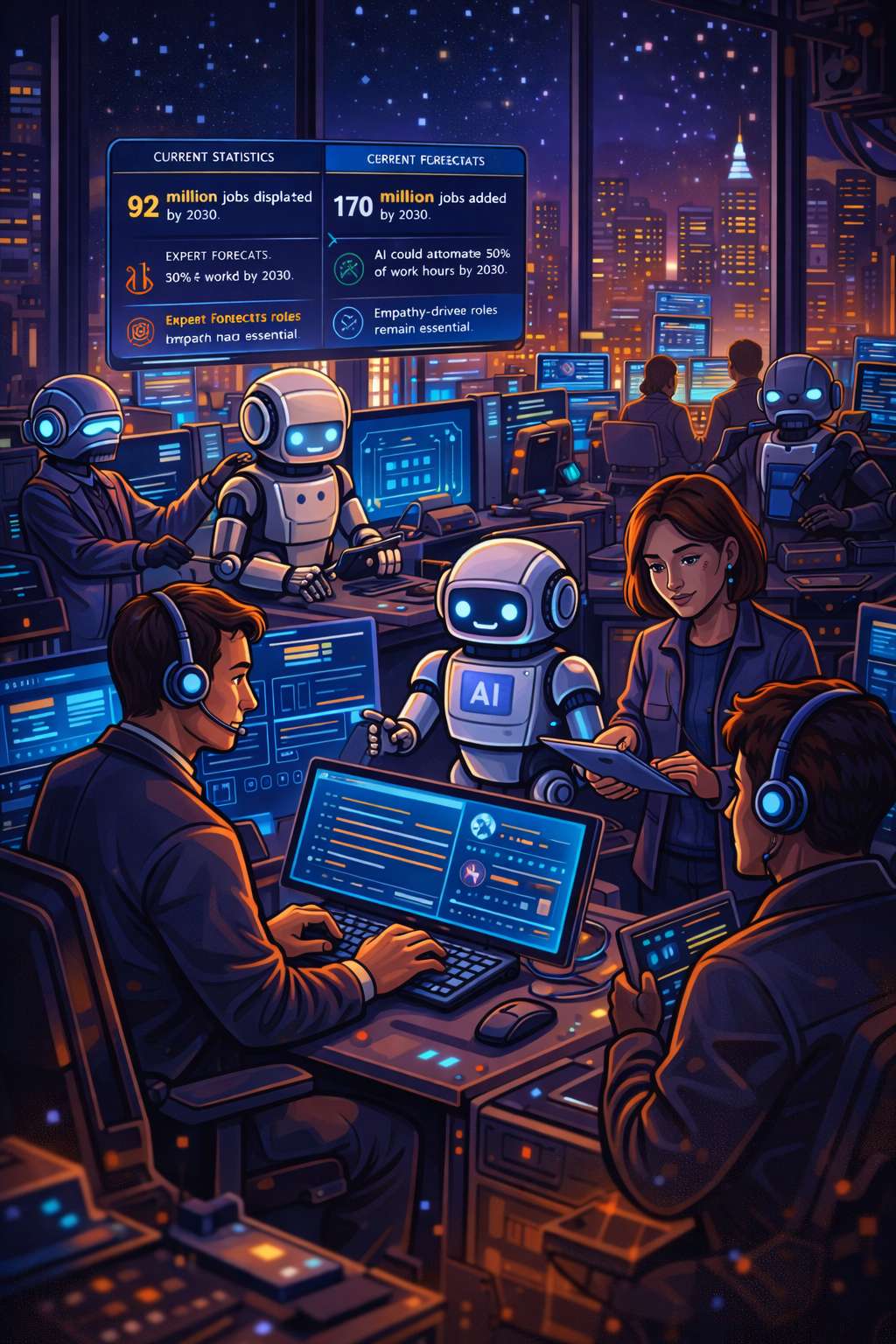
As the world hurtles towards 2030, a crucial milestone in the journey of AI and the future of work has been reached. The World Economic Forum has released a projection that AI is set to displace 92 million jobs by 2030, but also create 170 million new ones, resulting in a net gain of 78 million roles globally. This stark contrast leaves us wondering – what exactly is happening, and what does it mean for the human workforce?
McKinsey research has shed some light on this question, suggesting that up to 30% of work hours could be automated by 2030. But here’s the twist – automation is not about replacing jobs entirely; it’s more about reshaping job content. This shift indicates that while AI will certainly disrupt traditional job structures, it won’t eliminate most jobs outright.
The truth is, routine, repetitive tasks are the ones most at risk of automation. These tasks are easily replicable, and AI can perform them faster, more accurately, and at a lower cost. On the other hand, roles requiring empathy, creativity, and complex judgment are more resistant to AI. This is because these skills are uniquely human and require the nuance and understanding that AI systems currently lack.
As we move forward into the era of AI and the future of work, one thing is clear – the future of employment is not a zero-sum game. While AI will undoubtedly change the landscape of work, it also presents opportunities for humans to upskill, reskill, and adapt to the changing job market. By understanding the impact of AI on the workforce, we can make informed decisions about our futures and ensure that the benefits of technological progress are shared by all.
The Impact of AI on Productivity
As artificial intelligence continues to revolutionize the way we work, one thing is clear: the future of work is here, and it’s inextricably linked to AI and the future of work. But what does this mean for businesses and employees alike?
The answer lies in the ability of AI to augment human work. By automating tasks like data processing, AI frees employees to focus on higher-value strategic work that requires creativity, empathy, and problem-solving skills. This is where the real value lies – in the human touch that can’t be replicated by machines.
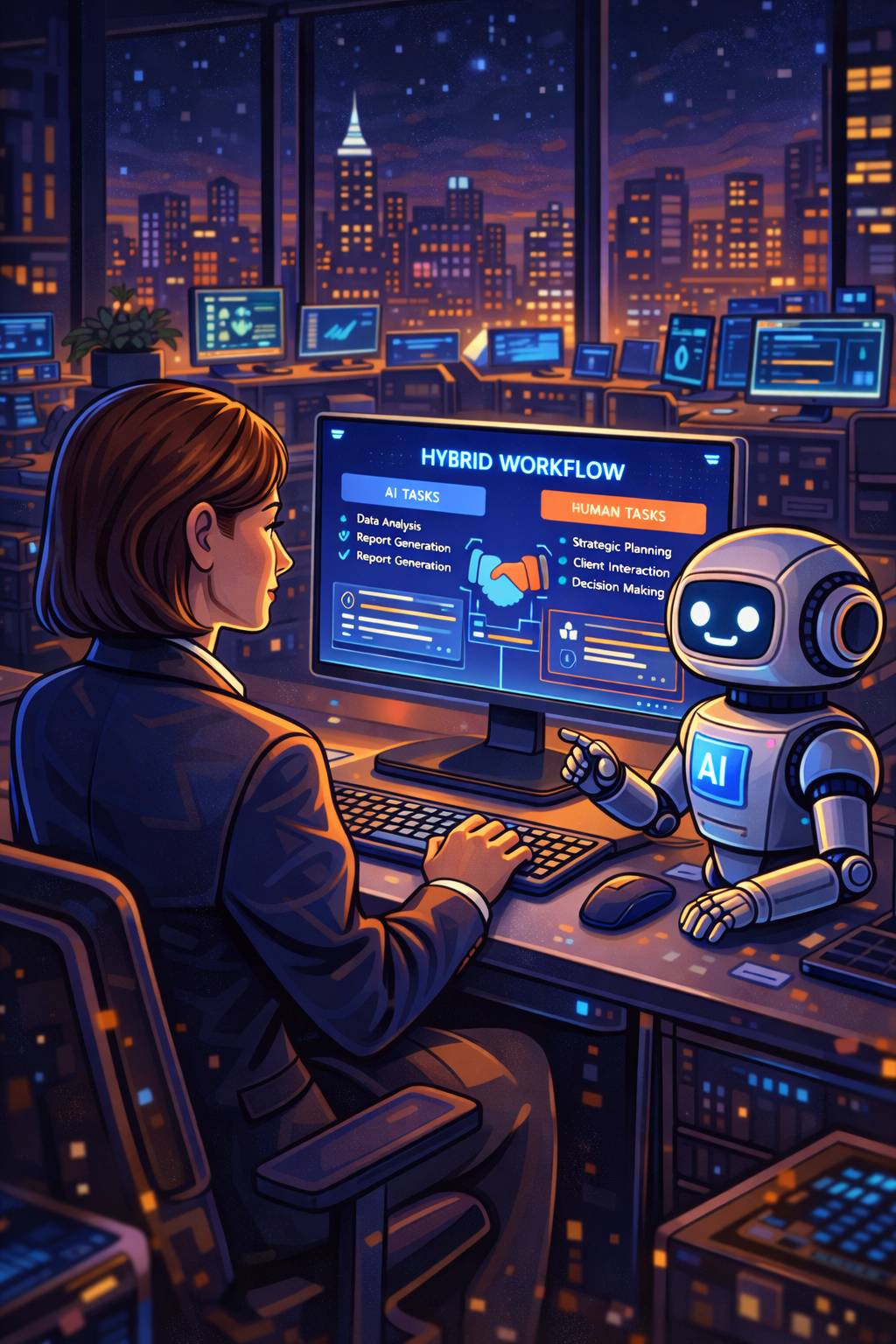
Companies are increasingly combining human oversight with AI tools, using hybrid models to maintain quality and empathy in service roles. This approach allows businesses to leverage the strengths of both humans and machines, creating a more efficient and effective workflow. By working together, humans and AI can deliver exceptional results that meet the evolving needs of customers.
Industry experts emphasize that humans who leverage AI will outperform those who do not, underscoring the importance of adaptation in the face of technological change. Those who resist AI will be left behind, while those who adapt and learn to work with AI will thrive. In this sense, AI is not a replacement for human workers, but a tool that can amplify their abilities and enable them to achieve greater things.
The impact of AI on productivity is undeniable. As businesses continue to invest in AI and automation, we can expect to see even greater efficiencies and innovations in the years to come. By embracing this change and working together with AI, we can create a brighter, more productive future for all.
Challenges and Concerns
As AI continues to transform the way we live and work, it’s becoming increasingly clear that its impact extends far beyond the realm of technology. Without reskilling and policy support, AI could contribute to wage inequality and structural workforce challenges. The consequences are far-reaching, and experts are sounding the alarm.
One major concern is the fear of job replacement. Many workers acknowledge the benefits of AI, such as increased productivity and reduced stress, but can’t shake the feeling that their jobs are at risk. This fear is understandable, given the rapid pace of technological change. However, ignoring the underlying issues may only exacerbate the problem.
Experts warn that ignoring the impact of AI and the future of work could lead to a perfect storm of social and economic challenges. As AI assumes more tasks and responsibilities, some workers may find themselves facing a future without a job. The consequences would be felt across communities, with widening income gaps and reduced economic mobility.
The reality is that AI is not just a tool, but a catalyst for change. It’s forcing us to rethink the way we work, and the role of humans in the process. By acknowledging the challenges and concerns, we can start to address them head-on. This means investing in education and training programs that prepare workers for an AI-driven future.
It’s time to take a proactive approach to the impact of AI and the future of work. By working together, we can mitigate the risks and ensure that the benefits of AI are shared by all. The future of work is uncertain, but one thing is clear: we must act now to create a more equitable and sustainable future.
Expert Forecasts and Predictions
The future of work is rapidly unfolding, with AI at the forefront of this transformation. While some may fear that AI will replace human workers, the facts suggest a more nuanced reality. The World Economic Forum projects a net gain of 78 million jobs globally by 2030, with AI creating new opportunities and displacing some jobs. This shift is not a zero-sum game, where some win and others lose, but rather an evolution of the workforce where humans leverage AI to outperform their peers.
McKinsey research suggests that AI could automate up to 30% of work hours by 2030, reshaping job content rather than eliminating most jobs outright. This means that humans will need to adapt to new roles and responsibilities, but it also presents an opportunity for workers to upskill and reskill. The key to success in AI and the future of work lies not in replacing humans, but in augmenting their capabilities with AI.
Industry leaders emphasize that humans who leverage AI will outperform those who do not, underscoring the importance of adaptation over replacement. This is not a question of whether AI will disrupt the workforce, but rather how workers will respond to this disruption. Those who can harness the power of AI will be the ones to thrive in the years to come, while those who resist will risk being left behind.
As we navigate the complex landscape of AI and the future of work, it’s essential to focus on the opportunities presented by this technology. By embracing AI and leveraging its capabilities, humans can unlock new levels of productivity, creativity, and innovation. The future of work is not a destination, but a journey, and one that requires us to adapt, evolve, and thrive in a world where AI is increasingly integral to our daily lives.
Combining Human and AI Capabilities
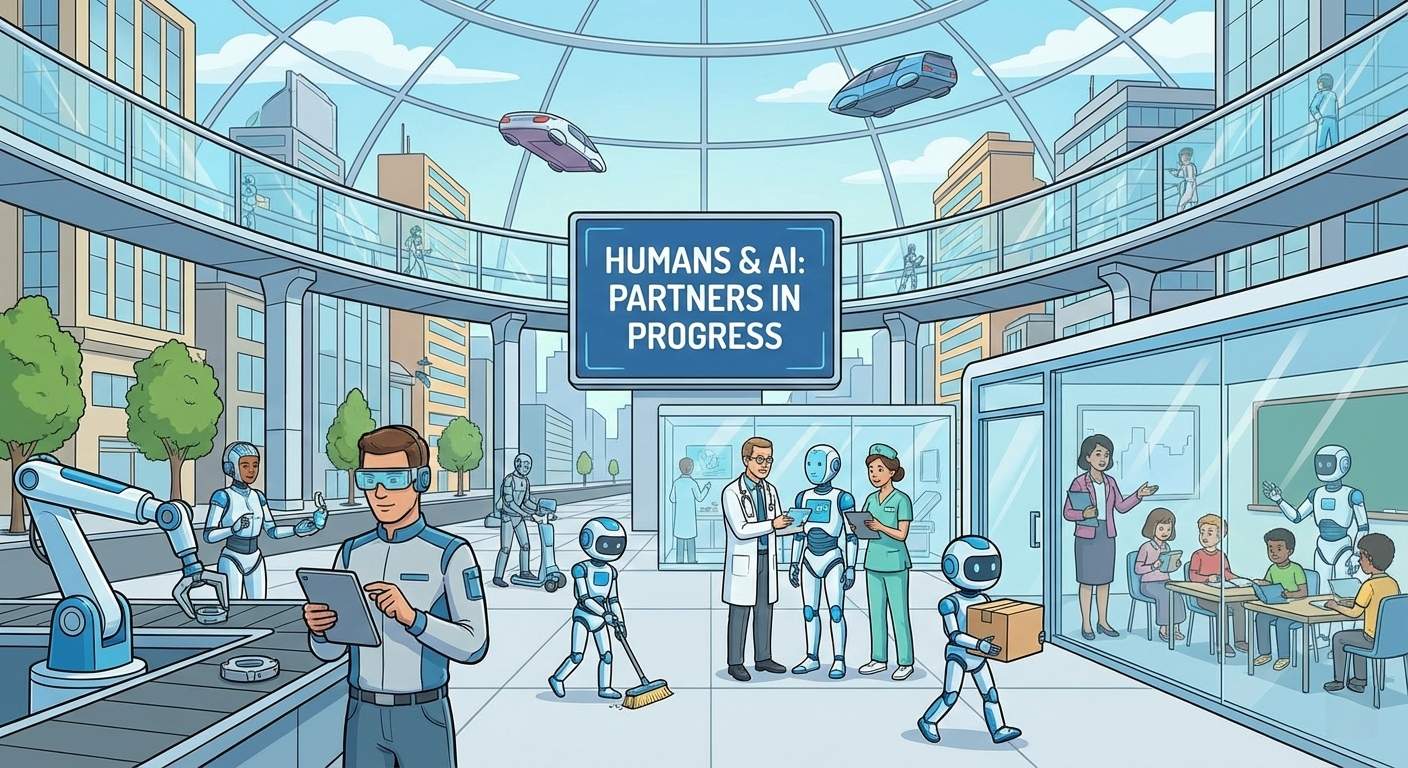
Companies are increasingly combining human oversight with AI tools, using hybrid models to maintain quality and empathy in service roles. This strategic approach allows businesses to leverage the strengths of both humans and machines, creating more efficient and effective operations. By automating repetitive and mundane tasks, human workers are freed to focus on higher-value tasks that require creativity, empathy, and problem-solving skills.
AI is augmenting human work by automating tasks, freeing employees to focus on higher-value strategic work. This shift in focus enables organizations to drive innovation, improve customer experiences, and stay competitive in the market. Moreover, human-AI collaboration is becoming a key differentiator for businesses, setting them apart from those that rely solely on technology.
Industry experts emphasize the importance of human-AI collaboration in addressing the challenges of AI and the future of work. As machines take on more routine tasks, humans must develop the skills to work alongside AI systems, ensuring that work remains meaningful and fulfilling. By embracing this collaboration, businesses can create a more sustainable and adaptive work environment that prepares employees for the demands of the future.
Hybrid models that combine human oversight with AI tools are proving to be a game-changer in industries such as customer service, healthcare, and finance. By integrating AI into their workflows, companies can improve accuracy, reduce response times, and enhance customer satisfaction. As the world navigates the complexities of AI and the future of work, one thing is clear: human-AI collaboration will be the key to unlocking productivity, innovation, and success.
Nothing Stops the Change
As the debate over AI and the future of work continues to unfold, it’s essential to separate the hype from the reality. While some experts predict that intelligent systems will displace human jobs, others argue that AI will amplify human productivity, leading to new opportunities and innovations.
The truth lies somewhere in between. Understanding current data and expert forecasts is crucial in grasping the impact of machine learning on employment. According to recent studies, AI is likely to augment certain jobs, making them more efficient and effective, but it will also create new job categories that we cannot yet imagine.
The key to addressing the challenges of AI and the future of work lies in human-AI collaboration and adaptation. By working together, humans and AI systems can unlock new levels of productivity, creativity, and innovation. This collaboration will require a fundamental shift in how we approach work, education, and skill development.
As AI and the future of work continue to evolve, it’s essential to prioritize upskilling and reskilling programs that prepare workers for the changing job market. By investing in human capital and fostering a culture of lifelong learning, we can ensure that workers are equipped to thrive in an AI-driven economy.
Ultimately, the future of work is not a zero-sum game, where one side wins and the other loses. Instead, it’s a chance for humans and AI systems to collaborate, adapt, and create new opportunities that benefit everyone. By embracing this collaboration, we can unlock the full potential of AI and create a brighter future for work and society as a whole.