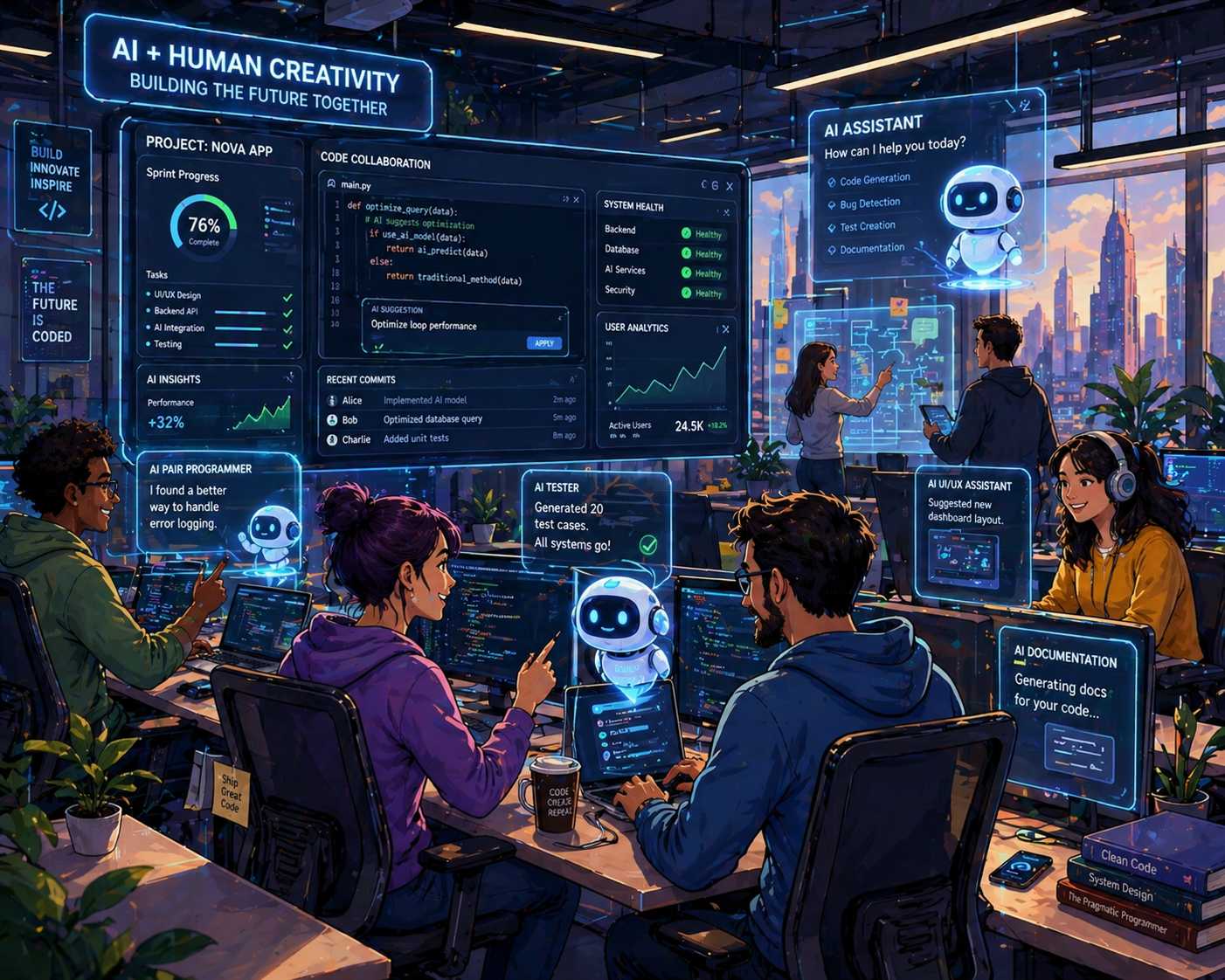
AI coding has shifted from autocomplete to autonomous agents that plan, write, test, and refactor code end-to-end. The key question is not if developers change-it’s which role they evolve into.
AI impacts developers in multiple ways. On one hand, it’s providing a safety net for errors and increasing productivity. On the other, it’s raising questions about the nature of work and the value proposition of human developers.
The landscape of coding has undergone a seismic shift in recent years. Gone are the days of relying solely on autocomplete features to write code. Today, we’re witnessing the rise of autonomous agents that can plan, write, test, and refactor code from start to finish. This game-changing technology is revolutionizing the way developers work, and the impact on the industry is profound.
According to recent statistics, a staggering 90% of developers are now using AI tools to augment their work. But it’s not just about tool adoption – the actual code being written is also undergoing a significant transformation. Almost 50% of production code is now being generated by AI, a figure that’s set to continue growing in the coming years.
The implications of this shift are far-reaching. As AI assumes more responsibilities, developers are being freed up to focus on higher-level tasks that require creativity, problem-solving, and strategic thinking. The role of developers is evolving, and the key question is no longer “will we adapt to AI?” but rather “which role will we evolve into?”
As AI assumes more responsibilities, developers must adapt to a world where their skills are no longer solely focused on writing code, but also on collaborating with AI, troubleshooting issues, and providing strategic guidance. The future of development is complex, and the path forward is uncertain – but one thing is clear: AI is here to stay, and its impact on developers will continue to shape the industry for years to come.
The Changing Role of Developers
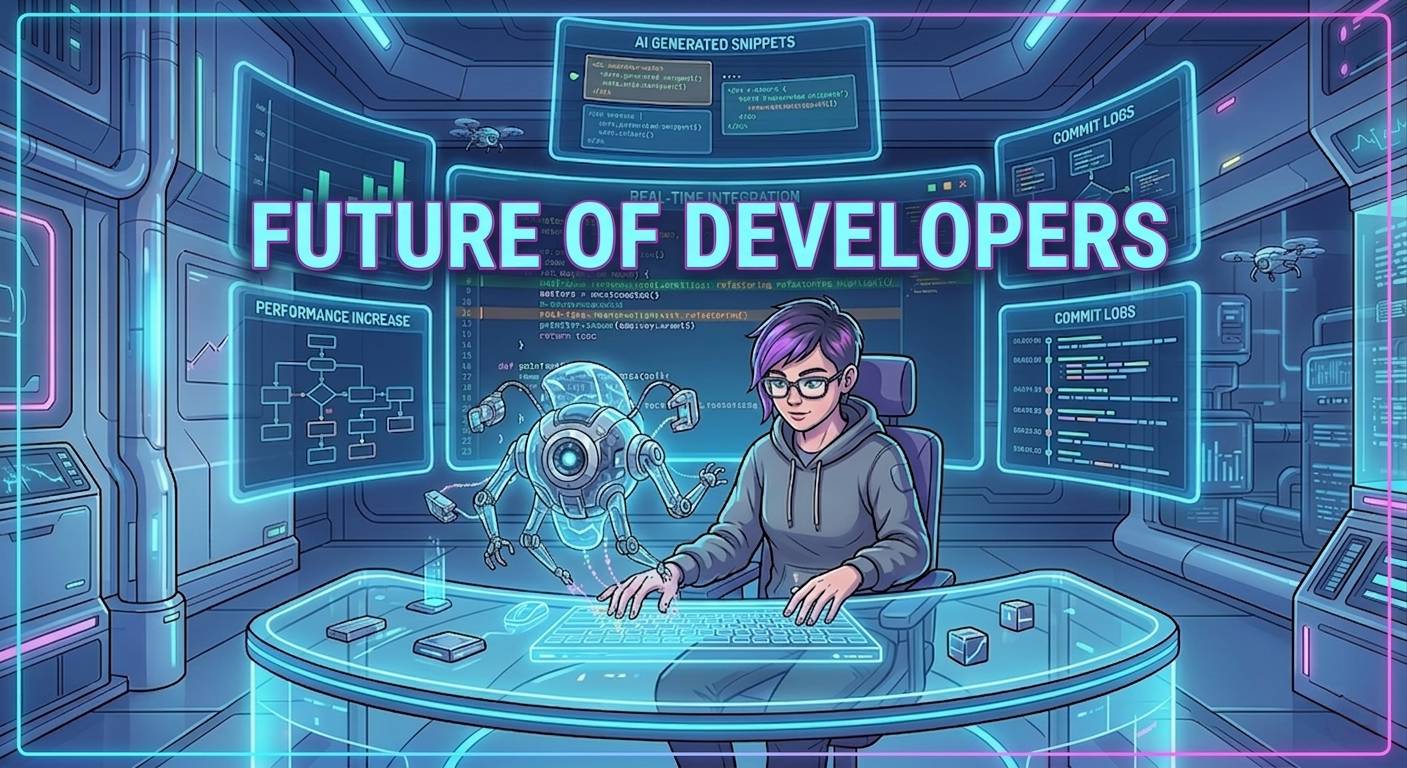
In a world where technology is advancing at breakneck speed, the role of developers is undergoing a significant transformation. Gone are the days of developers spending hours upon hours writing code from scratch. Today, AI collaboration is becoming the core skill, and AI is playing a pivotal role in shaping the way we develop software.
AI is not just a tool, but a partner that’s changing the dynamics of software development. The workflow has inverted: AI writes code first, and humans review it later. This might sound like a dream come true for developers, but it’s a reality that’s already taking shape. With the help of AI-generated code, developers are now spending more time validating than building.
The fact that AI impacts developers is undeniable, and it’s having a profound effect on the way we develop software. AI is not just generating code, but also helping to identify potential bugs and errors, making the entire development process more efficient and streamlined. This has led to a significant reduction in development time, allowing developers to focus on higher-level tasks that require creativity and human intuition.
However, this shift also raises important questions about the role of developers in the future. As AI takes over the grunt work of coding, will developers become redundant? Or will they be able to adapt and thrive in this new landscape? The answer lies in embracing that AI impacts developers and leveraging it to become better developers. By working alongside AI, developers can focus on the high-level thinking and creativity that makes software development truly innovative.
Future Possibilities
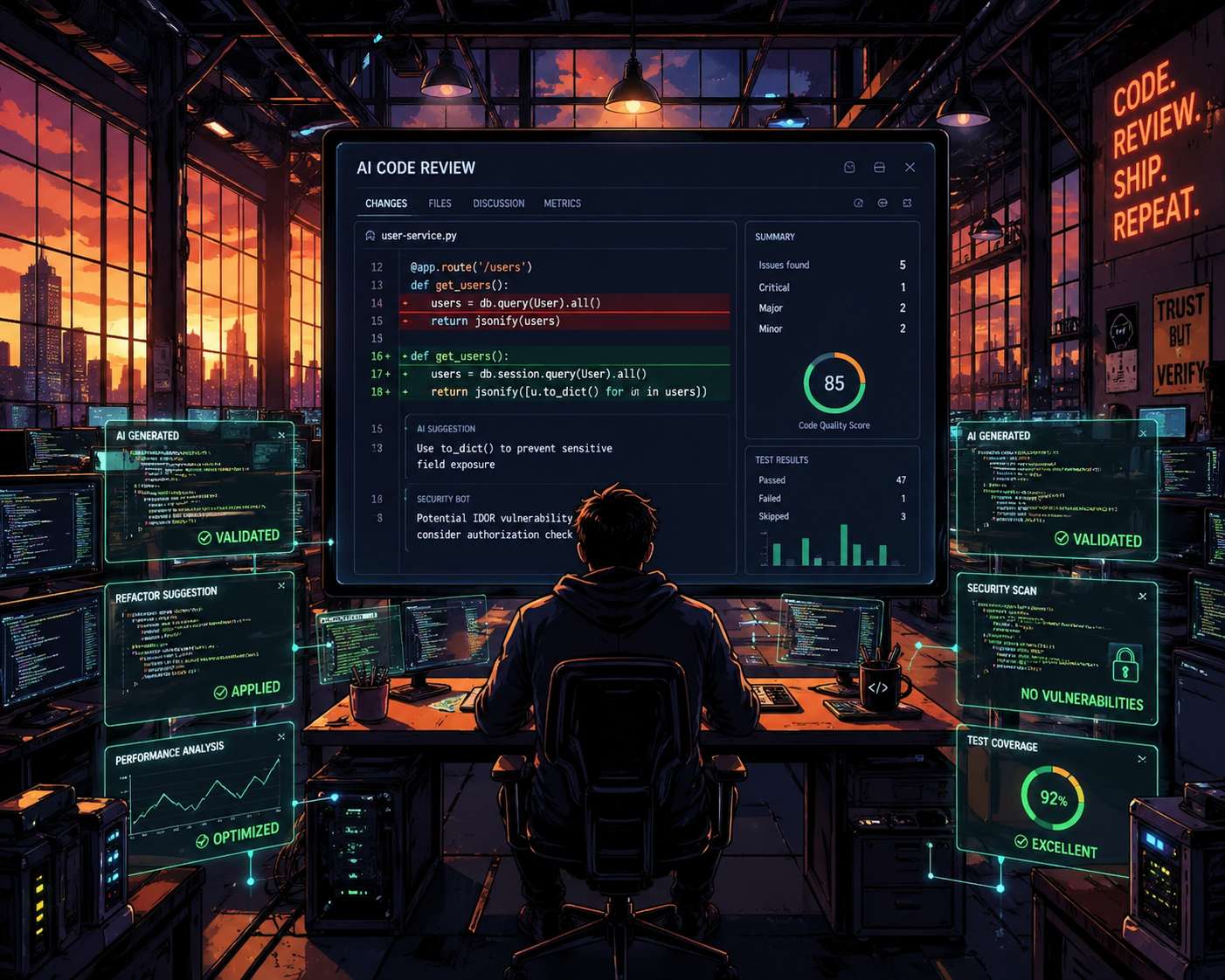
As we dive into the world of AI and its rapidly evolving capabilities, it’s essential to consider its potential impact on the developer community. The future of the industry is shrouded in uncertainty, with various possibilities that range from exciting opportunities to daunting challenges.
Devs become useless – Low probability: AI still lacks accountability, context awareness, and system-level judgment.
While some may speculate about the eventual obsolescence of developers, it’s essential to acknowledge the limitations of AI technology. Currently, AI systems lack the accountability, context awareness, and system-level judgment required to fully replace human developers. Moreover, AI still struggles to understand the nuances of human behavior, making it difficult for machines to replicate the decision-making process of experienced developers.
Devs become testers – High probability: validation, debugging, and edge-case handling are becoming dominant tasks.
However, one area where AI is increasingly making a significant impact is in the realm of testing and validation. AI-powered tools are becoming more sophisticated, allowing developers to focus on higher-level tasks while leaving the more mundane and time-consuming tasks to machines. This trend is expected to continue, with validation, debugging, and edge-case handling becoming dominant tasks in the future.
No juniors, only seniors – Medium-high probability: AI removes beginner tasks, but juniors will still exist.
Another possibility is that AI will remove the need for junior developers to perform routine and repetitive tasks. With AI handling the bulk of the workload, senior developers will be able to focus on more complex and challenging projects. However, it’s unlikely that AI will completely eliminate the need for junior developers. Instead, junior developers will be tasked with learning more advanced concepts and working on projects that require creativity and problem-solving skills, such as AI development itself – AI impacts developers and it will be possible to create AI solutions that will change the way we develop software.
Emerging Roles for Developers
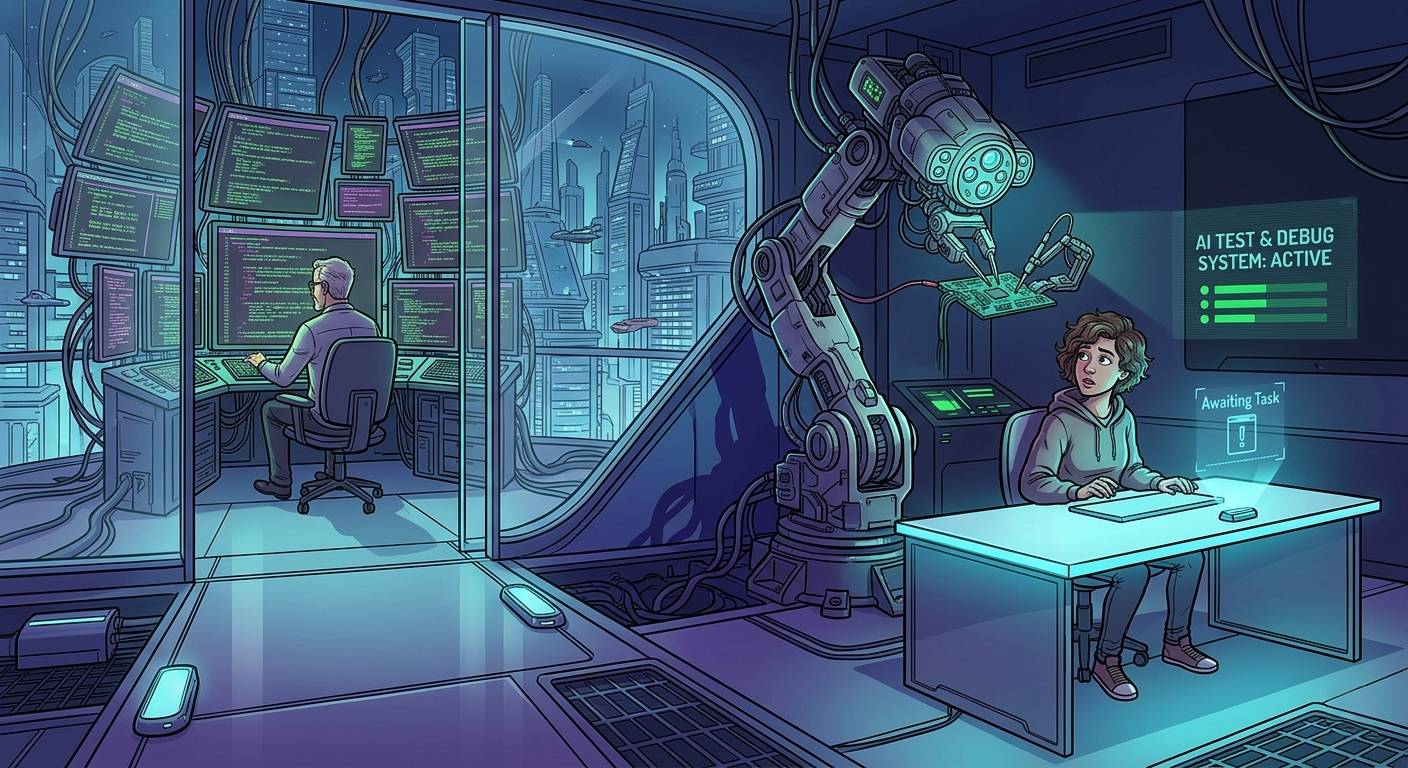
As technology continues to advance, the role of developers is evolving. The rapid development and integration of AI is creating new opportunities and challenges for developers. Here are some emerging roles that are likely to shape the future of development:
Architects & security-focused – Very high probability: system design and security remain hard for AI.
Despite the advancements made in AI, system design and security remain crucial aspects that require human expertise and attention. With the increasing reliance on technology, the need for skilled architects and security specialists will only continue to grow. These professionals will be responsible for designing secure systems, protecting against cyber threats, and ensuring the integrity of data.
Reviewers of AI code – Very high probability: developers increasingly act as reviewers and orchestrators.
As AI becomes more pervasive in software development, developers will play a crucial role in reviewing and refining AI-generated code. This role requires a deep understanding of both AI and coding principles, as well as the ability to identify and address potential issues. By acting as reviewers and orchestrators, developers will be able to ensure that AI-generated code meets the required standards and is aligned with the project’s goals.
Online business owners – Medium probability: AI lowers the barrier to building products.
The integration of AI has democratized access to development tools and platforms, making it easier for online business owners to build and launch products. With AI-powered development platforms, entrepreneurs can now create complex applications and services without requiring extensive coding knowledge. This shift is likely to open up new opportunities for online business owners who can leverage AI to drive innovation and growth. How AI impacts developers will be profound, as they adapt to new roles and responsibilities in this rapidly changing landscape.
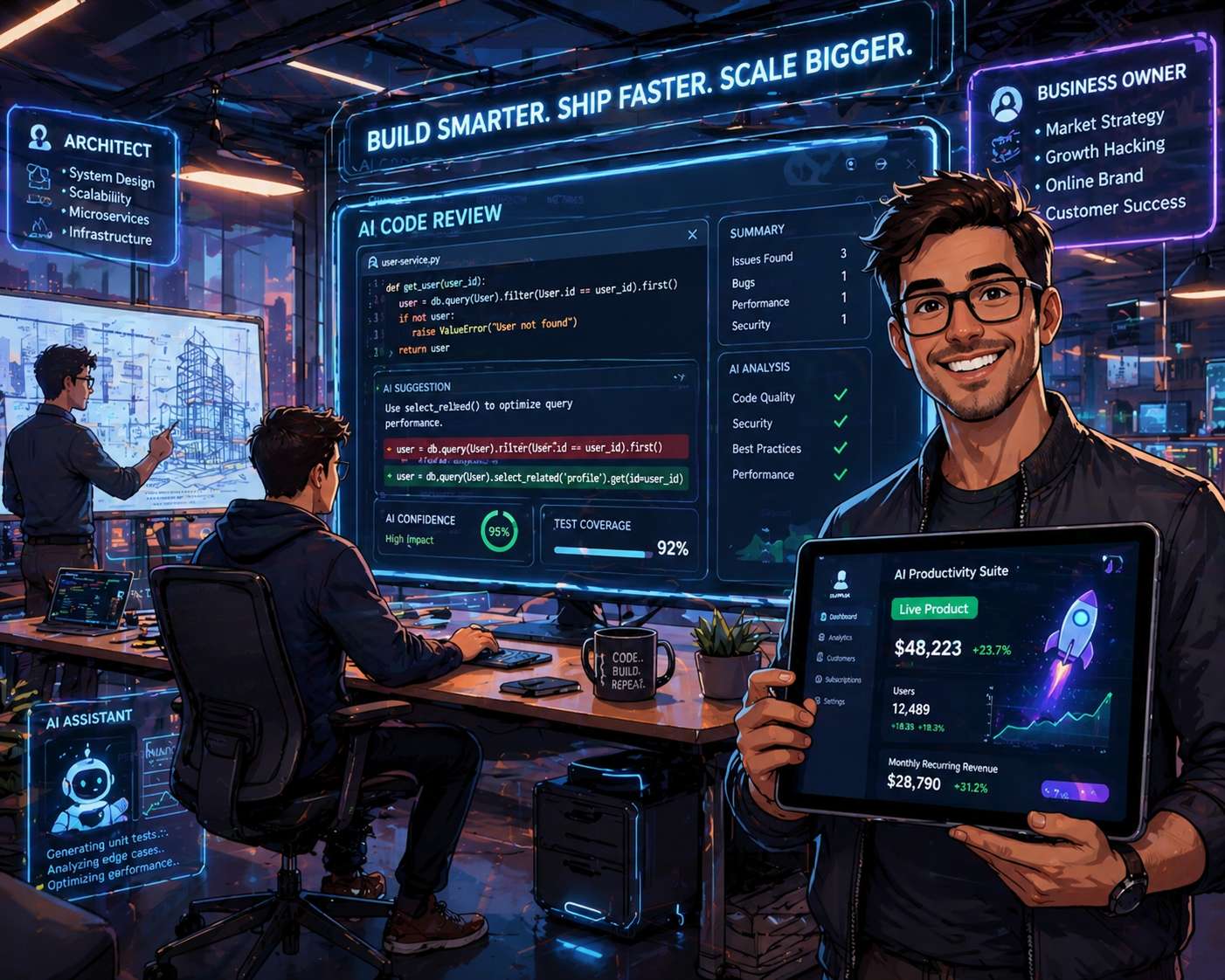
The New Era: AI Impacts Developers Everywhere
The world of software development is on the cusp of a revolution. This new era where AI impacts developers is here, and it’s changing the game. Gone are the days of coding for hours on end, debugging, and rewriting lines of code. The AI revolution is shifting the focus from manual coding to leveraging AI tools that can do the heavy lifting for you.
As AI technology advances, developers are no longer just coders. They’re becoming AI-powered architects, designers, and strategists. The most realistic future is a hybrid role, combining architecture, review, testing, and product thinking. Developers will need to focus on higher-level thinking and strategy, working closely with AI tools to create innovative solutions.
AI impacts developers not just in automating tasks; it’s about augmenting human capabilities. AI tools can analyze vast amounts of data, identify patterns, and make predictions, freeing up developers to focus on the creative aspects of software development. This shift in focus is not just about productivity; it’s about innovation and creating value for customers.
Developers who adapt to this new reality will thrive in the era where AI impacts developers. They’ll be able to create more complex and sophisticated software solutions, faster and more efficiently. They’ll be able to focus on the things that matter most – creating value for customers and driving business growth.
As the AI revolution continues to shape the software development landscape, one thing is clear: the era when AI impacts developers is here to stay.
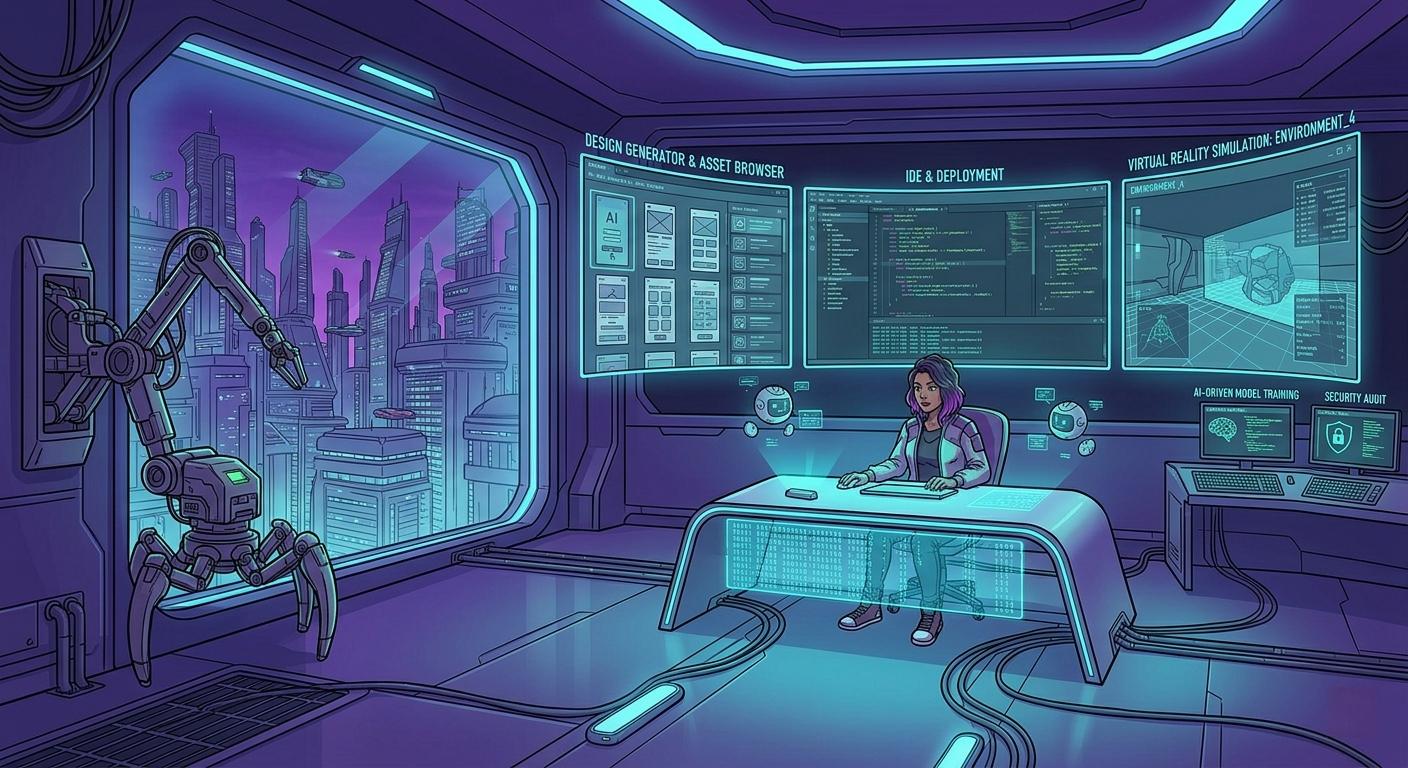
Developers Need To Adjust
The future of development has finally arrived, and it’s not about coding skills anymore. The key differentiator now is leverage – the ability to harness the power of technology to create innovative solutions. As AI continues to transform the industry, developers will need to adapt to AI-assisted workflows and higher-level thinking.
The AI revolution has already started to reshape the development landscape. With AI tools and platforms becoming increasingly accessible, developers can now focus on high-level thinking and strategy, rather than getting bogged down in tedious coding tasks. This shift has opened up new avenues for collaboration and creativity, where developers can work together with AI systems to push the boundaries of what’s possible.
The fact that AI impacts developers is undeniable. As AI-assisted tools become more prevalent, developers will need to develop skills that complement AI’s capabilities. This means moving away from traditional coding skills and towards a more strategic, creative approach. It’s not about replacing human developers with AI, but rather about augmenting their capabilities to create even more innovative solutions.
In the future of development, collaboration and leveraging AI technology will be the name of the game. Developers will need to work closely with AI systems to design, build, and deploy cutting-edge solutions. This requires a fundamental shift in how we approach development, from a solo coding activity to a collaborative, AI-driven process.
By embracing this new reality, developers can unlock new levels of creativity, productivity, and innovation. The future of development is bright, and it’s up to us to harness the power of AI to create a better world.