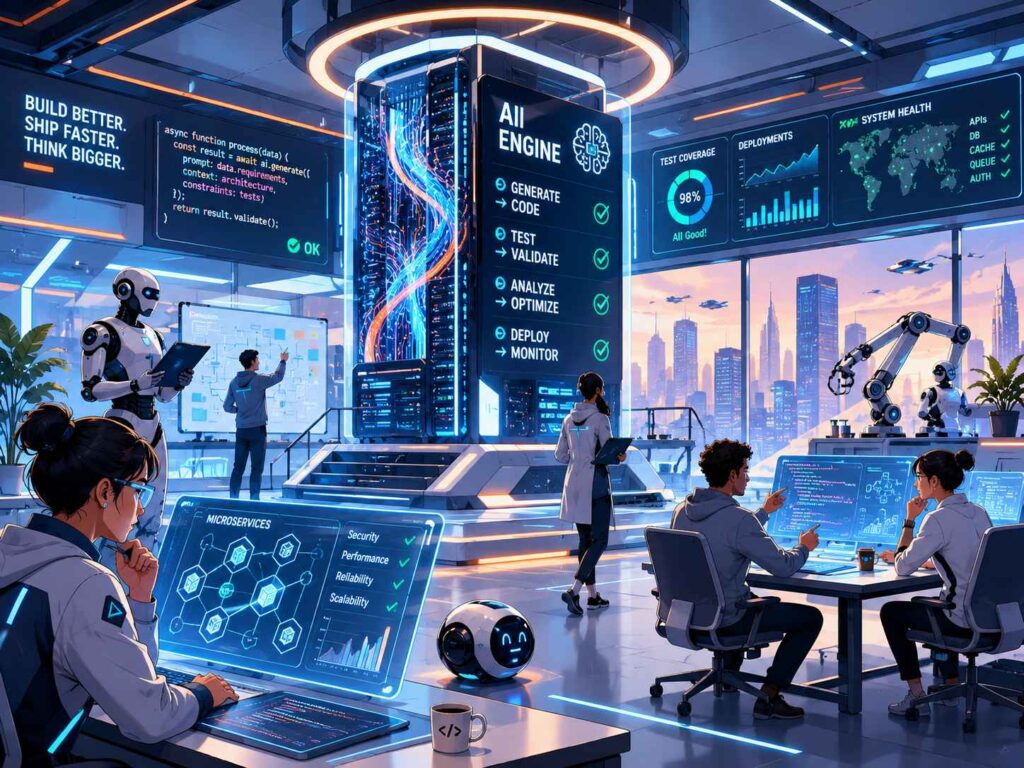
AI coding agents are revolutionizing the way software is developed and maintained. By automating repetitive tasks, these agents accelerate the development process, enabling developers to focus on high-level thinking and strategy. The impact is profound – software projects are completed faster, with fewer resources, and at a lower cost.
But the velocity shift is uneven, and reliable measurement of productivity gains remains a challenge. While some teams are seeing significant improvements, others are struggling to adapt. The key to success lies in understanding the true potential of AI coding agents and how they can be leveraged to drive innovation.
As we gaze into the future of software engineering, one thing is clear: the role of humans will evolve. AI agents will take over routine tasks, freeing developers to concentrate on complex problem-solving and high-level decision-making. This shift will not only streamline the development process but also lead to better software quality, reduced bugs, and improved user experience.
The future of software engineering is not just about adopting new technology; it’s about embracing a new way of working. By harnessing the power of AI coding agents, teams can unlock new levels of productivity, creativity, and innovation. The result will be software that is faster, more reliable, and more intuitive – software that truly meets the evolving needs of users.
The Acceleration Paradox
As we accelerate into the future of software engineering, a paradox emerges. AI-generated code can speed up certain tasks, but measuring the productivity gains is a daunting challenge. It’s like trying to time a sprinter without a clear finish line. On one hand, AI can automate repetitive coding tasks, freeing up developers to focus on higher-level thinking. On the other hand, the lack of transparency in AI-generated code makes it difficult to assess its impact.
The scarcity of verification expertise has become a pressing concern. As a result, the value of tests, continuous integration (CI), and observability has skyrocketed. In a world where developers are increasingly relying on AI-generated code, ensuring the quality and reliability of software has never been more crucial. It’s like trying to build a skyscraper on shaky ground – one misstep can bring the whole edifice crashing down.
This shift calls for a new approach to harness engineering. We need to rethink the way we design, develop, and deploy software. It’s time to move beyond the traditional waterfall model and adopt a more agile, iterative approach. By embracing testing, CI, and observability, we can ensure that our software is resilient, scalable, and meets the evolving needs of users. As we navigate the future of software engineering, one thing is clear: the stakes have never been higher, and the rewards have never been greater.
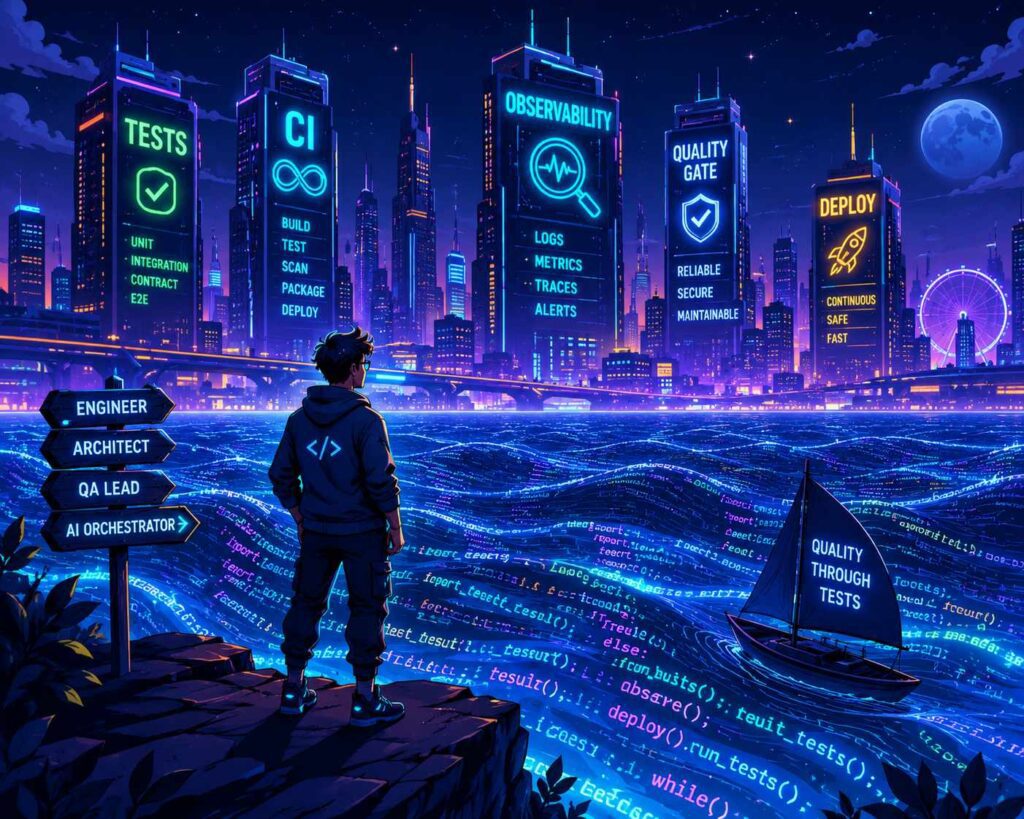
Harness Engineering: The Engineer’s New Role
Harness engineering treats the engineer’s job as designing the environment, tools, and context for AI agents. This approach requires a deep understanding of the tasks and objectives an agent needs to accomplish, as well as the constraints and requirements that govern its behavior.
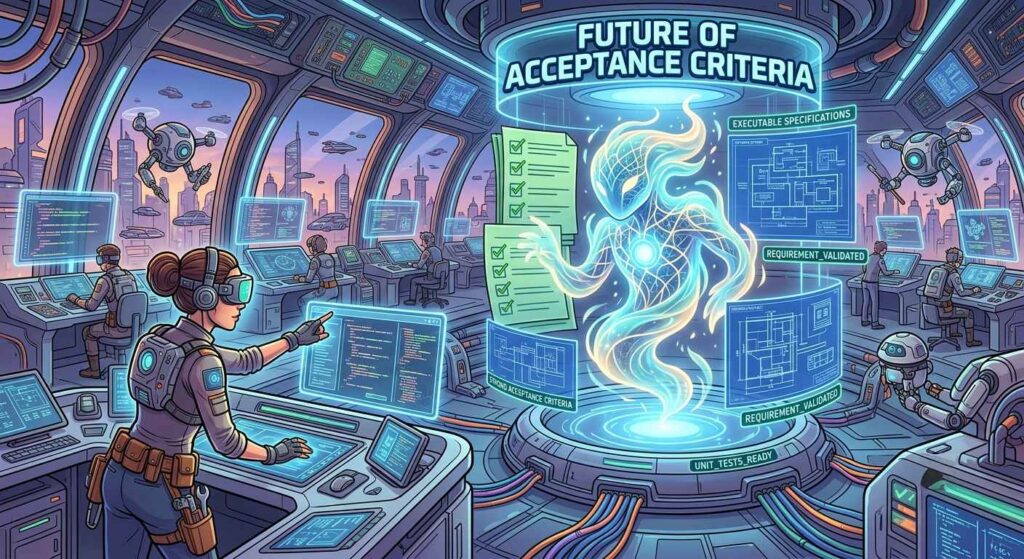
Engineers must now focus on designing strong acceptance criteria and executable specifications for agents. This involves defining clear, testable conditions for agent success, and identifying specific behaviors and outcomes that indicate an agent’s reliability and trustworthiness. By doing so, engineers can ensure that their agents are aligned with business goals and user needs, and that they operate consistently and predictably in complex environments.
As we move towards the future of software engineering, harness engineering will play an increasingly important role in shaping the development of intelligent systems. By placing the engineer at the center of the design process, harness engineering enables the creation of agents that are not only intelligent and adaptable, but also transparent and accountable. This approach has far-reaching implications for industries such as finance, healthcare, and transportation, where the ability to trust and rely on AI systems is critical to innovation and growth.
In harness engineering, the engineer’s role is that of a “system designer,” responsible for crafting the environment, tools, and context that enable AI agents to learn, adapt, and make decisions. By taking ownership of this role, engineers can ensure that their agents are designed to be reliable, trustworthy, and aligned with human values. This requires a fundamental shift in the way we think about AI development, one that prioritizes transparency, accountability, and human-centered design.
The Evolution of Testing
Testing is no longer just about writing unit tests to ensure individual components function as expected. It’s time to evolve and take a more holistic approach to ensure the reliability and safety of our software.
Contract tests verify the interfaces and interactions between components, ensuring they work together seamlessly. Integration tests, on the other hand, validate the behavior of multiple components in a more realistic scenario, emulating real-world use cases. By including these types of tests, we can catch issues that may have been overlooked in isolation.
But what about the subtle nuances of software behavior? Property-based tests allow us to define the expected properties and behaviors of our code, ensuring they align with our design intent. These tests generate a wide range of input values, simulating various scenarios to uncover potential issues. This is particularly useful in complex systems where manual testing becomes impractical.
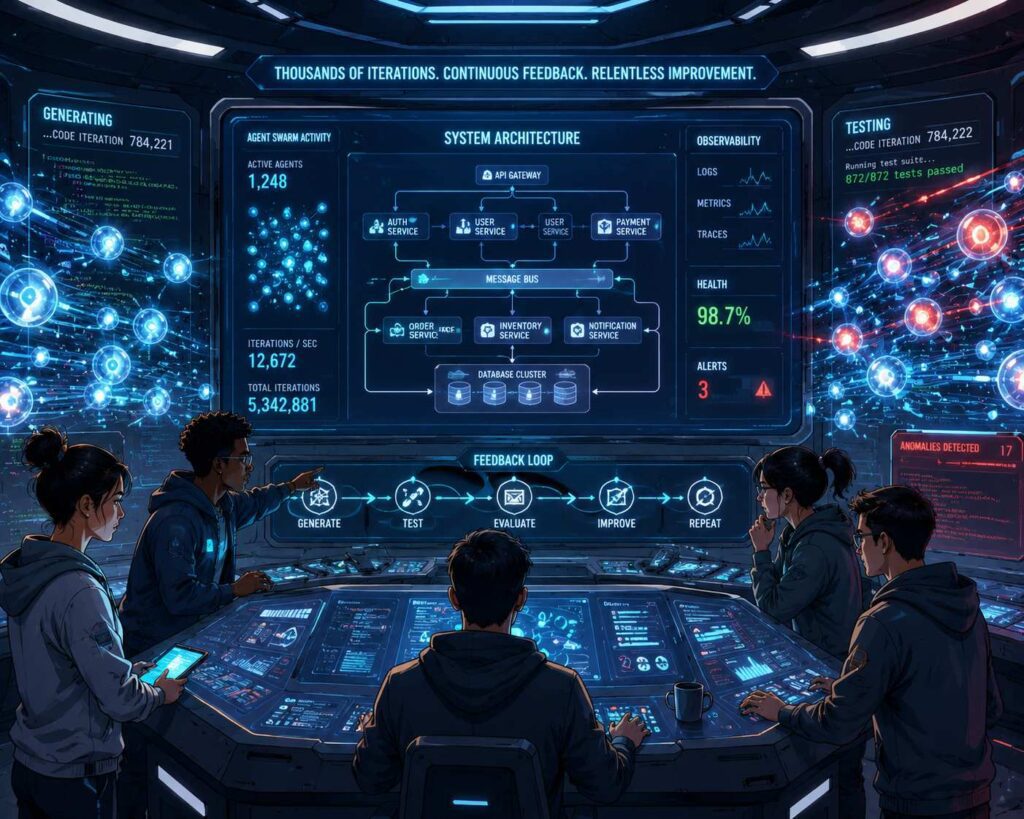
In the future of software engineering, testing will become an even more integral part of the development process. With the help of AI and machine learning, agents can analyze code and generate thousands of plausible but subtly wrong implementations. This allows us to identify potential vulnerabilities and improve the overall quality of our software. However, it also introduces a new challenge: ensuring that our testing frameworks can keep pace with these advancements.
To overcome this, engineers must build a feedback loop that includes testing, iteration, and continuous improvement. By doing so, we can create a culture of reliability and safety, where testing is a proactive measure to prevent issues rather than a reactive response to failures.
The Next Generation of Engineers
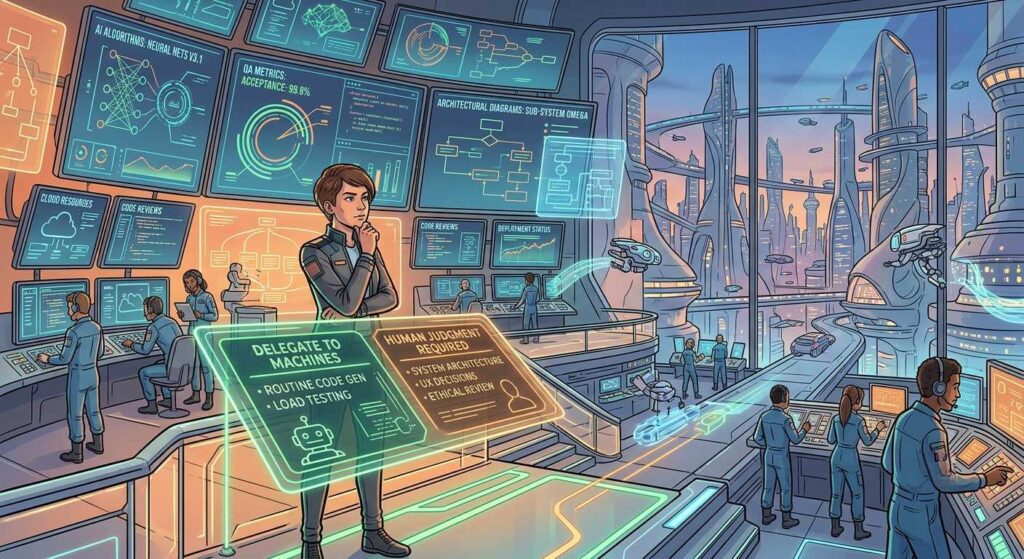
In the future of software engineering, technical leads will be at the forefront of innovation, combining architecture, QA, and AI orchestration to make informed decisions. These leaders will be the bridge between the technical and business sides of the organization, driving growth and success through strategic design and implementation.
As we move forward, technical leads must learn to delegate effectively, deciding what tasks can be automated and what requires human judgment. This is a delicate balance, as the wrong decision can lead to inefficiency and stagnation. However, by striking the right balance, technical leads can unlock the full potential of their teams and drive significant improvements in productivity and quality.
Engineers who build systems that constrain and evaluate AI will have a competitive advantage in the future of software engineering. They will be the ones who understand how to harness the power of machine learning and AI to drive innovation and growth. By developing skills in areas like natural language processing, computer vision, and predictive analytics, these engineers will be in high demand and will have a wide range of career opportunities available to them.
Moreover, engineers who focus on building AI-powered systems will be at the forefront of the future of software engineering, driving advancements in areas like autonomous systems, robotics, and healthcare. They will be the ones who shape the direction of their organizations and drive business outcomes through technological innovation. As the field continues to evolve, one thing is clear: engineers who can build and deploy AI-powered systems will be the leaders of the future.
Conclusion: Embracing the Future of Software Engineering
As we navigate the ever-changing landscape of software development, one thing is clear: the future of software engineering is rapidly evolving. At the forefront of this evolution is AI-driven development and maintenance, shifting the way engineers approach their work. Gone are the days of manual coding and tedious testing; the future demands a more holistic and strategic approach.
Harness engineering and testing are key components of this new paradigm. By focusing on these critical areas, engineers will be better equipped to tackle the challenges and opportunities that lie ahead. Harness engineering, in particular, is critical to ensuring that software systems can adapt and scale as needed, making it a vital skill for any software engineer. By mastering this skill, engineers can unlock the full potential of their software systems and drive business success.
In this new landscape, the lines between development and maintenance are blurring. Engineers must be able to design, build, and maintain complex software systems that are capable of evolving and adapting to changing requirements. It’s no longer enough to simply write code; engineers must also be able to integrate AI-powered tools and techniques into their workflow. By embracing this new reality, engineers can position themselves for success in the future of software engineering, where AI-driven development and maintenance are the norm.