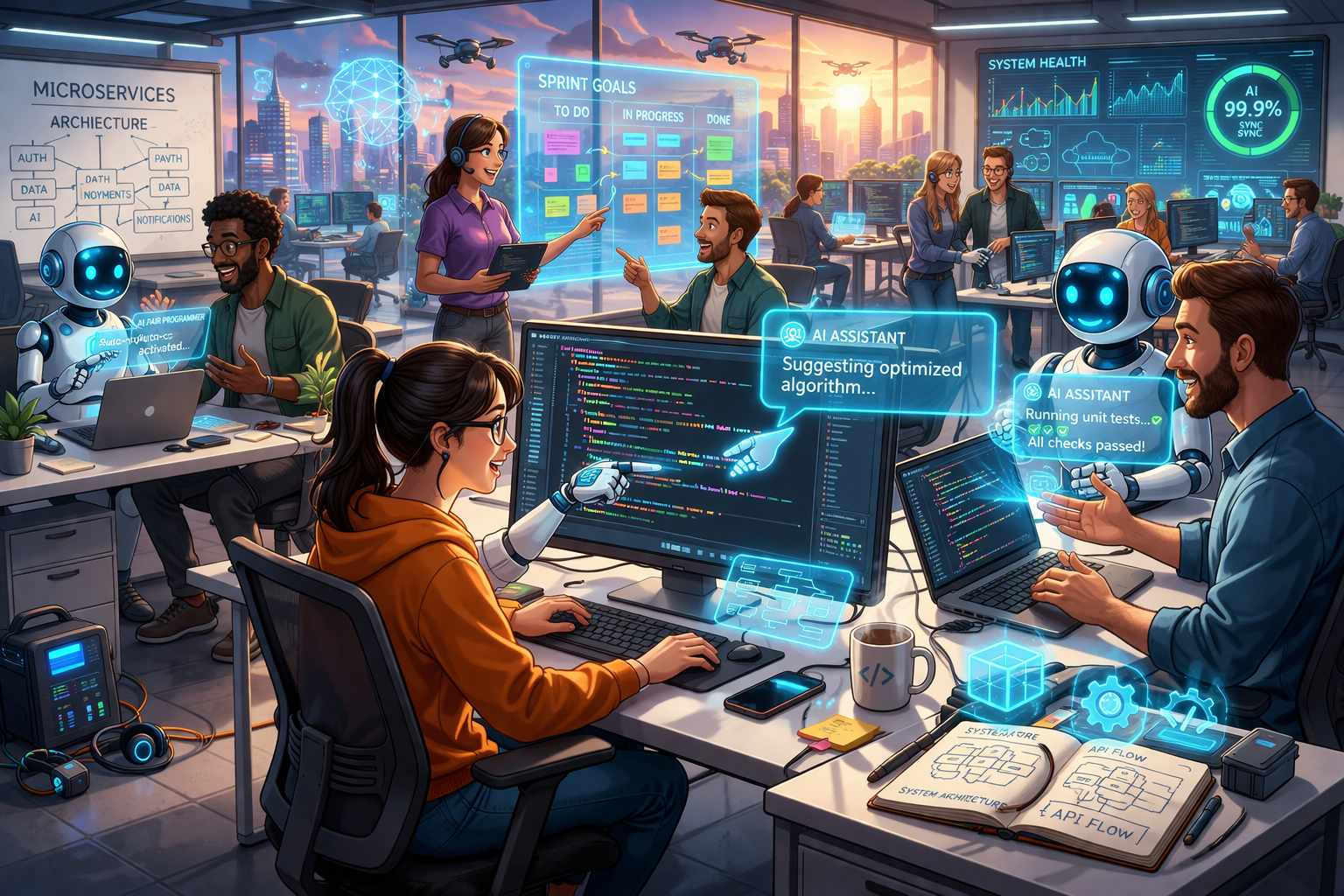
The adoption of AI in the engineering world has reached a boiling point. We’re not talking about early adopters or pioneers – we’re talking about the norm. Around 90% of engineering teams are now using AI tools daily, making it a standard part of their workflow. The days of AI being a differentiator in the industry are long gone. Today, it’s a table stakes, a minimum requirement for any team looking to stay ahead of the curve.
So, what does this mean for teams looking to gain a competitive edge? The truth is, it’s not just about adopting AI tools, it’s about using them effectively. In the world of AI assisted software engineering, a disciplined workflow is the key to unlocking true potential. High-performing teams are able to leverage AI to further strengthen their performance, automate repetitive tasks, and focus on high-level decision making.
On the other hand, fragmented teams may struggle to keep up with the demands of AI-assisted software engineering. Without a clear plan and process in place, AI can quickly become a liability rather than an asset. It’s not uncommon to see teams get bogged down in the data and lose sight of the bigger picture. The good news is that it’s not too late to get on board. By investing in the right tools and processes, teams can level the playing field and start reaping the rewards of AI adoption. It’s time to stop talking about AI and start using it to drive real results.
Benefits and Drawbacks of AI Tools
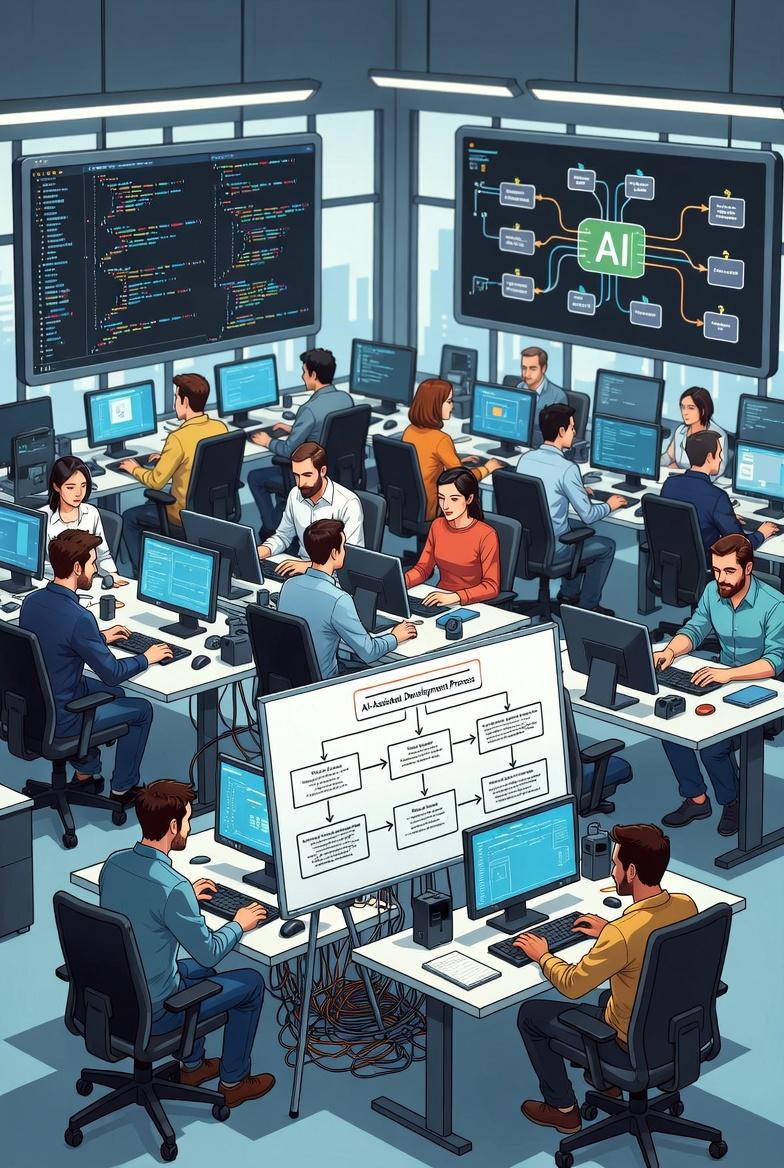
The integration of AI tools in software development has been a game-changer for many teams. With AI-assisted software engineering, teams can experience significant improvements in efficiency and productivity. According to recent studies, AI-assisted teams can see a whopping 50% faster task completion and around 4× reduction in PR cycle time. This means that teams can deliver high-quality software faster and with fewer resources.
However, the integration of AI tools also brings its own set of challenges. One of the significant drawbacks is the creation of a downstream review bottleneck. As AI tools automate more tasks, human reviewers may struggle to keep up with the increased volume of code reviews. This can lead to delays and frustration among team members.
Moreover, poorly used AI tools can actually hinder productivity rather than improve it. When teams rely too heavily on AI, they risk replacing thinking and critical analysis with automated suggestions. This can lead to a lack of understanding and ownership among team members, ultimately resulting in lower-quality software.
To get the most out of AI tools, teams need to strike a balance between automation and human oversight. By using AI-assisted software engineering as a complement to human expertise, teams can unlock the full potential of AI and improve their overall productivity and efficiency. By doing so, teams can create high-quality software faster, without sacrificing the quality and integrity that comes with human oversight.
Shifting Role of Engineers
In today’s fast-paced and ever-evolving technological landscape, the role of engineers is undergoing a significant transformation. Gone are the days when engineers were solely focused on designing, developing, and implementing solutions. Now, they are becoming more “full-stack,” meaning they are taking on a broader range of responsibilities and succeeding at tasks beyond their normal expertise.
This shift is largely driven by the increasing complexity of modern systems, which require engineers to be proficient in multiple domains. As a result, engineers are being called upon to wear many hats, from software development to project management, and from data analysis to stakeholder communication. However, this breadth may come at the cost of losing deeper technical competence.
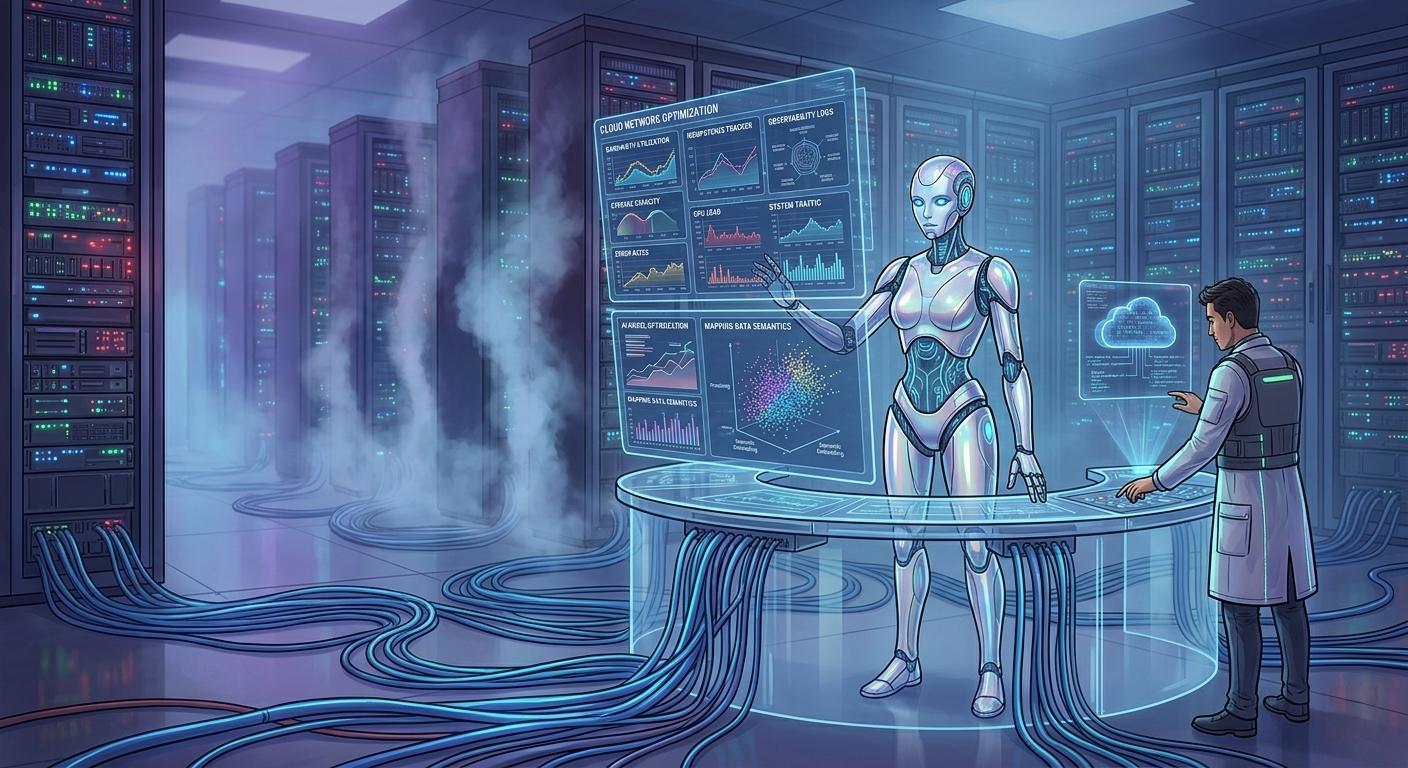
The rise of AI-assisted software engineering is also contributing to this shift. With the help of AI-powered tools, engineers can automate routine tasks, focus on higher-level design decisions, and explore new possibilities for innovation. While AI is augmenting human capabilities, it’s also forcing engineers to adapt and evolve their skills.
As engineers shift from hands-on creators to curators and orchestrators, they are taking on a more strategic role. They are responsible for overseeing the development process, ensuring that projects are completed on time and within budget, and that they meet the required quality standards. In this capacity, engineers are becoming more business-savvy, learning to communicate effectively with stakeholders, and making data-driven decisions to drive business outcomes.
Ultimately, the shifting role of engineers presents both opportunities and challenges. As technology continues to advance and the needs of businesses and organizations evolve, engineers will need to stay agile, adaptable, and committed to ongoing learning and professional development. By embracing this shift and leveraging their skills and expertise, engineers can thrive in their new roles and help drive innovation and success in the years to come.

Accountability and Decision-Making
In the rapidly evolving landscape of AI assisted software engineering, one crucial aspect often gets overlooked: accountability. As AI takes on more responsibilities, it’s essential to remember that architecture decisions, cross-service tradeoffs, and data model design are still inherently human judgment calls. While AI can be a valuable ally, providing insights and suggestions, it’s not yet capable of making these complex decisions on its own.
This might seem counterintuitive, given the advances in AI technology. However, the truth is that AI can only analyze and process data to a certain extent. It lacks the nuance, creativity, and context that human engineers bring to the table. Ultimately, the onus of decision-making remains on the engineer, and it’s their responsibility to weigh the pros and cons of different approaches.
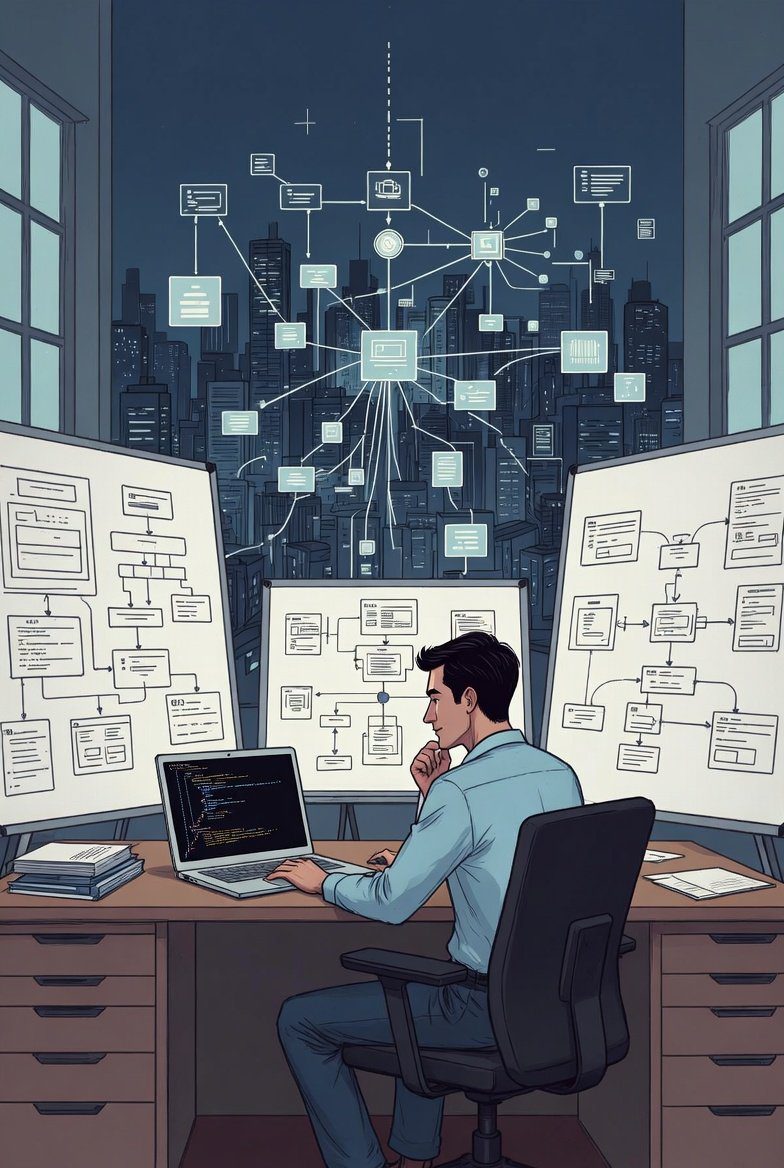
Effective decision-making in AI assisted software engineering requires a unique blend of technical expertise and system thinking. Engineers must be able to see beyond the syntax and code, and consider the broader implications of their choices. This means thinking in systems, rather than just individual components. It means considering how different services interact, how data flows through the system, and how changes to one part might impact others.
As AI continues to augment the software development process, it’s crucial to maintain a clear understanding of who’s accountable for decision-making. The engineer remains the critical link between the technical and business aspects of the project. By acknowledging the limitations of AI and focusing on system-level thinking, engineers can harness the power of AI assisted software engineering to drive innovation and excellence in their work.
Ethical Considerations in AI Assisted Software Engineering
In today’s rapidly evolving tech landscape, the integration of Artificial Intelligence in software development has revolutionized the way we code. However, with the rise of AI assisted software engineering, a pressing concern has emerged – the ethics of AI in coding.
According to a recent survey, four out of five developers have faced an ethical dilemma related to AI-assisted coding. This alarming statistic highlights the urgent need for a deeper discussion on the ethics of AI in software development. After all, who owns the intellectual property (IP) of an AI-generated code? Should it be the developer or the AI system itself?
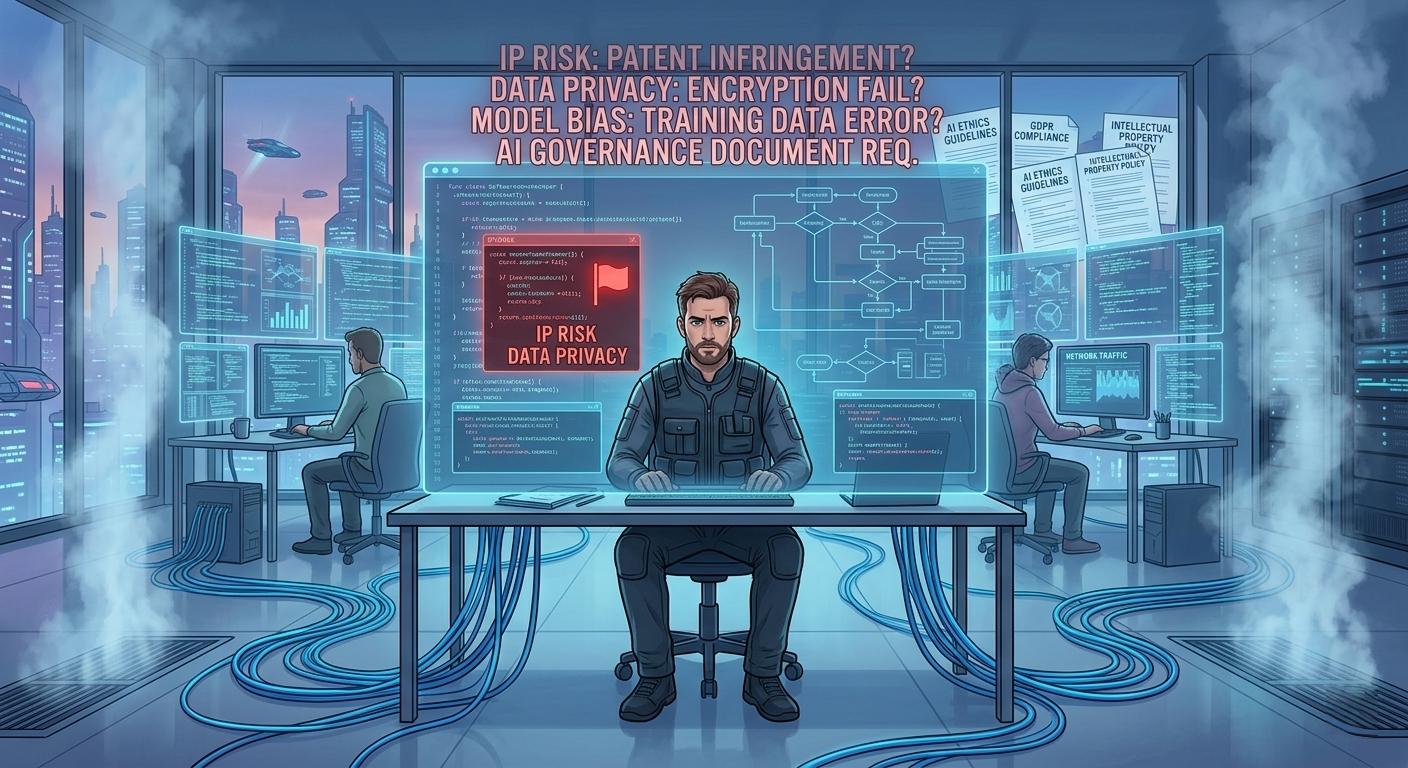
One of the primary ethical concerns in AI assisted software engineering is IP. With AI systems generating code autonomously, it raises questions about ownership and authorship. Moreover, data privacy is another crucial concern, as AI systems collect and process vast amounts of sensitive data to improve their coding capabilities. This raises concerns about data security and potential breaches.
Bias is another significant ethical concern in AI assisted software engineering. AI systems can perpetuate existing biases if they are trained on biased data, leading to discriminatory outcomes. This can have severe consequences, particularly in applications like facial recognition, credit scoring, and medical diagnosis.
For backend engineering teams, policy and governance are a practical concern. Establishing clear guidelines and regulations for AI assisted software engineering can help mitigate these risks. This includes implementing robust security measures, conducting regular audits, and ensuring transparency in AI decision-making processes.
As AI assisted software engineering continues to grow, it’s essential to address these ethical concerns head-on. By prioritizing ethics and transparency, we can harness the benefits of AI while minimizing its risks.
No More Earthquakes In the Field?
In conclusion, the adoption of AI in the software engineering market has reached a saturation point. The competitive edge now lies in having a disciplined workflow that can effectively harness the power of AI. It’s no secret that AI assisted software engineering has brought numerous benefits to the industry, but it’s also created new challenges that engineers must navigate.
One of the key challenges in AI assisted software engineering is adapting to the changing roles and responsibilities within the team. As AI takes over repetitive tasks, engineers must focus on high-value tasks that require creativity, problem-solving, and critical thinking. This shift in focus requires engineers to upskill and reskill, embracing new technologies and methodologies to remain relevant in the industry.
Moreover, AI-assisted software engineering has also brought about new collaboration models, where humans and machines work together to achieve common goals. Engineers must now learn to communicate effectively with AI systems, providing context and feedback to ensure that the AI-powered tools are working in tandem with the human team.
Ultimately, the key to success in AI-assisted software engineering lies in embracing this new paradigm and finding ways to collaborate effectively with AI systems. By doing so, engineers can unlock new levels of productivity, innovation, and quality, setting themselves apart from the competition. As the industry continues to evolve, one thing is certain – the future of software engineering will be shaped by the successful integration of AI and human expertise.