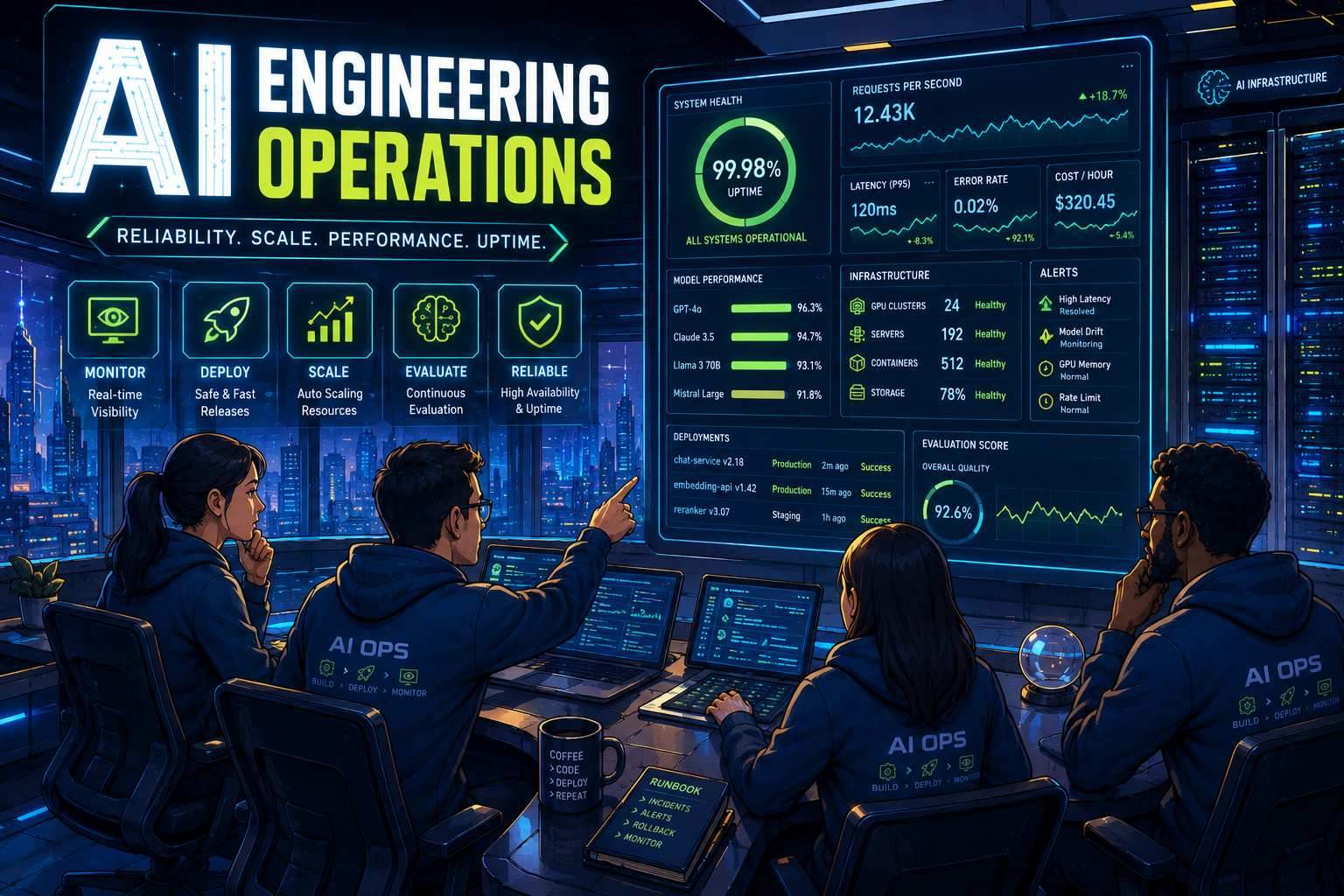
As the world becomes increasingly reliant on artificial intelligence, the way we approach AI engineering is undergoing a significant transformation. Gone are the days when AI was solely focused on model creation and prompt engineering. Today, the most successful AI teams are shifting their focus to AI engineering operations – the discipline of ensuring AI systems run smoothly, efficiently, and reliably in production.
This shift is driven by the harsh reality that AI systems are not just one-off projects, but rather complex, distributed systems that require constant monitoring, maintenance, and optimization. AI engineering operations is all about ensuring that these systems are designed to withstand the rigors of production, with a focus on uptime, latency, observability, deployment safety, and cost control.
In practical terms, this means that AI teams are now more akin to DevOps and SRE (Site Reliability Engineering) teams than traditional software development teams. They’re concerned with the entire lifecycle of the AI system, from deployment to monitoring and maintenance. They’re responsible for ensuring that the system is not only accurate but also reliable, scalable, and secure.
The key benefits of this shift to AI engineering operations are numerous. By focusing on operations, AI teams can:
- Reduce downtime and improve uptime
- Optimize latency and improve user experience
- Enhance observability and reduce debugging time
- Improve deployment safety and reduce the risk of model drift
- Lower costs and improve resource utilization
In short, the shift to AI engineering operations represents a seismic shift in the way we approach AI development. It’s no longer just about creating the next big model; it’s about ensuring that these models run smoothly, efficiently, and reliably in production.
Foundation Models and Inference Infrastructure
As foundation models become increasingly commoditized, the competitive advantage has shifted towards inference infrastructure, orchestration, and production operations. This is because the traditional approach to building AI models is no longer sufficient to meet the demands of complex, reasoning-heavy applications.
These agentic applications require significantly more computing power to process and generate insights, posing a substantial challenge for organizations looking to leverage AI in their operations. To address this challenge, companies are now focusing on developing robust inference infrastructure, capable of handling the increased computational demands.
The AI engineering operations teams are at the forefront of this transformation, working closely with data scientists and engineers to design, deploy, and manage inference pipelines. By streamlining these operations, organizations can ensure that their AI systems are running at optimal performance, delivering accurate and timely insights to support business decisions.
As the landscape continues to evolve, the importance of AI engineering operations will only continue to grow. By investing in this area, companies can unlock new levels of efficiency and effectiveness, ultimately driving business success in a rapidly changing world. Inference infrastructure is no longer just a technical challenge, but a key differentiator for organizations looking to stay ahead of the competition.
In this new paradigm, companies that excel in inference infrastructure, orchestration, and production operations will be better positioned to drive innovation and growth. By prioritizing these areas, organizations can build a strong foundation for their AI initiatives, ensuring that they remain competitive and agile in the years to come.

Monitoring and Observability
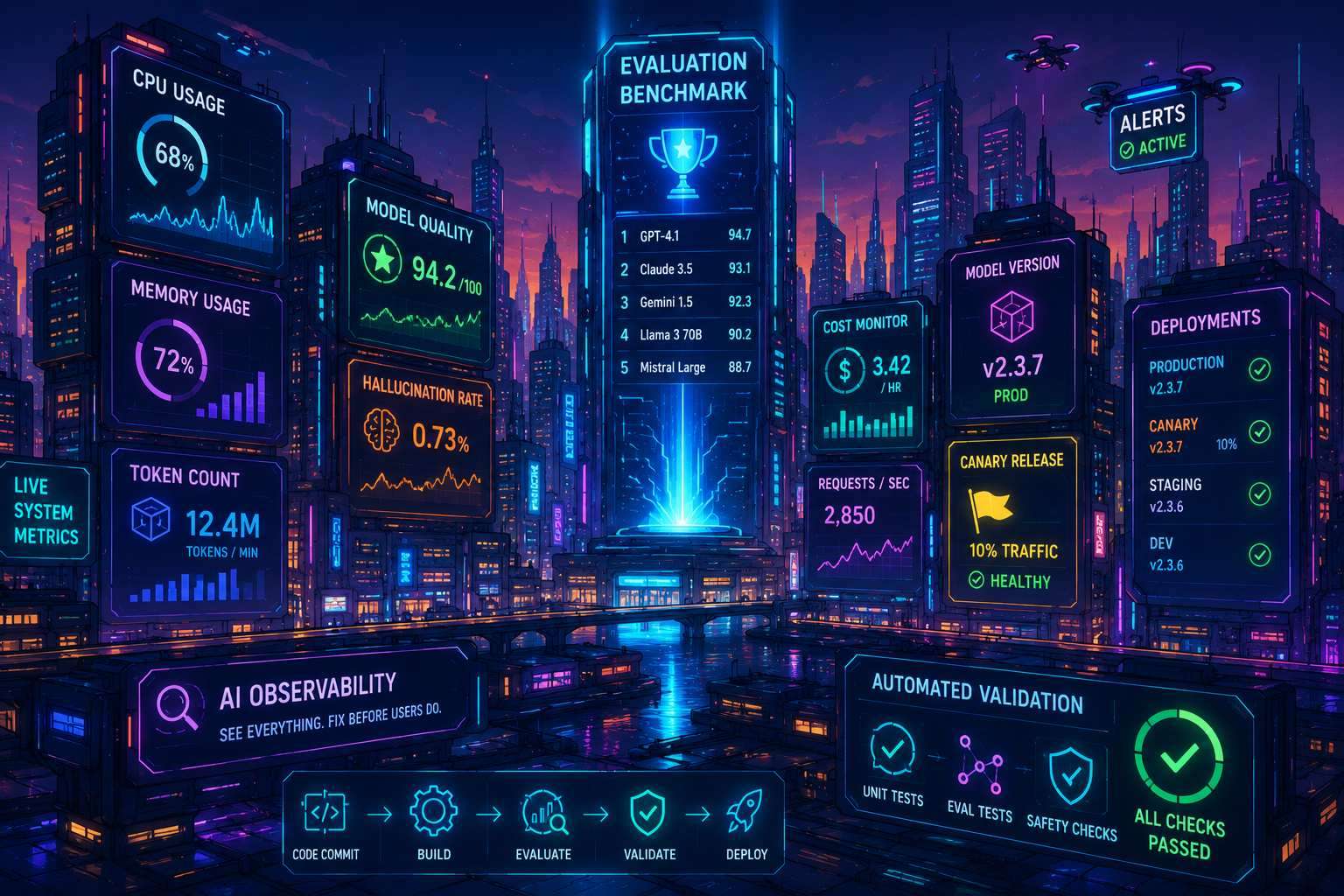
When it comes to monitoring AI systems, traditional metrics like CPU and memory usage are no longer sufficient. The complexity of AI models requires a new level of telemetry, including token usage, model quality, hallucination rates, latency, costs, and evaluation scores. These metrics provide a more comprehensive understanding of how your AI system is performing in real-world scenarios.
To ensure successful AI deployments, it’s essential to adopt CI/CD-style practices. This involves implementing model versioning, rollback strategies, canary releases, and automated validation before production rollout. By doing so, you can minimize the risk of AI model failures in production and quickly adapt to changing business requirements.
Moreover, evaluations have emerged as the equivalent of automated testing for AI. A model that passes benchmarks can still fail real-world business tasks, highlighting the need for rigorous evaluation and testing. It’s not uncommon for AI models to perform well on synthetic data but falter when faced with the complexities of real-world data.
In the context of AI engineering operations, monitoring and observability play a crucial role in ensuring the reliability and performance of AI systems. By establishing a robust monitoring and observability practice, organizations can identify potential issues before they arise, reduce downtime, and improve the overall quality of their AI models.
In conclusion, monitoring AI systems requires a more nuanced approach than traditional IT monitoring. By incorporating new telemetry metrics, adopting CI/CD-style practices, and prioritizing evaluations, you can ensure the success of your AI deployments and deliver business value through AI engineering operations.
AIOps and Governance
The AI landscape is rapidly shifting towards a more centralized, data-driven approach. At the heart of this transformation lies AI observability – a discipline that harmoniously connects model behavior, user outcomes, and infrastructure metrics into a single operational view. This convergence of insights enables data-driven decision-making, empowering organizations to navigate the complexities of AI adoption with greater ease.
AIOps, a term that’s gaining traction, is the convergence of AI, observability, and IT service management. It’s evolving from a niche concept into a core engineering function that combines monitoring, automation, incident response, governance, and reliability management for AI systems. As AIOps matures, it’s poised to redefine the role of AI engineering operations teams, equipping them with the tools and expertise necessary to optimize AI system performance and availability.
AIOps is more than just a technology enabler; it’s a strategic imperative that requires a deep understanding of AI system behavior, user interactions, and infrastructure metrics. By integrating these disparate elements, AIOps enables data scientists, engineers, and operations teams to collaborate more effectively, respond to incidents more quickly, and make data-driven decisions that drive business value.
As organizations embark on their AI journey, they must prioritize AIOps as a critical component of their overall strategy. By doing so, they’ll be better equipped to navigate the challenges of AI adoption, from model drift and concept drift to data quality and model interpretability. By embracing AIOps, organizations can unlock the full potential of AI, driving business growth, improving customer experiences, and establishing a competitive edge in the marketplace.

The Career Differentiators
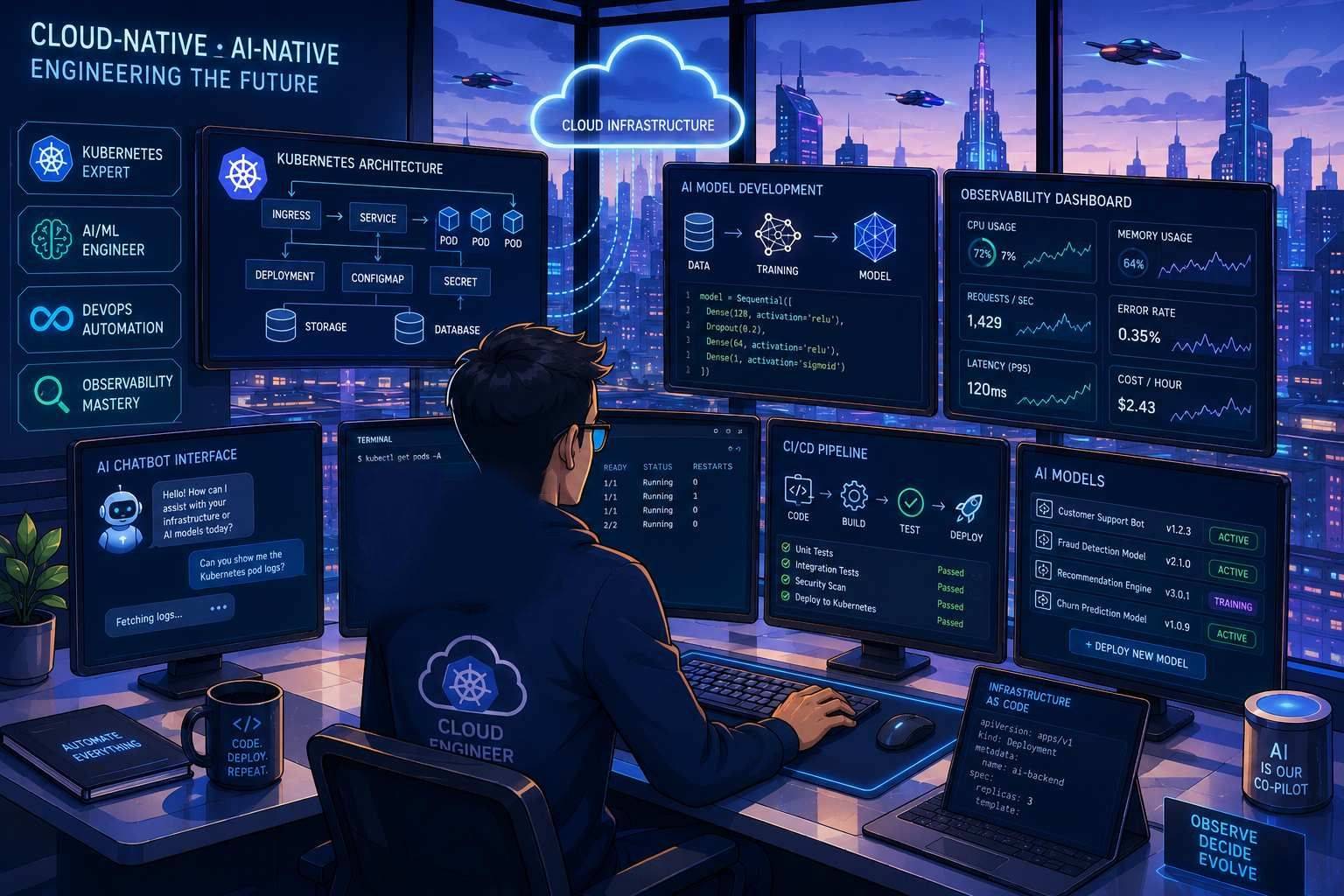
A strong career trend is emerging: engineers who understand Kubernetes, cloud infrastructure, observability, evaluation pipelines, and AI operations may be more valuable than engineers focused solely on model development. These engineers are not just coding experts, but also have a deep understanding of how to deploy, monitor, and maintain complex systems. They know how to make the most of the cloud, and how to use tools like Kubernetes to optimize resources and ensure high availability.
Anyone can prompt a chatbot, not everyone can build products with AI. With the rise of AI, the skills required to succeed in IT are shifting. Gone are the days when a developer who can write code is enough. Today, you need to be a problem solver, a creative thinker, and an expert in a specific domain. The ability to deliver working products on time is just as important as being creative and innovative.
In AI engineering operations, being able to bridge the gap between technical and business requirements is crucial. It’s not just about writing code, but also about understanding the needs of the business and designing solutions that meet those needs. This requires a deep understanding of the technology, as well as excellent communication and collaboration skills.
As the field of AI continues to evolve, the demand for skilled engineers who can design, build, and operate complex AI systems will only grow. If you’re looking to stay ahead of the curve, focus on developing skills in areas like Kubernetes, cloud infrastructure, observability, evaluation pipelines, and AI operations. With these skills, you’ll not only be more valuable to your employer, but also more likely to succeed in a rapidly changing industry.
Conclusion and Summary
In conclusion, the shift to AI engineering operations marks a significant turning point for organizations seeking to harness the full potential of AI. By adopting this new paradigm, teams can unlock a competitive advantage that sets them apart from the rest. At the heart of AI engineering operations lies a set of core competencies that prioritize uptime, latency, observability, deployment safety, and cost control.
Effective AI engineering operations require a delicate balance between technical expertise and strategic thinking. Teams must be able to navigate the complexities of inference infrastructure, orchestration, and production operations with ease. By doing so, they can ensure that their AI systems are not only reliable and scalable but also maintainable in the long term.
AIOps and governance play a crucial role in AI engineering operations, serving as the linchpin that holds the entire ecosystem together. By implementing AIOps and governance best practices, teams can ensure that their AI systems are constantly monitored, optimized, and updated, leading to improved performance and reduced downtime.
In the end, AI engineering operations is not just a buzzword or a trend – it’s a necessary evolution for organizations that want to stay ahead of the curve. By embracing this new way of working, teams can unlock unprecedented levels of innovation, efficiency, and competitiveness. As the AI landscape continues to evolve, one thing is clear: AI engineering operations is here to stay, and those who adapt will be the ones to reap the benefits.