

By freeing up software engineers from repetitive tasks, AI agents enable them to focus on innovative projects that drive development forward.
Codebase exploration and bug fixing are two key areas where AI agents make a significant impact. With their ability to identify patterns and anomalies, AI agents help engineers quickly pinpoint the root cause of issues, streamlining the debugging process.
The integration of AI agent use cases in software development has a direct and noticeable effect on productivity. Engineers can now allocate more time to creative problem-solving and high-level thinking, leading to more efficient and effective solutions.
Improved productivity is a direct result of AI agent integration, which allows teams to deliver projects faster and with fewer errors.
Codebase Exploration: Navigating the Unfamiliar with AI Agent Use Cases
Investigating unfamiliar repositories can be a daunting task, especially when dealing with a large codebase. But with the help of AI agents, developers can now explore these repositories with ease. AI agents can analyze the code and provide insights into the architecture, making it simpler for developers to understand the project’s structure and dependencies.
AI agents can also assist in tracing dependencies, which is crucial for identifying potential issues or areas for improvement. By analyzing the code and its relationships, AI agents can provide a clear picture of the codebase, allowing developers to focus on implementing changes with confidence. Moreover, AI agents can help identify relevant files for implementation, streamlining the development process and reducing the likelihood of errors.
By leveraging AI agents for codebase exploration, developers can save time and effort, and focus on writing high-quality code. This approach also enables teams to collaborate more effectively, as AI agents can provide a common understanding of the codebase, reducing misunderstandings and miscommunications. With AI agents by their side, developers can now tackle unfamiliar codebases with ease and confidence.

AI Agent Use Cases in Bug Fixing: A Proven Workflow
Give agents a reproducible issue and let them inspect logs.
When a bug arises, AI agents can be handed a specific, replicable problem to solve. This allows them to inspect relevant logs, pinpoint the root cause of the issue, and work toward a resolution.
This reproducible environment empowers agents to learn from their mistakes and refine their approach. By having a controlled setting, agents can fine-tune their skills and apply them to a broader range of scenarios.
Agents are then able to modify code, run tests, and iterate toward a verified fix. Through this process, they can identify areas of improvement in their own performance and develop more effective strategies.
Coding agents have demonstrated credibility in benchmarks, consistently producing accurate results and solving complex problems. This level of proficiency can be attributed to their ability to learn from their experiences and adapt to new challenges.
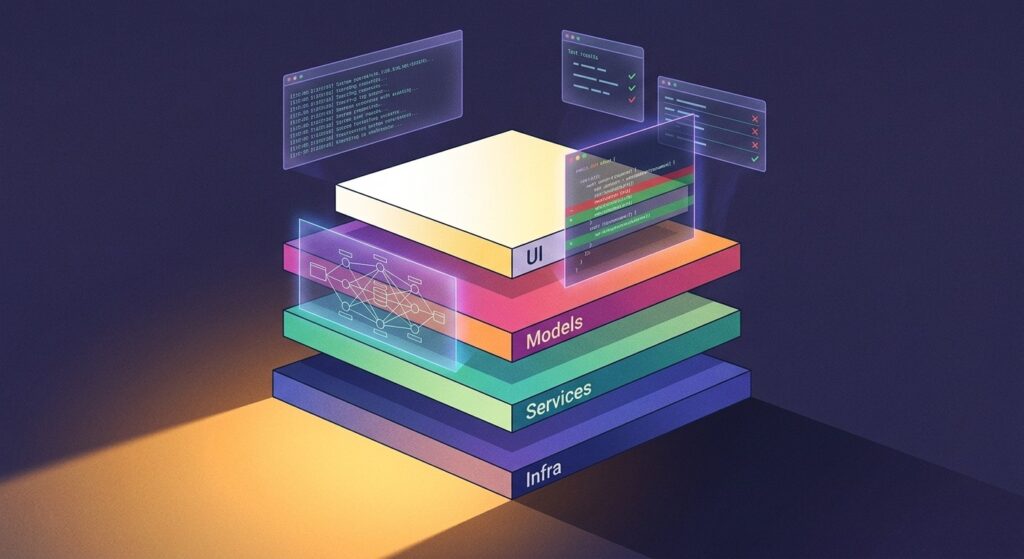
Generating Missing Tests with Ease
Agents are particularly useful for generating missing tests. They can replicate failure scenarios and identify the root cause of issues, making it easier to expand edge cases.
With AI agent use cases, you can simulate various user interactions and environments to ensure your application behaves as expected. This level of testing is crucial for catching subtle bugs and regressions that might have been introduced during development.
One of the key benefits of using AI agents is their ability to run the test suite to validate changes with confidence. By automating this process, you can quickly identify which tests are failing and pinpoint the specific lines of code causing the issue. This efficiency boost allows developers to focus on writing new code and improving the overall quality of the application.
By leveraging AI agent use cases, you can create a comprehensive testing strategy that catches issues early on, reducing the likelihood of downstream problems and costly rework.

Refactoring and Code Review
When it comes to refactoring and code review, AI agents can be invaluable tools. One key area where they shine is in delegating well-scoped migrations and API updates. By automating mundane tasks, AI agents free up developers to focus on more complex and high-value work.
The process begins with a thorough review of the codebase. AI agents can perform a first-pass review for bugs and security issues, helping identify potential problems before they cause issues downstream. This is not a replacement for human code review, however – humans retain final responsibility for ensuring the quality and security of the code.
In fact, AI agents work best when used in conjunction with human expertise. By serving as a second pair of eyes, AI agents can help developers catch errors and inconsistencies that might have otherwise gone unnoticed. This collaboration between humans and AI agents is key to producing high-quality code that meets the highest standards of security and reliability.

DevOps/Maintenance: AI Agent Use Cases for Smarter Operations
Investigate CI failures and analyze logs with AI agents, quickly pinpointing the root cause of issues and identifying areas for improvement. By automating this process, teams can reduce the time spent on debugging and focus on delivering value-added work.
Update configuration and prepare fixes with AI guidance, ensuring that changes align with best practices and don’t introduce new problems. AI agents can analyze the codebase, identify potential issues, and suggest the necessary updates, all while minimizing the risk of human error.
When it comes to production-changing actions, explicit approval is required, ensuring that all stakeholders are on the same page. This is a crucial step in maintaining transparency and accountability within the team.

Conclusion: Unlocking the Potential of AI Agent Use Cases
AI agents are designed to augment human capabilities, not replace them. By properly utilizing these tools, developers can significantly boost productivity and streamline their workflow.
Clear goals and repository conventions are essential when integrating AI agents into software development. This ensures that all team members understand the role and limitations of these agents, allowing for seamless collaboration and effective problem-solving.
Establishing tool permissions and access control is also crucial. This prevents unauthorized access to sensitive data and ensures that AI agents operate within predetermined boundaries.
Treating AI agents as supervised junior engineers is a useful analogy. Just as junior engineers learn and grow under the guidance of experienced team members, AI agents can be trained and monitored to improve their performance and accuracy.
Stopping conditions for AI agents must be clearly defined to prevent over-reliance on these tools. This involves setting limits on the tasks they can perform, the data they can access, and the decisions they can make. By doing so, developers can strike a balance between leveraging AI agent capabilities and maintaining human oversight and control.
