

What are the trends and challenges in agentic AI architecture?
The landscape of AI is shifting towards more autonomous and goal-driven systems, leaving behind the single Large Language Model calls that dominated the past. Today, we’re witnessing a new wave of development where AI systems are designed to plan, act, and iterate autonomously. This marks a significant shift towards creating more complex and dynamic AI systems that can adapt to changing environments.
However, this transition also poses significant challenges for backend engineers. As AI systems become more autonomous, designing reliable systems that can operate independently becomes a major hurdle. Engineers must now focus on creating robust systems that can handle unexpected situations and adapt to new information. This requires a deeper understanding of system design and reliability, as well as the ability to anticipate and mitigate potential risks.
At the heart of this shift is the concept of agentic AI architecture, which seeks to create systems that are both autonomous and accountable. These systems must be able to make decisions, learn from their environment, and adjust their behavior accordingly. But what does this mean for engineers and developers working on these projects?
To succeed, engineers must have a profound understanding of the complex interactions between different components of the system. They must be able to design systems that can handle multiple scenarios, anticipate unexpected outcomes, and adapt to changing circumstances. Furthermore, they must be able to ensure that these systems are transparent, explainable, and fair, as they make decisions that impact real-world outcomes.
Ultimately, the development of agentic AI architecture is a multidisciplinary challenge that requires collaboration between engineers, ethicists, and domain experts. By working together, we can create AI systems that are not only more autonomous but also more responsible and accountable, leading to a future where humans and AI systems collaborate seamlessly to drive innovation and progress.
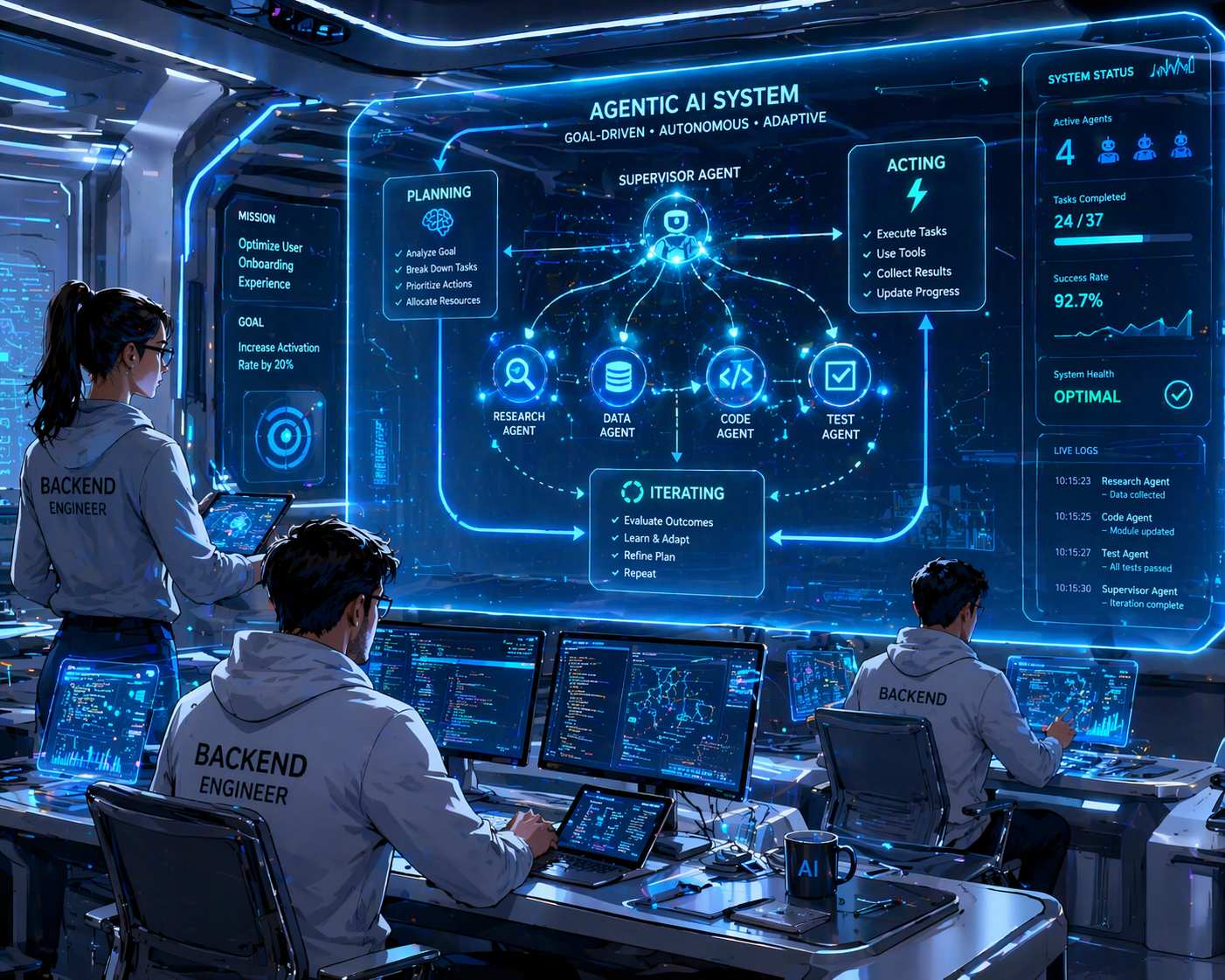
Agentic Loop and Planning
At the heart of any intelligent system lies the core agent loop, also known as ReAct: Thought → Action → Observation → repeat. This foundational pattern is the building block of reasoning and tool use, allowing agents to navigate complex environments and make informed decisions.
Within the agentic AI architecture, a crucial distinction is made between the Planner and Executor components. The Planner is responsible for generating a plan of action, while the Executor carries out these instructions. This separation is key to improving auditability and cost control, as it enables clear attribution of actions and their consequences.
But what are the essential components that make up an agentic AI system? For starters, there’s the Planner, which is responsible for generating a plan of action based on the current state of the environment and the agent’s goals. Next, we have the Tool Router, which selects the most suitable tools or actions to achieve the desired outcome. Memory is also a crucial component, as it enables the agent to store and retrieve information about past experiences and lessons learned.
The Executor is responsible for carrying out the actions determined by the Planner, while the Safety/Validation layer ensures that the agent’s actions align with its goals and values. By integrating these components, agentic AI systems can achieve a high degree of autonomy and adaptability, making them an exciting area of research and development.
In essence, the agentic AI architecture provides a framework for building intelligent systems that can learn, reason, and interact with their environment in a flexible and effective manner. By understanding the core agent loop and the key components that make up an agentic AI system, we can begin to unlock the full potential of these powerful architectures.
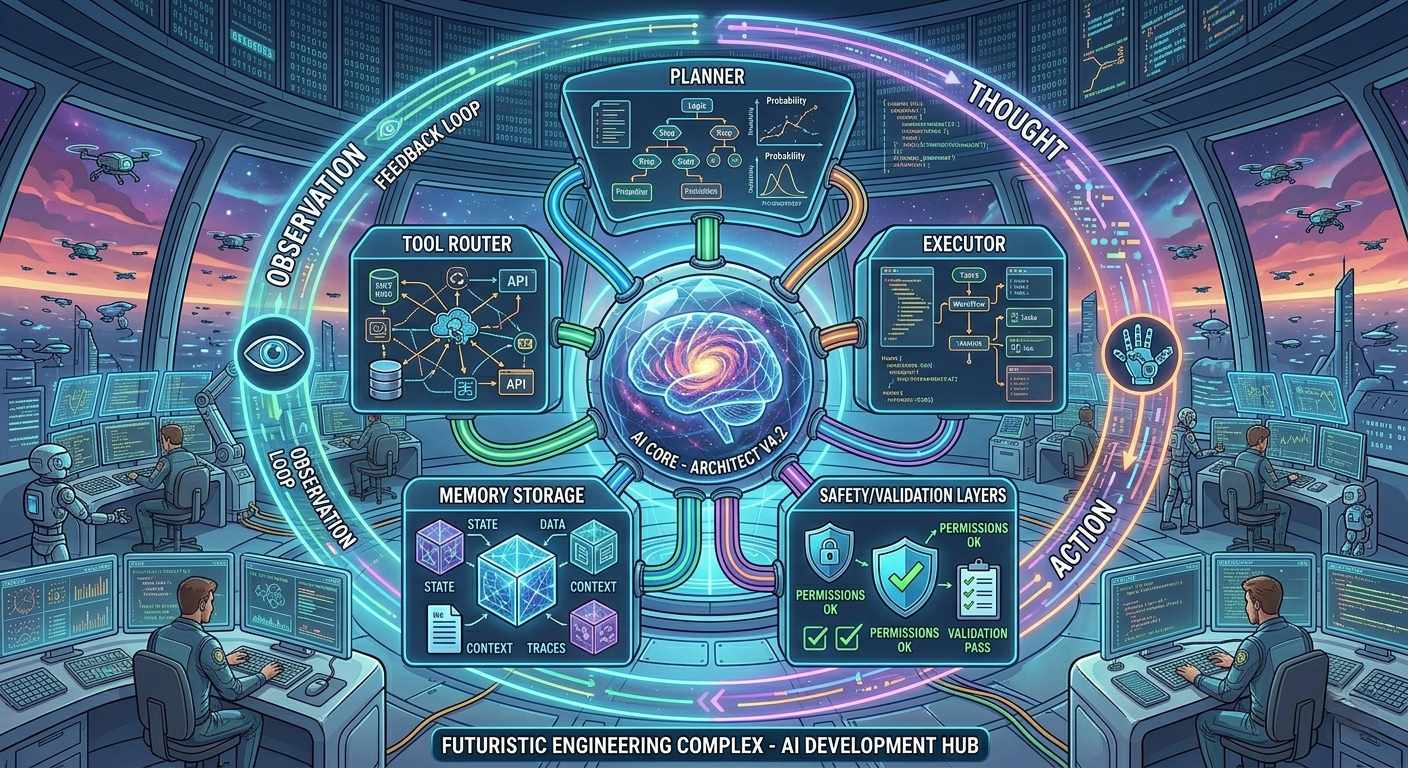
Components of Agentic Systems
In the realm of complex workflows, multi-agent architectures are rising to prominence as the go-to solution. These architectures, which include leader-worker, pipelines, and peer collaboration, enable seamless interaction between various components, making them the default choice for intricate processes.
But what makes these systems truly reliable? The answer lies in the guardrails that safeguard each component. Schema validation, for instance, ensures that data is accurately formatted and consistent throughout the system. Permissioned tool access restricts access to only authorized personnel, preventing unauthorized changes or tampering. Eval loops provide a feedback mechanism, allowing the system to adapt and learn from its mistakes. And human-in-the-loop checkpoints require human oversight at critical junctures, providing an added layer of reliability and accountability.
However, despite these advances in agentic AI architecture, data quality and integration remain the primary obstacles for most agentic projects. Ensuring that data is accurate, up-to-date, and properly formatted is a daunting task, but a crucial one. Without high-quality data, even the most sophisticated agentic systems will falter. Moreover, integrating data from disparate sources and systems poses a significant challenge. It requires a deep understanding of the underlying data structures, as well as the ability to harmonize them into a cohesive whole.
As agentic systems continue to evolve, addressing these challenges will be essential. By developing more robust data integration solutions and investing in data quality initiatives, we can unlock the full potential of agentic AI architecture and create more reliable, efficient, and effective complex workflows.
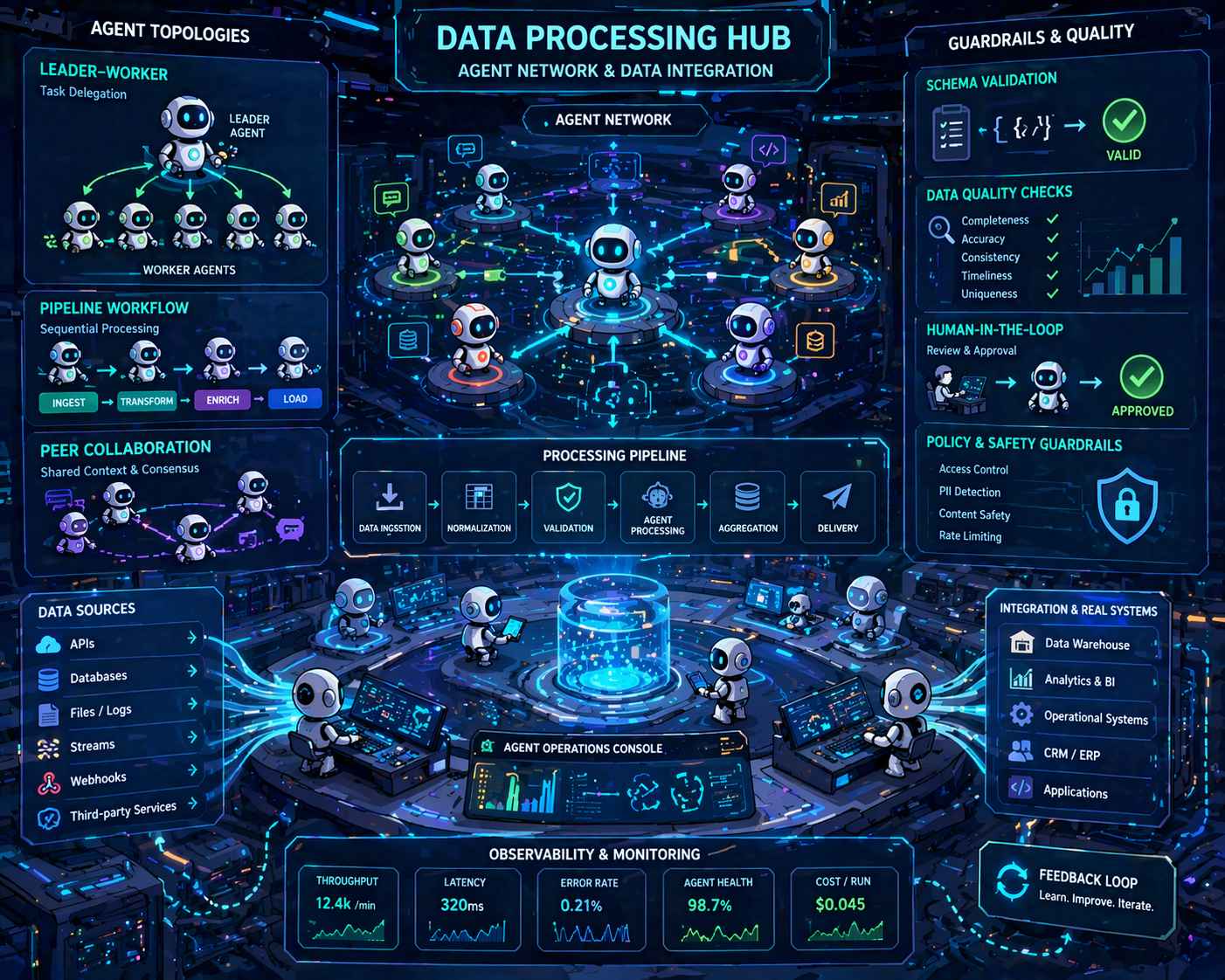
Data Integration and Interoperability
In the rapidly evolving landscape of artificial intelligence, one crucial aspect often gets overlooked: data integration and interoperability. The key to unlocking true potential lies in the seamless exchange of information between various systems, tools, and agents. New standards like Model Context Protocol aim to standardize tool usage and interoperability between agents and systems, paving the way for a more cohesive and efficient AI ecosystem.
However, achieving this level of integration requires more than just technical know-how. Data quality is crucial for agentic AI systems, requiring reliable and accurate data sources to learn from and adapt to new situations. This means that developers must prioritize data collection and validation, ensuring that the information being fed into these systems is trustworthy and relevant.
But what does this mean for agentic AI architecture? Essentially, it means designing systems that can communicate effectively with one another, sharing knowledge and insights to create a more comprehensive understanding of the world. By integrating AI systems with real-world applications (APIs, databases, CRMs), agentic projects can unlock their full potential.
Take, for example, an AI-powered customer service chatbot. To be truly effective, it needs to be able to draw from a wide range of data sources, including customer interactions, sales data, and market research. By integrating with these systems, the chatbot can provide personalized, informed responses that meet the unique needs of each customer.
Ultimately, data integration and interoperability are the keys to unlocking the true potential of agentic AI systems. By prioritizing data quality and designing systems that can communicate effectively with one another, developers can create a more cohesive, efficient, and effective AI ecosystem.

Observability and Governance
The future trend is not about building better models, but rather about deeper integration, observability, and governance. As AI systems become increasingly sophisticated, it’s no longer just about what they can do, but how they can be trusted to do it. This is where observability and governance come in – two critical components that ensure reliable behavior and alignment with business goals.
Observability is the ability to monitor and measure the performance of AI systems in real-time. It’s like having a dashboard to track how your system is behaving, identifying potential issues before they become major problems. By designing agentic AI systems with observability in mind, you can ensure that they learn from data in a way that’s transparent, explainable, and consistent with your organization’s values.
Governance, on the other hand, ensures that AI systems align with business goals and values. It’s the framework that guides decision-making and sets boundaries for AI behavior. Effective governance is critical for avoiding unintended consequences and ensuring that AI systems don’t compromise on ethics or accountability.
In the context of agentic AI architecture, observability and governance are essential for building trust and confidence in AI decision-making. By integrating these two components into your AI system, you can create a more robust and reliable architecture that meets the needs of your business while minimizing the risk of unintended consequences. As we move forward in the AI landscape, it’s clear that the future trend is not about better models, but about deeper integration, observability, and governance.

Agentic Demand And Use Is Rising
As we conclude our exploration of agentic AI systems, it’s clear that their impact will be profound. By focusing on goal-driven systems, agentic AI has the potential to revolutionize industries and improve lives. However, designing reliable systems that control and validate autonomous behavior is a daunting task.
Backend engineers must rise to the challenge, leveraging their expertise to craft agentic AI architectures that are both robust and adaptive. This requires a deep understanding of the complex interplay between data, integration, and interoperability.
At the heart of successful agentic projects is high-quality data. Without accurate and comprehensive data, even the most sophisticated AI systems will falter. Integration and interoperability are also critical, as they enable seamless communication between disparate systems and ensure that AI decisions are informed by a broad range of perspectives.
The agentic AI architecture is a key component in this process, providing a framework for designing and deploying AI systems that are capable of autonomous decision-making. By incorporating elements of machine learning, computer vision, and natural language processing, agentic AI architectures can be tailored to specific use cases and industries.
Ultimately, the success of agentic projects depends on the ability to integrate and validate autonomous behavior. By focusing on data quality, integration, and interoperability, and by leveraging the capabilities of agentic AI architecture, we can unlock the full potential of AI and drive meaningful innovation. As we move forward, it will be exciting to see the ways in which agentic AI systems continue to evolve and improve our world.
