We are witnessing a rapid growth in the tech economy driven by artificial intelligence. The expectation for AI’s potential is high, and many companies are investing heavily in AI-related technologies. But concerns about an AI bubble have been rising as well.
The phrase ‘AI bubble’ is often associated with the dot-com bubble of the early 2000s. In the late 1990s and early 2000s, investors poured money into technology startups, driving stock prices to unprecedented heights. When the bubble eventually burst, many companies went bankrupt, and investors lost billions of dollars.
However, the current AI revolution is different from the dot-com bubble in several ways. Today, AI is not just a hype-driven industry; it has real-world applications and uses. From content creation, healthcare and finance to education and transportation, AI is transforming various sectors and improving people’s lives.
Moreover, the current AI investment is more targeted and focused on solving real-world problems. Companies are investing in AI research and development to create innovative products and services that can disrupt traditional industries.
This is in contrast to the dot-com bubble, where companies often focused on creating web-based businesses with limited real-world applications.
Despite these differences, the concerns about an AI bubble remain valid. The current AI investments is massive, and many companies are racing to develop various products. If the AI bubble bursts, it could have severe consequences for the tech industry and the economy as a whole.
In the this blog post, we will explore the signs of an AI bubble and whether the current expectations are too high.

AI Hype vs. Reality: Why Today Feels Like the 1990s All Over Again
We’re currently living in a time where the phrase “AI bubble” is thrown around by investors and analysts, sparking debates about its potential impact on the job market. While the biggest tech companies seem to be doing well, there are always warning signs that we’re facing a similar situation to the Nasdaq internet bubble of the late 1990s.
Back then, the expectation was that every business would be on the internet, and investors were more than happy to buy into that hype. However, when reality didn’t quite live up to the expectations, the bubble burst, leaving almost everyone with significant losses.
Fast-forward to today, and we’re seeing a similar trend with AI. While AI has made tremendous progress in recent years, many experts believe that we’re overhyping its capabilities and potential impact. The AI bubble has created unrealistic expectations about the jobs that will be replaced and also the jobs that it will create.
Still, the biggest tech companies seem to be rising quickly, even without the AI bubble. Take, for instance, the performance of Nvidia, Amazon, and Google in recent years. They’ve all seen significant growth, and it’s hard to deny that they’re among the most successful companies in the world.
But, as we saw in the year 2000, even the most successful companies can be vulnerable to sudden changes in the market. The Nasdaq internet bubble may have been a warning sign, but it’s clear that we need to be cautious about the AI bubble and its potential impact on the job market.

The Risks of a Bubble
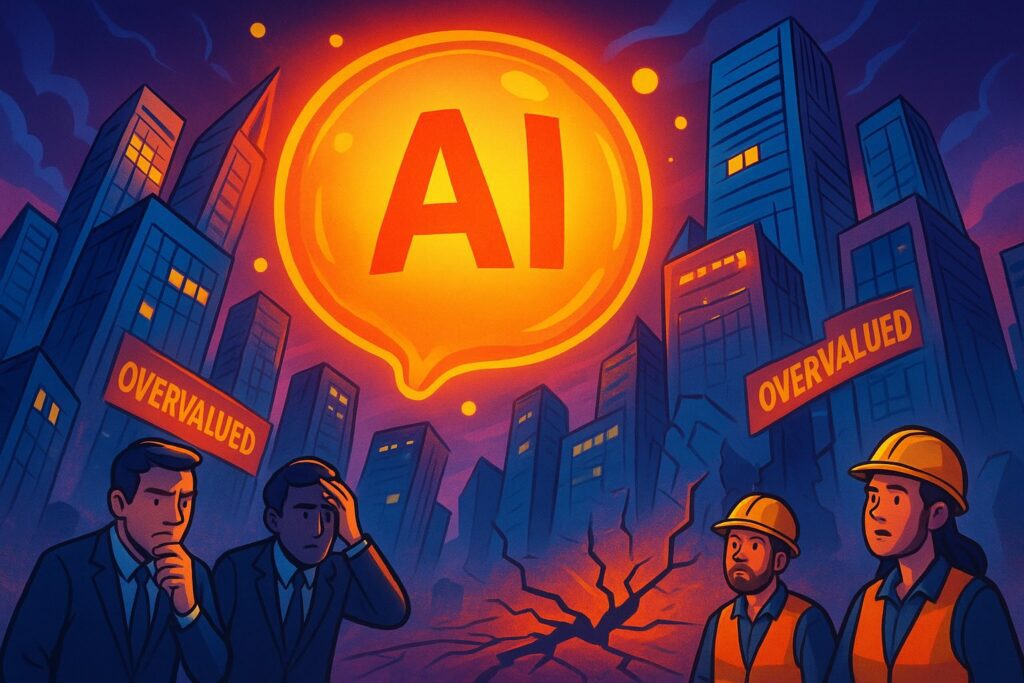
The AI revolution has been making headlines for years, with many companies pouring millions of dollars into AI research and development. However, the harsh reality is that most businesses in the tech industry are currently not profitable. Despite this, investors are still betting big on the potential in many industries.
The high expectation for AI’s potential might be leading to overvaluation of related stocks. This could be a sign of an bubble forming, where investors are buying into the hype rather than the actual value of the companies. The consequences of a stock bubble could be catastrophic, leaving many investors with significant losses and many people without jobs.
One of the key risks is the lack of transparency. Many AI-related companies are still in the early stages of development, and it can be difficult to determine their actual financial health. This makes it even more challenging for investors to make informed decisions.
Investing requires careful consideration and market trend lately seems to only increase the stock value. But when we stay up-to-date with the latest developments in the AI space, we may see potential risks.
Ultimately, we have to remind ourselves that it’s not just about betting on the potential of AI, but also about understanding the actual value of the companies involved. By taking a more cautious approach, investors can avoid getting caught up in the hype and workers are prepared for potential sudden changes in different industries.
The Value of AI is Real
Artificial intelligence is clearly delivering value in various industries. From automating mundane tasks to providing personalized experiences, AI is revolutionizing the way businesses operate.
The tech economy, in particular, is experiencing a significant boost due to AI-driven innovations. Companies are leveraging AI to improve customer service, enhance product development, and streamline operations, resulting in increased efficiency and productivity.
However, the high expectation for AI’s potential might be unrealistic. Many people fear that the current hype surrounding AI may lead to an overestimation of its capabilities. While AI has undoubtedly made significant strides, it still has limitations, and its full potential has not yet been realized.
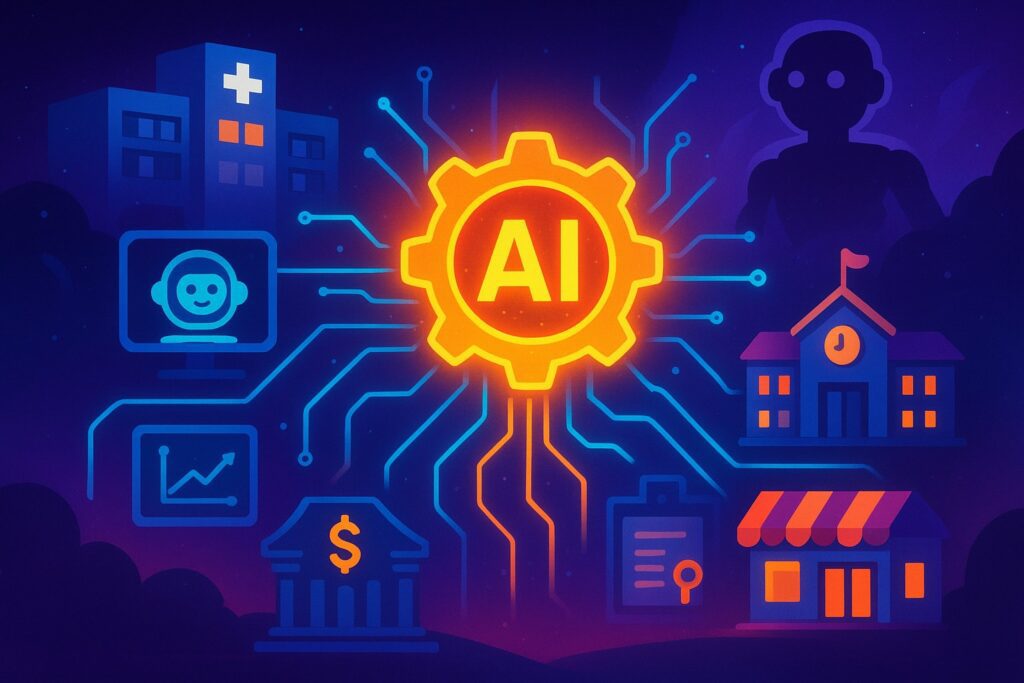
Despite these limitations, AI is still delivering tangible value to industries such as healthcare, finance, and education. For instance, latest chatbots are improving customer engagement in the commerce sector, while AI-driven algorithms are enhancing diagnosis in healthcare sector.
As AI continues to evolve, it’s essential to separate fact from fiction and have realistic expectations about its capabilities. By understanding the limitations and potential of AI, we can harness its full value and create meaningful solutions that benefit society as a whole.
The future of AI holds much promise, but there is one term that is being overused lately – AGI or Artificial General Intelligence, making it seem that a self conscious machine will be possibly among us in the near future. Is that even possible?
The Challenges of Further Progress
Some people are talking about reaching Artificial General Intelligence very soon. But at the moment, it is realistically still considered science fiction.
We’ve all seen the movies and read the books – robots taking over the world, becoming smarter and more powerful than humans. While the idea of AGI might seem exciting, we’re still a long way off from making it a reality.
The development of AGI is a complex task that requires significant advancements in AI research. It’s not just a matter of creating a more powerful chatbot. It would require a fundamental understanding of how the brain works, and how we can replicate that in a machine.
It’s a daunting challenge, and one that many experts believe is unlikely to be solved in the near future. This has happened before in the tech industry, as the expectation that a hard problem would be solved in soon, while in reality the development took even decades.
While AI has the potential to revolutionize many industries, it’s still a developing field, and we need to be careful not to get ahead of ourselves. The timeline for reaching AGI is still unknown and may take many years without significant progress.
What’s clear is that we need to be realistic about the challenges ahead, and not get caught up in the hype. By taking a more measured approach, we can ensure that AI research is driven by progress, not speculation.

Beyond the Hype: Why the AI Bubble Matters – But Shouldn’t Stop You
The AI bubble is a concern that requires careful consideration. No one knows if the bubble is real, at the beginning or close to burst. It will be clear only in the hindsight.
The value of AI is undeniable, but the high expectation for its potential might be unrealistic. For now, the best path forward is actually not caring about the something that is impossible to predict and maybe start learning about the possibilities right now how to improve.
In many ways, the AI bubble is a reflection of the enthusiasm and optimism that surrounds AI innovation. While it’s natural to be excited about the potential of technology in general, it’s essential to separate hype from reality.
The AI bubble may be fueled by the rapid progress, but it’s also driven by the high expectations of investors and the media. Interestingly, when everyone in the stock market is talking about a potential downfall due to a bubble, it means that they are not right.
We’ve seen this play out time and time again, and there’s no reason to believe that the AI bubble will be any different. The truth is that AI is real, and its benefits are undeniable.
What do you think about the current situation? Are we in another overhyped era, or there should be no concerns at the moment? Let me know in the comment section!