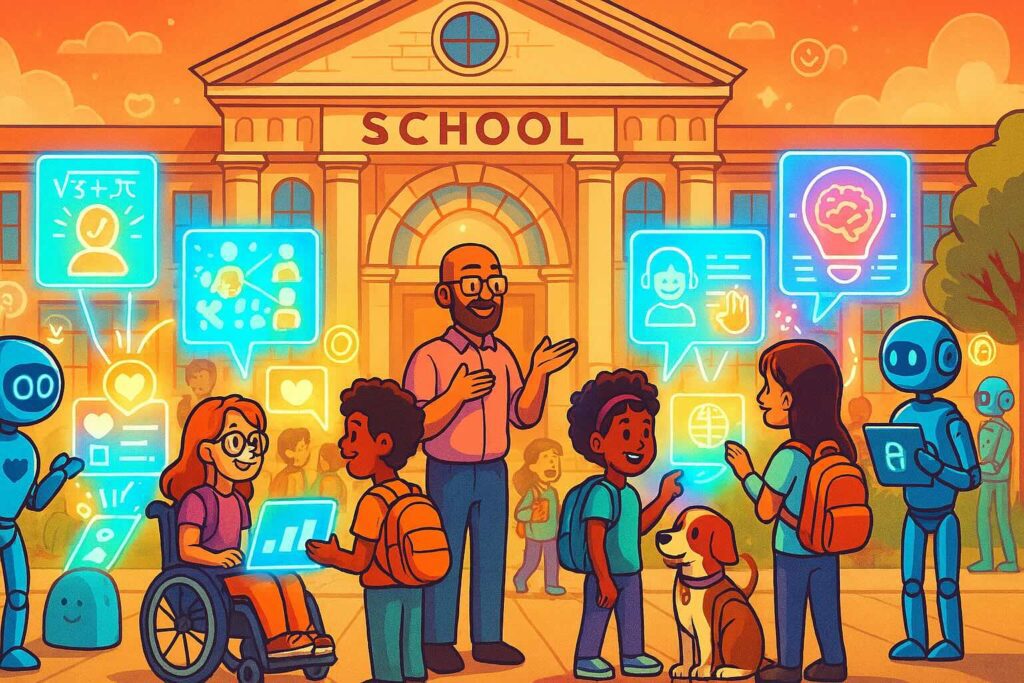
As we navigate the digital age, the way we learn and interact with information is undergoing a significant transformation. The integration of artificial intelligence in learning systems.
The education sector is reshaping, making learning more effective, engaging, and accessible to students worldwide. With growing adoption of AI-powered tools and platforms, the face of education is changing in significant ways.
One of the biggest advantages of AI education is its ability to provide personalized learning experiences. Student’s learning patterns, strengths and weaknesses can be analyze and then tailor content and pacing to match.
This kind of adaptive education has been shown to improve engagement and academic outcomes, offering more effective learning than one-size-fits-all approaches. We have already discussed the possible impact of AI on education in one of our previous blog posts.
Moreover, AI education enables real-time feedback and assessments, helping students identify where they need improvement and allowing them to track their progress dynamically.
That not only enriches the learning process but also encourages a growth mindset – empowering students to take ownership over their learning journey. Virtual tutors and AI-driven study assistants can support students even outside classroom hours.
Many individuals can also more easily upskill or reskill in response to changing industry demands. As these advanced systems evolve, we can expect even more innovative applications – further transforming learning and unlocking new possibilities worldwide.
In today’s post, we will delve into AI education, its current status and where it is headed.

Transformative Power of AI in Learning
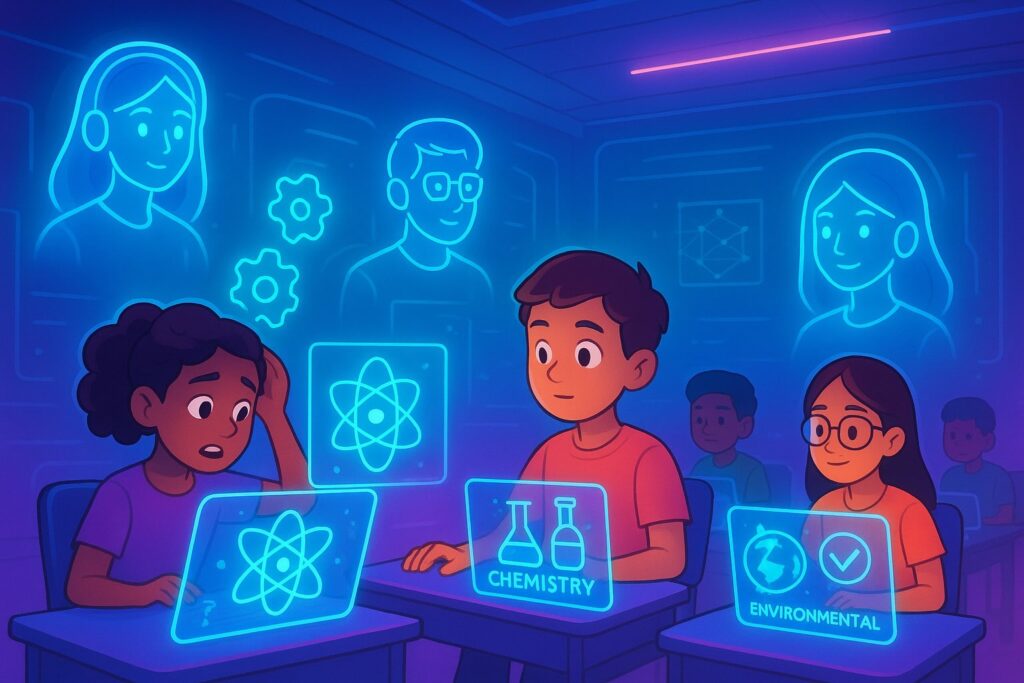
The integration of AI in education has already opened doors to more personalized and immersive experiences for learners across the globe. At the heart of this transformation are adaptive AI platforms that dynamically adjust to each learner’s needs.
Students struggling with certain concepts receive extra support; those ready to advance can access more challenging material. This flexibility can help accommodate diverse learning styles and broad ranges of ability.
Beyond adaptation, AI offers continuous support through virtual tutors available 24/7, a common advantage not only in education, but all industries.
These artificial assistants can provide explanations and guidance whenever a student needs it – making support scalable and flexible. This often fills gaps left by traditional teaching, especially for students who need extra help outside classroom hours.
One of the greatest properties is that learners can explore both introduction class and later complex concepts as well. From biology and chemistry to environmental science and beyond, all topics are covered. This immersive learning experience can also broaden accessibility to high quality education.
Streamlining Teacher Workload and Enhancing Training
In today’s fast-paced educational environment, teachers often juggle many roles: instructor, mentor, administrator. That heavy workload can contribute to burnout and diminish the quality of teaching.
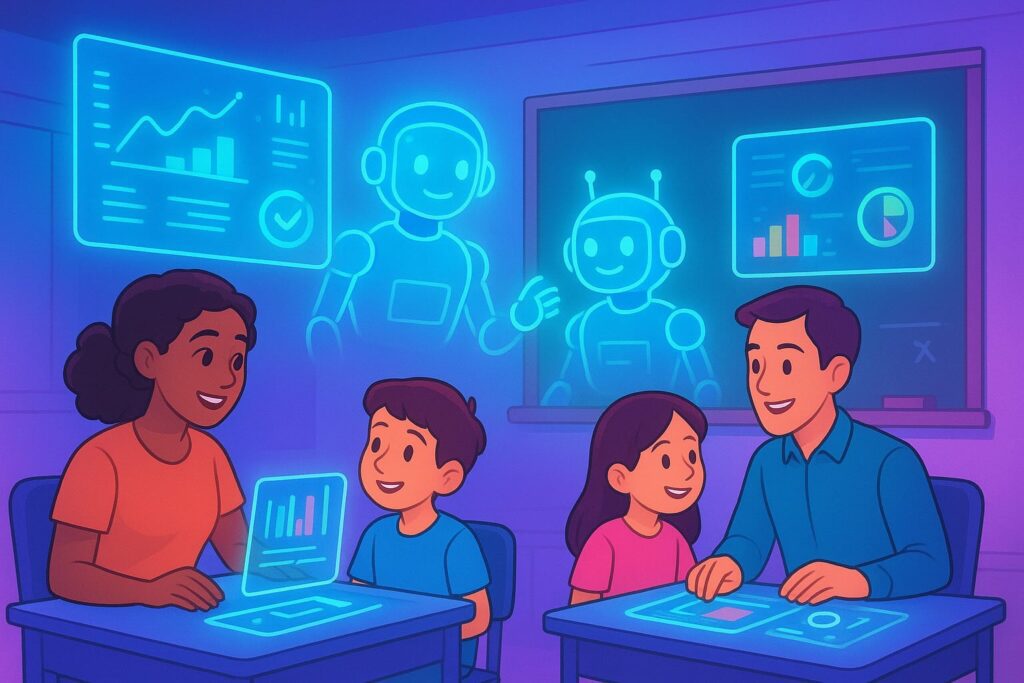
AI tools are helping to change that by automating routine and administrative tasks – reporting, tracking progress – freeing up teachers to focus more on individualized instruction and student mentoring.
Offloading these tasks can give teachers more time for lesson planning, one-on-one support and designing engaging learning experiences.
Advanced analytics also give educators insights into student performance and needs – allowing more informed, data-driven teaching strategies and timely interventions. This helps improve teaching quality, especially in mixed-ability or large classrooms.
Combining traditional classroom methods with AI-powered digital modules into hybrid learning models are becoming the new norm. These models offer flexibility: real-time feedback and interactive content.
This can lead to a more holistic and effective learning experience for students while supporting teacher growth and instructional innovation.
Promoting Digital Literacy and Accessibility
In our increasingly tech-driven world, students need digital literacy – the confidence and skills to engage with modern tools.
AI helps by making high-quality learning more widely accessible, especially for those who might otherwise lack resources or conventional support.
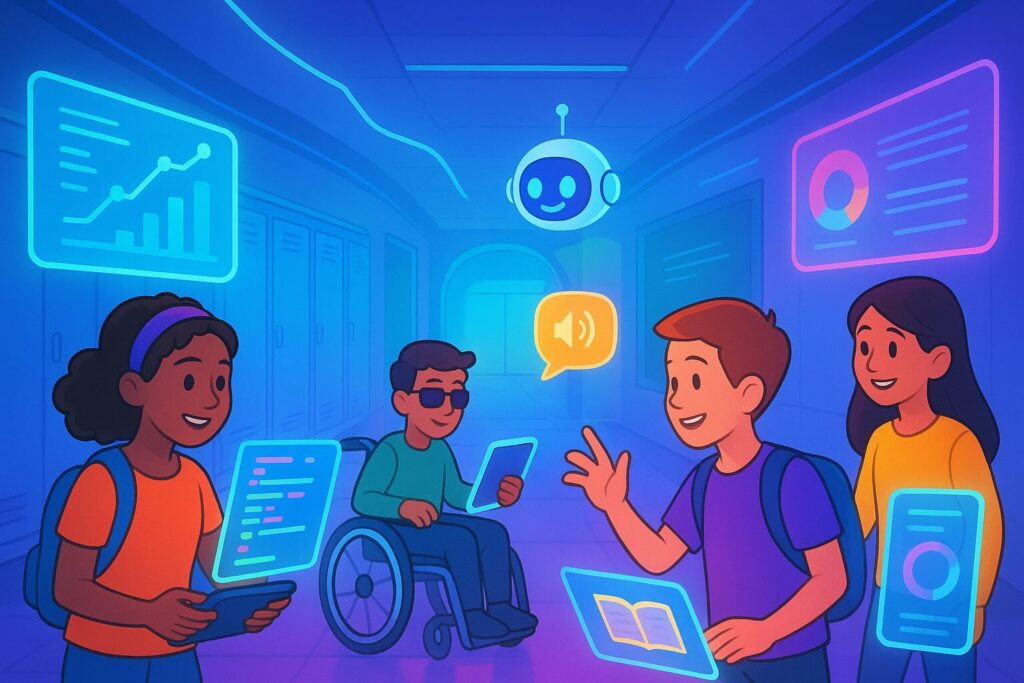
Learning is more engaging and understandable, even when traditional methods fall short. Whether it’s a coding simulator or learning literature, AI-powered tools can bridge gaps, making learning more inclusive and tailored to individual needs.
AI also has great potential to support students with disabilities. For example, adaptive audio-based learning platforms for visually impaired students show how AI can create personalized and accessible learning experiences.
As reliance on technology grows, equipping students with digital and AI literacy becomes crucial – helping them succeed not only academically but also in navigating a rapidly evolving, AI-enabled world.
Enhancing Learning Outcomes and Reducing Inequality
By harnessing AI’s adaptive capabilities and reach, we have an opportunity to narrow educational inequality.
Real-time assessments and personalized feedback help students identify weaknesses and improve skills regardless of background or resources. This kind of personalization is especially beneficial for learners who historically lacked access to quality education.
AI platforms can analyze data to provide educators with insights, enabling early identification of at-risk students or learning gaps. Teachers can then tailor interventions or support based on actual needs – improving outcomes and reducing disparities.
Because many AI-driven educational tools operate online, they can reach remote or underfunded areas – offering quality learning opportunities regardless of geography or socioeconomic status.
This helps democratize access to education and supports equity across different communities.
When thoughtfully implemented, AI-powered education has the potential to foster a high-quality and inclusive learning environment for all.
But let’s not forget about the possible issues of these advanced systems.
Ethical AI Frameworks and Student Data Protection
As AI education becomes more integrated into traditional education, ethical and privacy considerations become crucial, as we have already discussed in one of our the previous articles. In education, AI systems often rely on collecting student data – performance metrics, learning behaviors, interaction logs – to function effectively.
Without robust safeguards, this raises serious concerns about privacy, consent, and data security. Following the best practices for data and ethics is not only important in education, it is important to many industries from healthcare to finance.
Moreover, there is a risk of over-reliance: when AI becomes the default for tutoring or assessment, students and educators might neglect human interaction, critical thinking or emotional learning – all vital elements of education. AI should augment, not replace, the role of human teachers.
We must also consider equitable access – not all students worldwide have access to such platforms. Without addressing this digital divide, AI’s promise could deepen existing inequalities instead of reducing them.

Where Education Is Headed – and Why AI Leads the Way
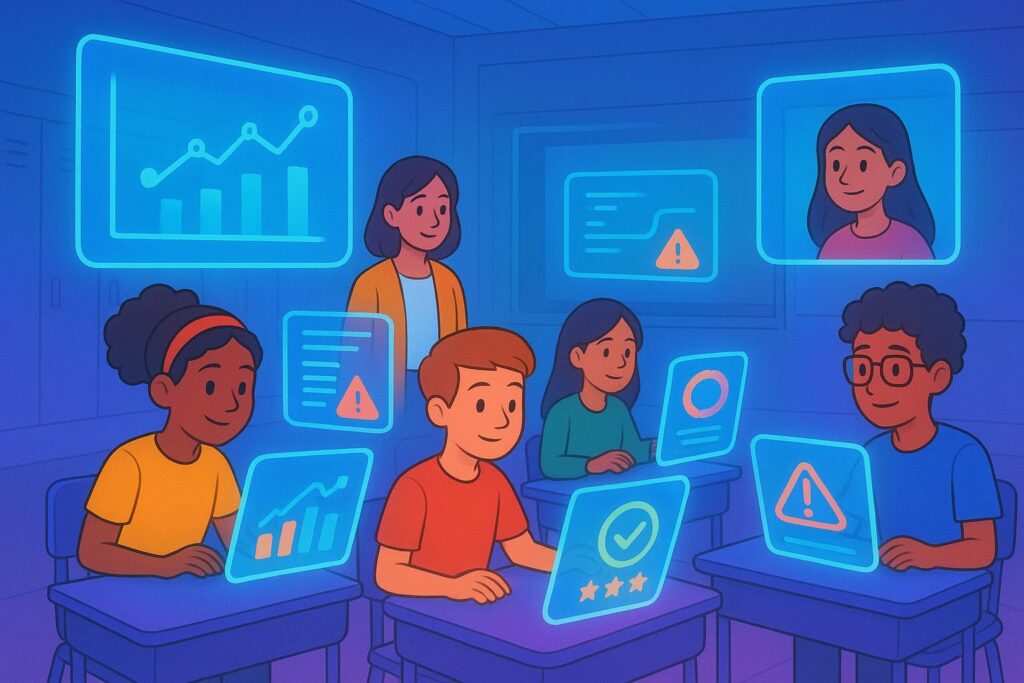
Imagine a classroom where every student engages in real-time conversations with AI-powered virtual assistants, receives personalized feedback on assignments and collaborates with peers across the globe.
This vision is no longer futuristic – it’s increasingly becoming a reality as AI integrates deeper into education.
With AI handling routine tasks, educators are freed to focus on mentoring and nurturing critical thinking. This collaboration can produce immersive, personalized learning – especially helpful for students with special needs, diverse learning styles, or those needing extra support.
But as AI becomes foundational in education, we must balance innovation with ethics, privacy, access, and human connection. Again, adoption should always be thoughtful: AI should complement, not replace, human teaching.
Looking ahead, digital and AI literacy will define the next generation’s competitiveness. As AI becomes more prevalent in learning environments, students also need to cultivate independence in completing tasks and critical thinking – skills that machines cannot easily replicate.
By embracing AI as a partner in education, we can unlock a future where learning is personalized, inclusive, accessible, and empowering.
What do you thing about application of AI in education? Let me know in the comment section!