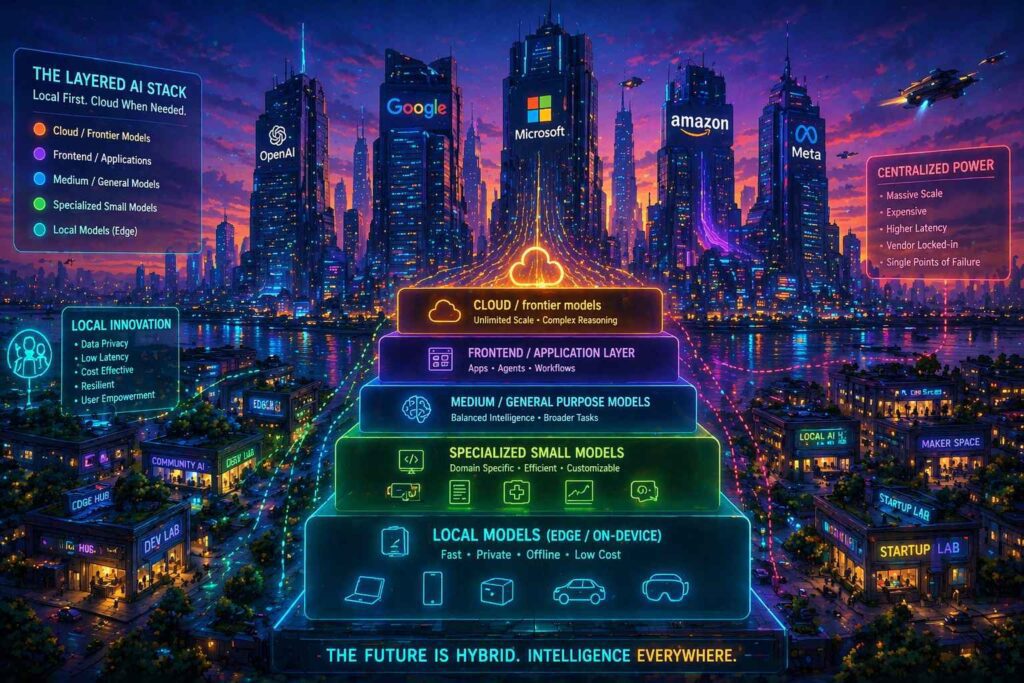
Is it possible to shift to local LLMs?
Centralized APIs might be replaced by local LLMs, allowing developers to run powerful AI directly on their machines. This shift has the potential to revolutionize the way we approach AI development, giving creators more control and flexibility over their projects.
Imagine being able to train and deploy AI models without relying on external services or APIs. This is the promise of local LLMs, and it’s becoming a reality thanks to advances in machine learning and edge computing.
By running local LLMs, developers can bypass the need for cloud services and reduce their reliance on big tech. This not only saves costs but also provides an added layer of security and data sovereignty. With local models, data never leaves the device, ensuring that sensitive information remains confidential.
The shift to local LLMs is also driven by the increasing adoption of edge computing. Edge devices, such as laptops, smartphones, and IoT sensors, are now capable of running complex AI models, thanks to advances in quantization and distillation. These techniques allow for the compression of large models into smaller, more efficient versions that can run on resource-constrained devices.
As a result, developers are no longer limited by the need for cloud connectivity or high-performance hardware. They can now deploy AI models on a wide range of devices, from laptops to IoT sensors, and run them seamlessly. This has far-reaching implications for industries such as healthcare, finance, and manufacturing, where data security and local processing are critical.
The shift to local large language models is an exciting development that has the potential to democratize AI development and unlock new possibilities for creators. By running powerful AI directly on their machines, developers can focus on innovation and creativity, rather than relying on external services.
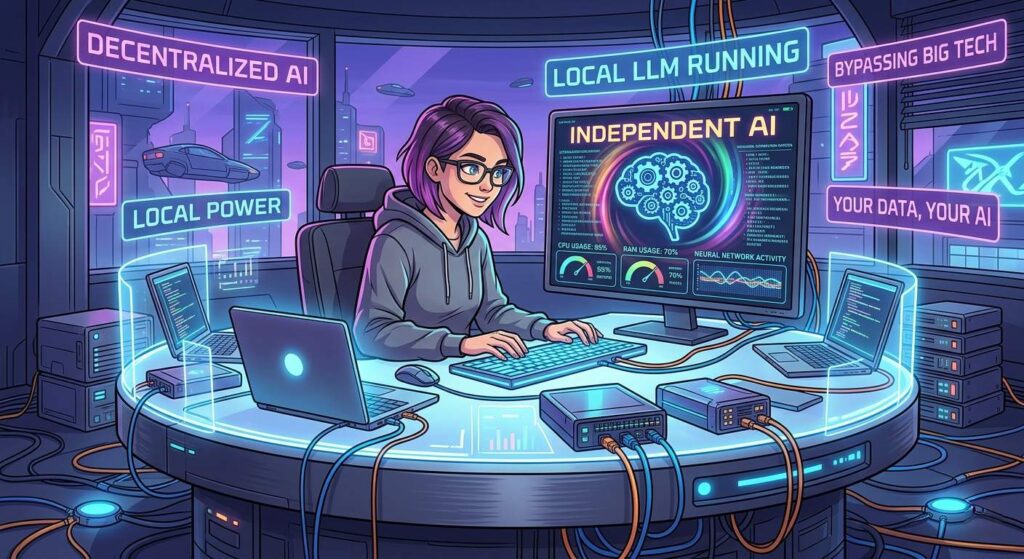
Production Risks and Benefits
When it comes to deploying machine learning models, production risks can be a major headache for backend engineers. But what if you could eliminate those risks altogether? Enter local models – a game-changing solution that’s revolutionizing the way we deploy and maintain AI-powered applications.
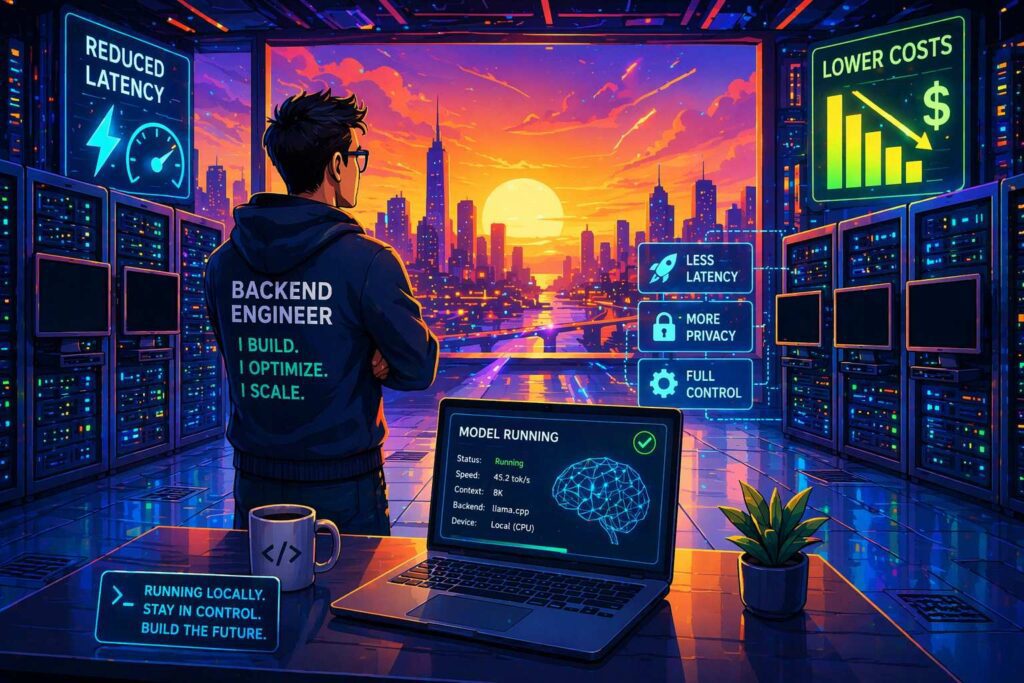
Local models eliminate key production risks: latency, rate limits, API outages, and unpredictable costs. Gone are the days of worrying about slow response times or unexpected API fees. With local models, you can say goodbye to those worries and hello to a more streamlined development process.
But the benefits don’t stop there. Backend engineers can benefit from the reduced risks, making it easier to deploy and maintain models. No more worrying about API outages or rate limits holding you back from delivering a seamless user experience. With local models, you can focus on what matters most – building innovative applications that wow your users.
And let’s not forget about the cost savings. Running models locally reduces marginal cost to near-zero. That means you can deploy as many models as you need, without breaking the bank. This is particularly ideal for startups and small businesses who may not have the budget to spare on expensive API fees.
By embracing local LLMs, you can unlock a world of possibilities for your application. From improving user engagement to reducing costs, the benefits are endless. So why wait? Make the switch to local models today and discover a more efficient, cost-effective way to deploy AI-powered applications.
Economic and Regulatory Impact
The real disruption is economic: running models locally challenges API-based business models of large providers. For years, companies like OpenAI, Anthropic, Google, and Microsoft have built massive businesses by offering cloud-based AI services. These providers charge customers for the privilege of accessing their powerful machines and advanced algorithms, often through APIs that connect to their cloud infrastructure.
However, the emergence of local LLMs is poised to upend this business model. By running AI models locally, on-device or on-premises, companies can reduce their reliance on cloud-based services and cut costs. This shift has significant economic implications for the providers of cloud-based AI services, who may see their revenue streams disrupted.
But the impact of local models goes beyond economics. Privacy and compliance are major drivers for local models, keeping sensitive data on-device. In regulated industries like finance, healthcare, and government, companies are subject to strict data protection laws and regulations. Running AI models locally helps companies comply with these regulations by keeping sensitive data within the organization’s control.
Local models are critical for enterprise adoption in regulated industries. Companies in these sectors require a high degree of confidence in the security and confidentiality of their data, which is harder to achieve when data is transmitted to the cloud. By running AI models locally, companies can ensure that their data remains secure and confidential, while also reducing their reliance on cloud-based services.

Emerging Patterns and Tooling
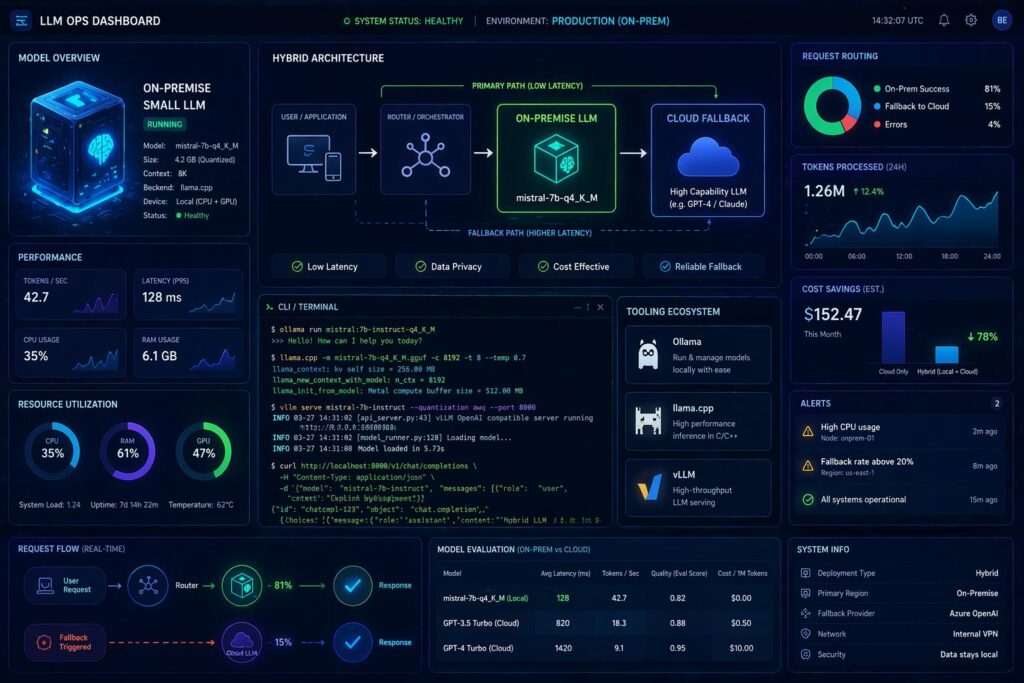
In the realm of Large Language Models, a crucial trade-off has emerged. Small models, despite their efficiency and ease of deployment, sacrifice both reasoning depth and long-context performance. This inherent limitation has led to the dominance of hybrid architectures, which cleverly combine the strengths of local models with the scalability of cloud-based fallbacks.
As the field continues to evolve, tooling ecosystems are rapidly maturing to simplify the deployment of local LLMs. Innovative platforms like ollama and vLLM are making significant strides in this area. These ecosystems empower developers to harness the potential of local LLMs with unprecedented ease.
The CLI commands offered by these tooling ecosystems have taken the complexity out of deploying local models, making it as simple as possible. With a few intuitive commands, developers can seamlessly integrate local LLMs into their applications, unlocking new possibilities for conversational AI, content generation, and more.
The proliferation of local LLMs is also giving rise to a new wave of innovative use cases. From edge computing to IoT applications, the potential for local large language models to drive meaningful insights and actions is vast. As the ecosystem continues to mature, we can expect to see even more exciting developments in the realm of local LLMs.
As the lines between local and cloud-based LLMs continue to blur, one thing is clear: the future of LLMs is hybrid. By combining the strengths of both local and cloud-based models, developers can unlock unparalleled levels of performance, scalability, and innovation. The emergence of hybrid architectures and maturing tooling ecosystems is poised to revolutionize the way we build and deploy LLMs.
Industry Response and Future Directions
The AI landscape is shifting rapidly, with big companies vying for dominance in the model space. The competition is no longer just about building the next best large language model, but about creating a comprehensive ecosystem that integrates multiple models to address diverse tasks. This includes model quality, distribution, ecosystem lock-in, and developer tooling, all designed to counter the decentralization of AI.
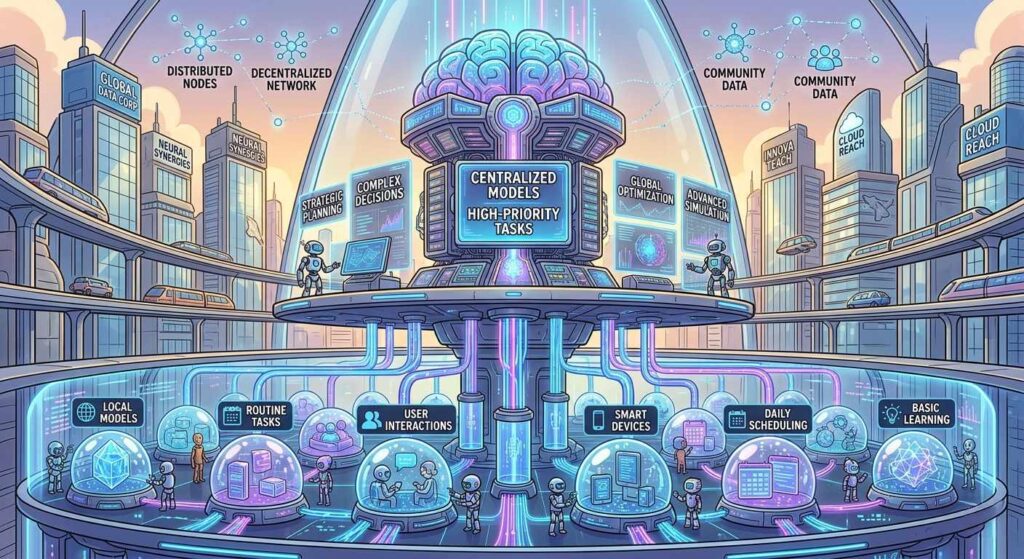
However, the likely future is not a simple “small vs big models” dichotomy. Instead, we’re witnessing the emergence of a layered AI stack, where different models work together to deliver exceptional results. This approach is already gaining traction, with local LLMs handling the bulk of everyday tasks, freeing up larger models to tackle critical, high-stakes challenges.
Local models are poised to handle around 80% of tasks, thanks to their ability to learn from specific datasets and adapt to local environments. This efficiency and agility make them ideal for tasks like customer service chatbots, language translation, and content moderation. Meanwhile, large models will focus on the critical 20% of tasks that require exceptional cognitive abilities, such as complex problem-solving, creative writing, and scientific research.
As this layered AI stack continues to evolve, we can expect to see a proliferation of hybrid models that combine the strengths of local and large models. This integration will unlock new possibilities for AI applications, from augmented intelligence to human-AI collaboration. As the industry responds to these changes, we can expect to see a new wave of innovations that transform the way we interact with AI.
The future of AI is not about replacing human intelligence with machine learning, but about augmenting it with intelligent systems that work in harmony with us. As we move forward, it’s essential to prioritize collaboration, transparency, and accountability in AI development, ensuring that the benefits of this technology reach everyone, not just a select few.
Small Models Might Bring Another Disruption
We’ve reached a pivotal moment in the history of AI, where the tide is turning in favor of decentralized innovation. The shift towards local LLMs marks a significant departure from the dominance of centralized APIs and big tech. This revolution has far-reaching consequences that will reshape the economic, regulatory, and production landscapes.
Local large language models offer a more equitable distribution of power, allowing developers and businesses to create their own AI solutions, free from the shackles of proprietary APIs. This shift is not just about technology; it’s about control and agency. By taking AI development in-house, companies can tailor their solutions to meet specific needs, rather than relying on pre-packaged, one-size-fits-all services.
The benefits of local LLMs extend beyond the confines of individual businesses. They also have significant implications for the economy and society as a whole. As more companies adopt local AI development, the market will see a surge in innovation, with new applications and use cases emerging at an unprecedented pace. This, in turn, will lead to increased productivity, cost savings, and competitiveness.
The future of AI will be shaped by a layered stack, where local models drive innovation and cost savings. This approach will enable developers to create complex AI solutions, combining the strengths of multiple models to achieve unparalleled performance. The possibilities are vast, and the opportunities are limitless. As local LLMs continue to gain momentum, we can expect to see a seismic shift in the way AI is developed, deployed, and used across industries and sectors.