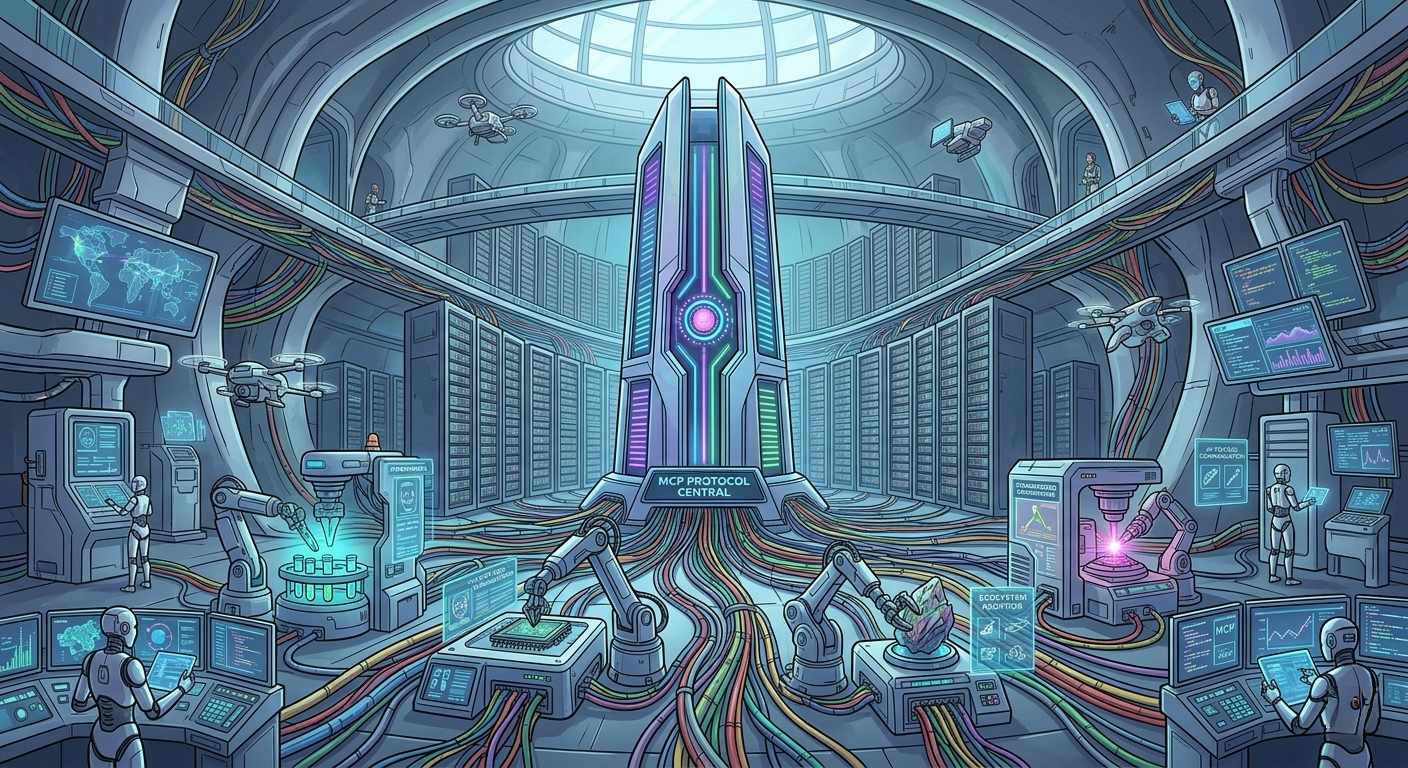
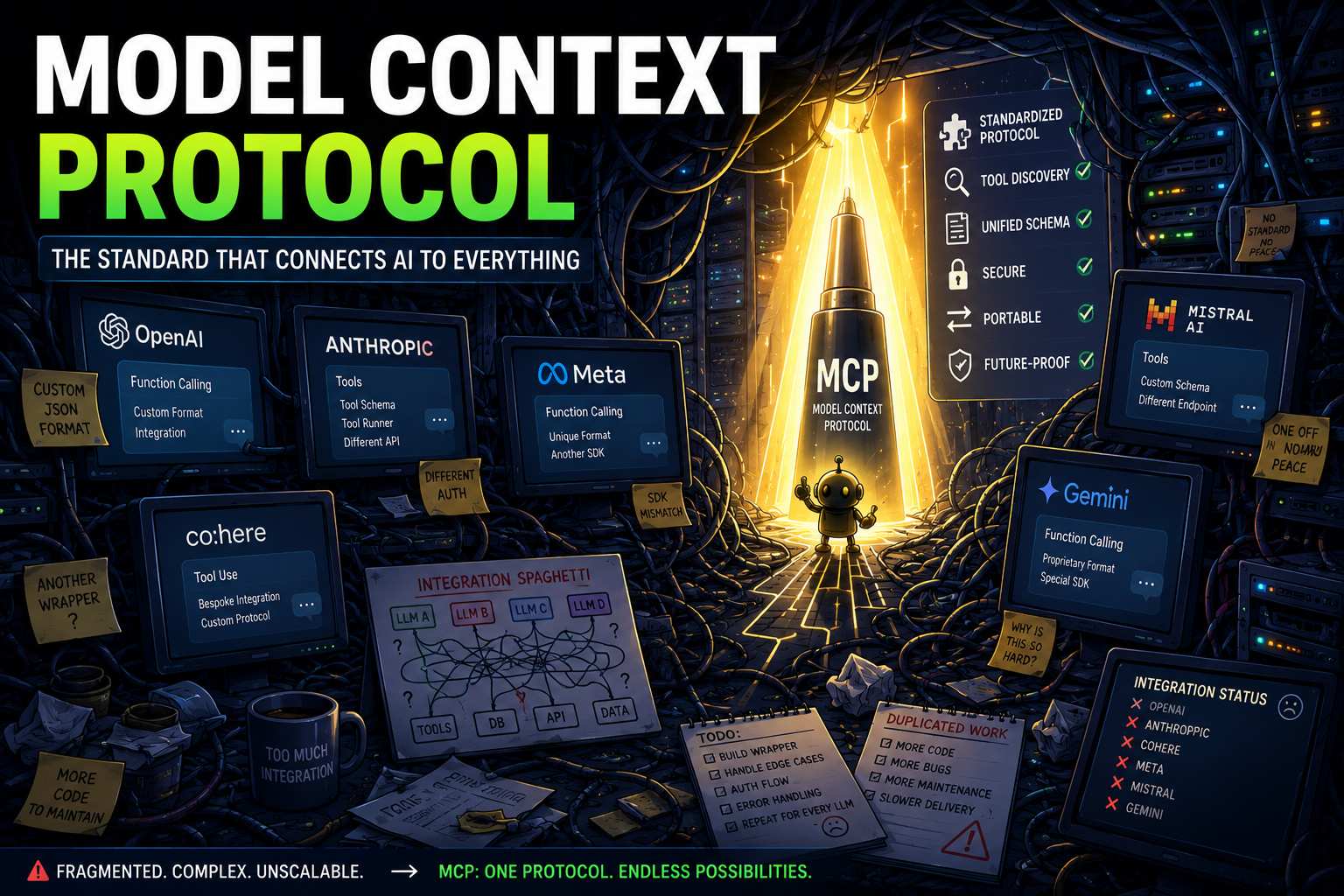
Fragmented AI tooling creates unnecessary complexity and duplicated work. Before MCP, developers often had to build separate integrations for each AI platform, creating unnecessary complexity, duplicated work, and platform lock-in. Imagine having to develop multiple custom workflows, each tailored to a specific AI tool, just to get the desired outcome. It’s a daunting task that not only consumes a lot of time and resources but also handcuffs developers to a particular platform.
The core idea behind Model Context Protocol MCP is simple: standardize how AI models discover tools, access resources, and invoke external capabilities through a common protocol. This means that developers can focus on building innovative applications rather than getting bogged down in integration complexities. By enabling seamless communication between AI models and tools, the MCP protocol revolutionizes the way we interact with AI technology, breaking free from the shackles of platform lock-in.
The benefits of the MCP protocol are multifaceted. With a standardized framework, developers can:
- Develop integrations once and deploy them across multiple platforms
- Avoid duplicated work and minimize the risk of errors
- Focus on application development rather than integration complexities
- Take advantage of emerging AI technologies without worrying about lock-in
- Build more scalable, flexible, and adaptable AI solutions
The MCP protocol addresses the long-standing issue of fragmented AI tooling, paving the way for a more efficient, agile, and collaborative AI development ecosystem. By embracing this protocol, developers can unlock the full potential of AI and create innovative applications that transform industries and lives.
MCP Standardization
The future of Artificial Intelligence is built on seamless integration and communication between various systems and services. This is where the MCP Standardization comes into play, revolutionizing the way we interact with AI models and external services.
A New Era of Standardization
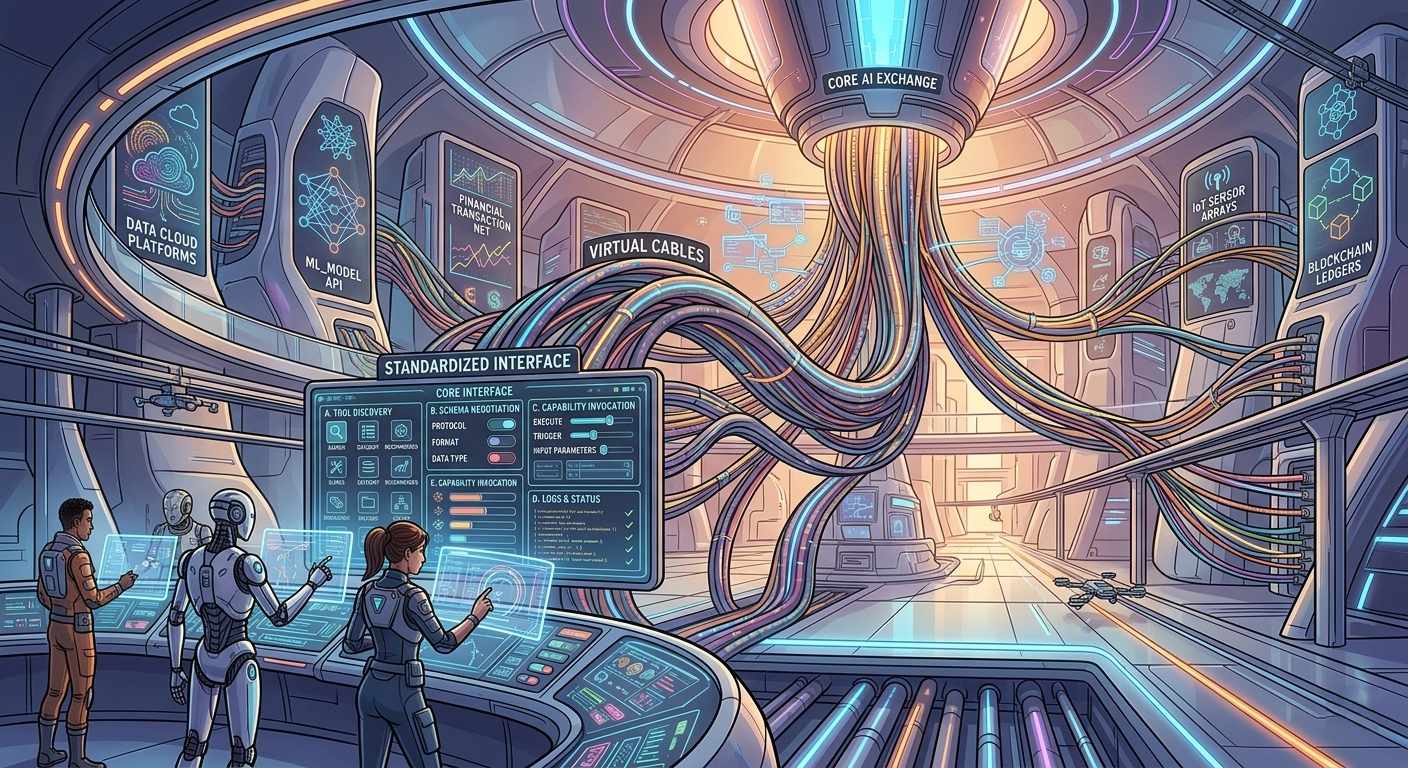
With MCP, the process of discovering AI models, accessing tools, and invoking external capabilities has never been more streamlined. By adopting a common protocol, MCP creates a unified language that enables AI clients to communicate effectively with external services. This breakthrough standardization touches every aspect of AI integration, from communication format to tool discovery, schemas, resources, and prompts.
Unlocking the Power of the MCP Protocol
At the heart of MCP lies the MCP protocol, a game-changing framework that enables the seamless exchange of information between AI clients and external services. This protocol ensures that all interactions are standardized, making it easier for developers to build and integrate AI applications.
Imagine being able to access a vast array of AI models and tools with a single interface. No more complexity, no more confusion – just a simple, intuitive way to tap into the vast potential of AI. The MCP protocol makes this a reality, empowering developers to build more sophisticated and effective AI applications.
A Brighter Future for AI Integration
The MCP Standardization is more than just a technical advancement – it’s a catalyst for innovation. By creating a common interface between AI clients and external services, MCP opens up new possibilities for AI development and deployment. As the AI landscape continues to evolve, one thing is clear: MCP Standardization is the key to unlocking a brighter, more connected future for AI integration.
Benefits of MCP Protocol
Imagine a world where AI agents can seamlessly communicate with each other, without the need for complex integrations or proprietary systems. Welcome to the world of MCP, where agent portability and interoperability reign supreme.
One of the most significant benefits of MCP is agent portability. With the same MCP server, multiple AI clients can be consumed, making it easier to deploy and manage AI-powered applications. This flexibility is a game-changer for businesses, allowing them to focus on innovation rather than integration headaches.
Moreover, MCP adoption accelerates interoperability and reduces integration friction. As more AI ecosystem players support the MCP protocol, the barriers to entry for new players decrease, and the market becomes more open and competitive. This, in turn, drives innovation and improves overall performance.
The adoption of MCP is gaining momentum, and major AI ecosystem players are starting to add MCP support to their platforms. In 2024 and 2025, we saw a significant increase in MCP adoption, with leading companies like Google, Microsoft, and Amazon investing heavily in MCP-based solutions.
The MCP protocol, which enables seamless communication between AI agents, is at the heart of this revolution. By providing a standardized interface for AI agents to interact with each other, MCP is paving the way for a new era of AI-powered applications that are more intuitive, more efficient, and more effective.
As MCP continues to gain traction, we can expect to see even more innovative applications of AI, from smart homes and cities to healthcare and finance. With MCP, the possibilities are endless, and the future of AI has never looked brighter.

Enterprise Architecture
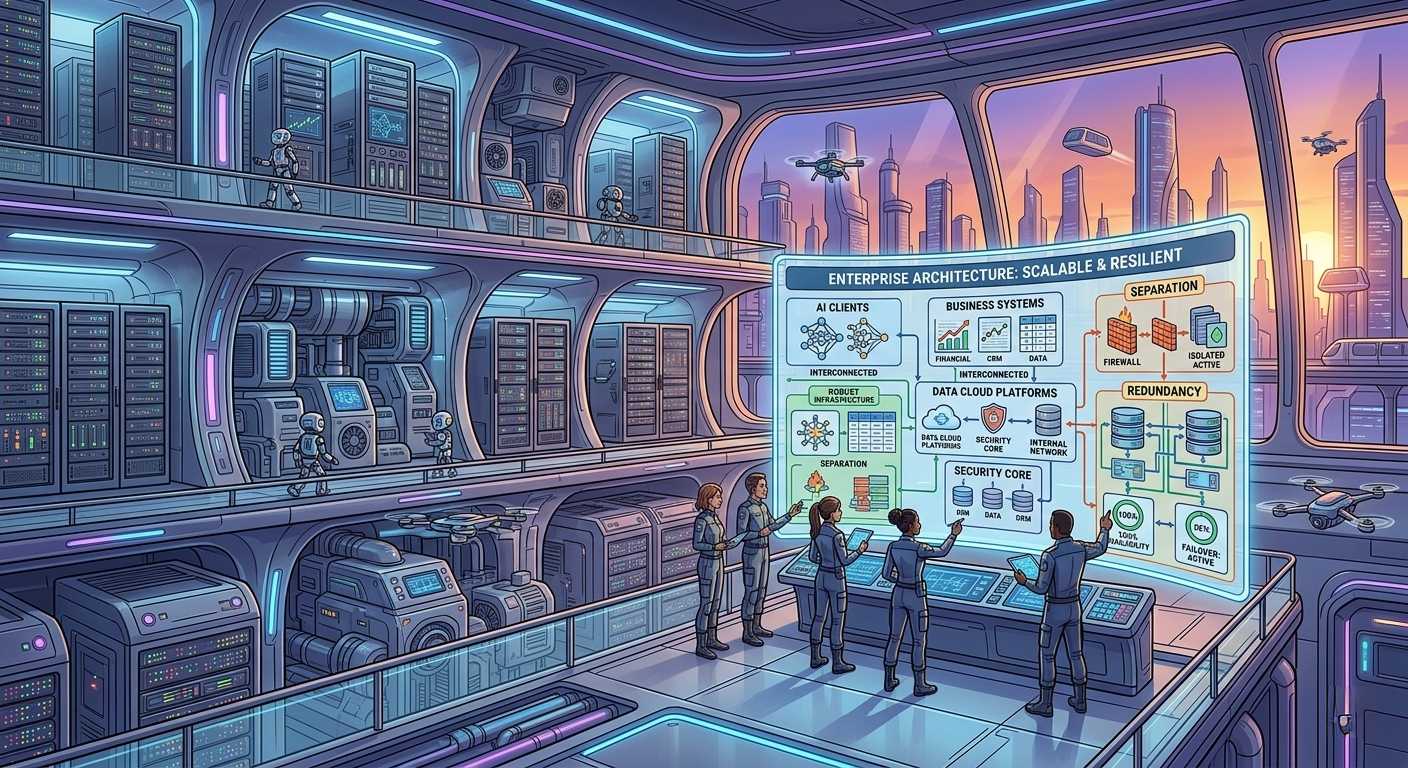
When it comes to implementing Large Language Models in an enterprise setting, one of the most significant challenges is achieving a clear separation between business systems and AI clients. This is where the MCP protocol comes in, allowing for a more streamlined and efficient integration of AI capabilities into your existing infrastructure. By creating a clear boundary between business systems and AI clients, the MCP protocol ensures that your enterprise architecture remains flexible and adaptable to changing needs.
One of the key benefits of the MCP protocol is that it reduces dependency on a single LLM vendor. In today’s fast-paced tech landscape, it’s more important than ever to have the freedom to choose the best tools for the job, without being locked into a specific vendor. The MCP protocol makes this possible by providing a standardized interface for integrating LLMs, allowing your organization to switch between vendors or explore new options as needed.
The MCP protocol also aligns well with enterprise architecture principles, which emphasize the importance of separation of concerns, scalability, and flexibility. By decoupling business logic from AI capabilities, the MCP protocol enables your organization to develop and deploy AI-driven solutions more quickly and efficiently, while minimizing the risk of vendor lock-in. With the MCP protocol, you can focus on building innovative applications that drive real business value, without getting bogged down in technical complexities. By embracing the MCP protocol, your organization can take a major step forward in its digital transformation journey, and unlock the full potential of AI-driven innovation.
MCP Evolution
Imagine a world where different services and systems can communicate with each other effortlessly, without the need for tedious integration and endless API calls. That’s exactly what the MCP protocol has set out to achieve. A standardized layer on top of existing services, MPC is the game-changer we’ve all been waiting for.
At its core, MCP is all about providing a common interface that enables seamless interactions between various systems and services. But here’s the thing: it doesn’t eliminate the need for APIs, authentication, authorization, or validation. In fact, MCP works in harmony with these existing systems, making it easier to integrate and manage complex architectures.
One of the key benefits of MCP is its ability to evolve and adapt to changing needs and technologies. As new services and systems emerge, MCP can be easily updated to accommodate them. This means that MCP will continue to play a foundational role in agent architectures, even as the landscape around it continues to shift.
The MCP protocol is the key to unlocking this future of seamless integration. By providing a standardized interface, MCP enables developers to build applications that can communicate with multiple systems and services, without the need for custom code or manual integration. This not only saves time and resources but also reduces the likelihood of errors and compatibility issues.
As the world becomes increasingly interconnected, the need for a standardized layer like MCP has never been greater. With its ability to evolve and adapt, MCP is poised to play a major role in shaping the future of agent architectures and beyond. Whether you’re a developer, a business leader, or simply someone interested in the latest technology trends, MCP is definitely worth keeping an eye on.

A Cemented Standard?
As we’ve explored the world of MCP, it’s clear that this revolutionary protocol is poised to change the game for AI developers and tool creators alike. At its core, the MCP protocol is key to standardized AI-to-tool communication. By providing a universal language, it enables seamless interactions between AI systems and the tools they use. This is a game-changer for developers, who can now focus on building innovative applications without worrying about compatibility issues.
But the MCP protocol’s impact goes far beyond just individual applications. Network effects make it a valuable ecosystem, with widespread adoption leading to increased innovation and growth. As more developers and tools join the MCP network, the value proposition grows exponentially. This creates a virtuous cycle, where early adopters are rewarded with access to a diverse range of tools and AI systems, fueling further growth and adoption.
Early adoption of the MCP protocol is crucial for several reasons. Not only does it reduce future migration costs, but it also protects against AI platform lock-in. By investing in the MCP protocol now, developers can avoid the costly and time-consuming process of switching to a new platform down the line. Instead, they can focus on building innovative applications that truly leverage the power of AI.
As we look to the future, it’s clear that the MCP protocol will play a starring role. With its standardized communication framework and network effects, it’s poised to become the de facto standard for AI-to-tool communication. By embracing the MCP protocol, developers can unlock a world of possibilities and join the next generation of AI innovation.