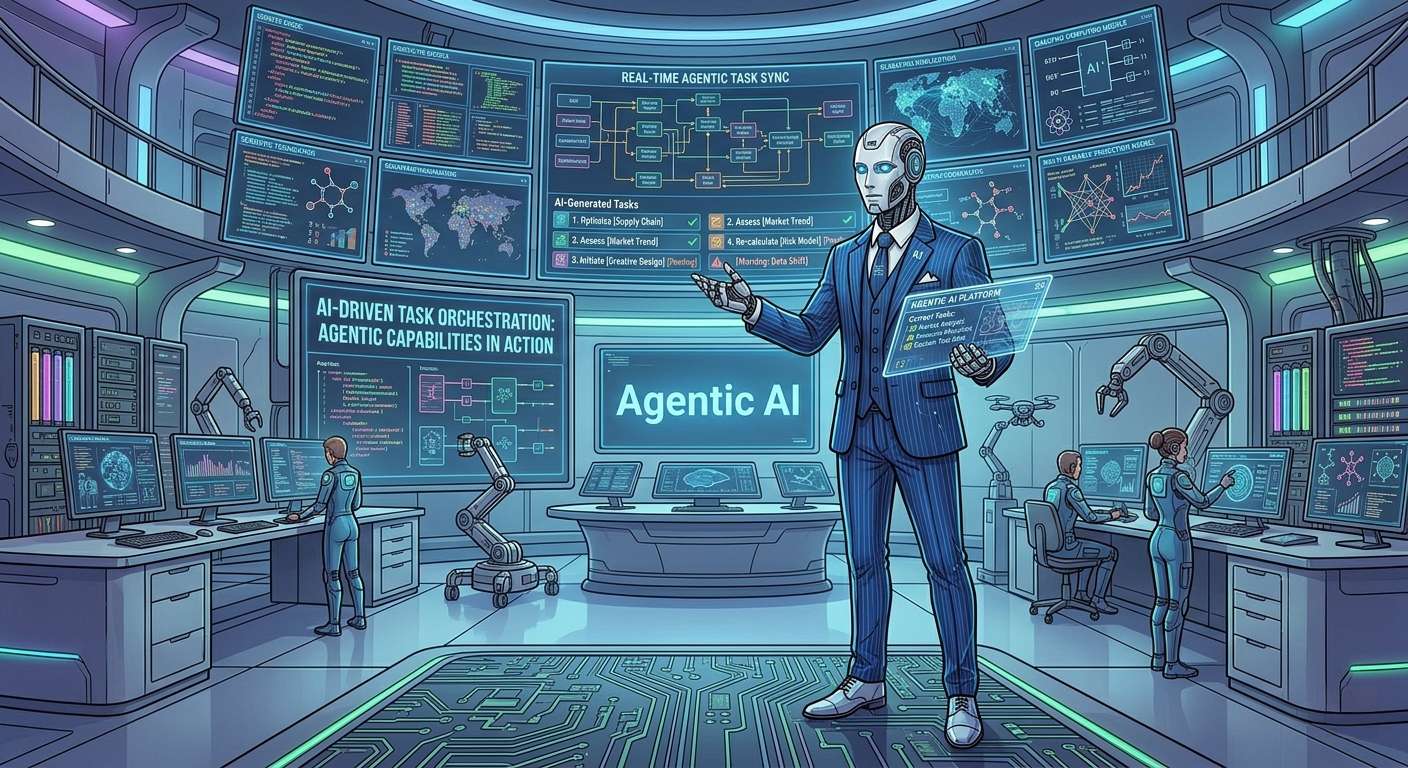
There are many misconceptions when it comes to Agentic AI systems. As it is one of the most overused terms in the IT industry. The term “Agentic AI” is often misused to describe multi-step LLM workflows. Many developers assume that just because an LLM can process multiple steps, it’s an example of true agency. However, true agency requires an AI system to dynamically decide what to do next, without being explicitly told.
Think about it like this: If you ask a virtual assistant to book a flight, it doesn’t mean the AI is truly in control. It simply follows a predetermined set of instructions. True agency implies that the AI can choose its own actions, and adapt to new information on the fly.
But what does it take to build an Agentic AI systems? To start, you need to differentiate between prompts, workflows, and agents. A prompt is simply a set of instructions or data that an AI uses to generate a response. A workflow, on the other hand, is a series of steps that an AI follows to complete a task. And an agent is a self-contained AI system that can make decisions and take actions independently.
Currently, most AI systems fall into the workflow category. They’re designed to follow a set of predetermined steps, without any ability to adapt or make independent decisions. But as we move forward, we’ll see more and more Agentic AI systems that can truly think and act on their own. And when that happens, we’ll need to rethink our entire approach to AI development and deployment.

The Core Idea of Agency
Imagine a machine that can set its own goals, make plans to achieve them, and adjust its strategy as needed. This is the core idea of agency, a concept that has been gaining traction in the field of Artificial Intelligence. The ultimate aim of agentic AI systems is to create systems that can navigate complex environments, make decisions, and adapt to changing circumstances – all on their own.
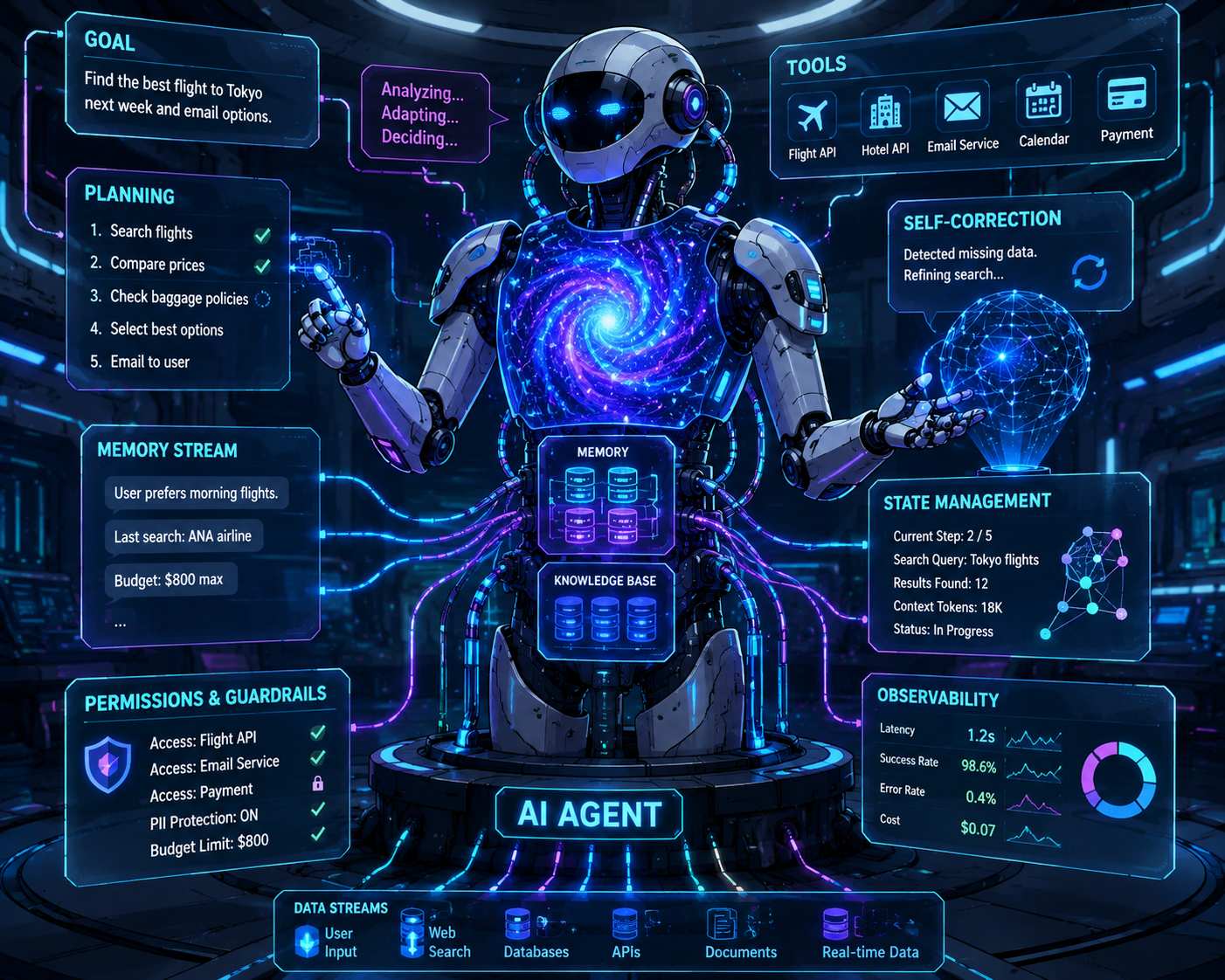
At the heart of agency are four essential capabilities that enable an AI agent to operate effectively. First, there’s planning – the ability to break down complex tasks into manageable steps and execute them in the right order. Next, there’s tool use – the capacity to leverage tools and resources to achieve its objectives. Memory plays a crucial role in agency, allowing an AI to recall past experiences, learn from them, and apply that knowledge in the future. Finally, there’s self-correction – the ability to recognize and rectify mistakes, and adjust its strategy accordingly.
Self-correction is a critical aspect of agency, and it relies heavily on feedback loops. These loops provide the AI with real-time information about its performance, enabling it to refine its approach and make adjustments as needed. By continuously iterating and adapting, an agentic AI can improve its decision-making, problem-solving, and overall effectiveness. As we strive to develop more sophisticated agentic AI systems, understanding these core principles will be essential to creating truly autonomous and intelligent machines.

The Spectrum of AI Systems
We’re living in an era of unprecedented innovation in the field of Artificial Intelligence. From smart assistants to self-driving cars, AI systems are transforming the way we live and work. But have you ever wondered what lies beneath the surface of these intelligent machines? In this article, we’ll delve into the fascinating world of AI systems and explore their spectrum.
At the heart of this spectrum are three primary types of AI systems: Prompted, Chained, and Agentic. Each type has its unique strengths and weaknesses, and understanding their differences is crucial for harnessing the full potential of AI.
Prompted systems are designed to answer questions and provide information. They’re essentially AI-powered search engines that can retrieve data from vast databases and present it in a user-friendly manner. However, their capabilities are limited to the data they’ve been trained on, and they can’t think outside the box or offer novel solutions.
Chained systems, on the other hand, are designed to execute predefined workflows. They’re AI-powered robots that can perform tasks autonomously, but their actions are predetermined and follow a set sequence. Chained systems are perfect for repetitive tasks, but they lack the flexibility to adapt to changing circumstances.
Agentic systems, however, take the cake. They’re the most advanced type of AI system, capable of dynamically deciding what to do next. Unlike prompted or chained systems, Agentic AI systems can think, learn, and act independently, making them the most powerful and flexible AI systems in the spectrum. The architectural shift from Generative AI to Agentic AI is significant, and it has the potential to revolutionize industries and transform the world as we know it.

The Challenges of Agentic AI
When we talk about Artificial Intelligence, most of us think of chatbots, virtual assistants, and other systems that can understand and respond to our needs. However, with the rise of Agentic AI systems, the landscape is changing. Agentic AI refers to systems that can take actions and make decisions on their own, without being explicitly programmed. This increased autonomy introduces new failure modes in Agentic systems, making it essential to understand the potential pitfalls.
One of the primary concerns with Agentic AI is hallucinations – when the system produces information that is not based on actual data. Imagine a self-driving car that suddenly decides to take a detour to a nearby park because it “sees” a pedestrian crossing the road. This can lead to catastrophic consequences, and it’s crucial to prevent such hallucinations from occurring in the first place.
Integration issues are another potential pitfall. As Agentic AI systems become more complex, it’s challenging to integrate multiple components that can work together seamlessly. This can lead to errors, inconsistencies, and even system-wide failures.
Incorrect goal pursuit is another challenge associated with Agentic AI systems. When a system is designed to pursue a specific goal, but the goal is not well-defined or is conflicting with other objectives, the system may make decisions that are detrimental to its overall performance or even safety.
Building agents requires a different mindset than prompt engineering. While prompt engineering focuses on generating text based on a specific prompt, building agents demands a deeper understanding of the system’s behavior, limitations, and potential failure modes. It’s a more hands-on, iterative approach that requires a willingness to experiment, test, and refine the system until it meets the desired outcomes.

Designing Agentic Systems
As we continue to push the boundaries of artificial intelligence, one crucial aspect stands out: memory. In particular, the capacity to remember and learn from past experiences is becoming a critical differentiator in Agentic AI systems. These systems are designed to operate autonomously, making decisions and taking actions based on their environment and goals.
But what exactly is agentic intelligence? At its core, it’s the ability of a system to embody qualities such as autonomy, self-awareness, and intentionality. Agents operating across long-running tasks require persistent state and context tracking to maintain their decision-making capabilities. This means they need to retain information about their environment, past interactions, and ongoing goals.
To achieve this level of sophistication, designers must consider several key factors. State management is a top priority, as agents need to be able to update and retrieve information about their state in real-time. Permissions and access control also play a critical role, ensuring that agents operate within defined boundaries and adhere to organizational policies.
Observability is another essential consideration, as it enables developers to monitor and understand agent behavior. This, in turn, allows for rapid iteration and improvement of the system. By incorporating these features, designers can create Agentic AI systems that are not only more effective but also more transparent and accountable.
Ultimately, the successful design of agentic systems requires a deep understanding of how memory, state management, and observability interact. By prioritizing these factors, developers can unlock the full potential of Agentic AI and create systems that truly make a difference in our world.
The Future of Agentic AI
The AI landscape is undergoing a significant shift, and it’s not just about generating answers anymore. Organizations are increasingly seeking software that can actually complete tasks, not just provide responses. This new frontier is driven by the need for efficiency, productivity, and innovation. As a result, the demand for Agentic AI – AI that can take initiative and make decisions – is on the rise.
But with this growing interest comes a pressing concern: definitional clarity. Vendors of AI solutions must provide clear definitions of what constitutes Agentic AI to avoid “agent washing” – the practice of mislabeling existing AI capabilities as Agentic AI. This lack of transparency can lead to confusion, mistrust, and ultimately, wasted resources. By clearly defining the boundaries of Agentic AI systems, vendors can ensure that their solutions meet the growing needs of organizations.
The implications of Agentic AI are significant, and its impact will be felt across various industries. From customer service to finance, Agentic AI has the potential to revolutionize the way we work and interact with technology. By automating tasks, improving decision-making, and enhancing user experience, Agentic AI can unlock new levels of productivity, efficiency, and innovation.
As the field of Agentic AI continues to evolve, it’s essential for organizations, vendors, and researchers to work together to establish clear guidelines and standards. By doing so, we can ensure that Agentic AI systems live up to its promise and delivers on its potential. With its rapid growth and significant implications, Agentic AI is poised to change the face of technology and business forever.