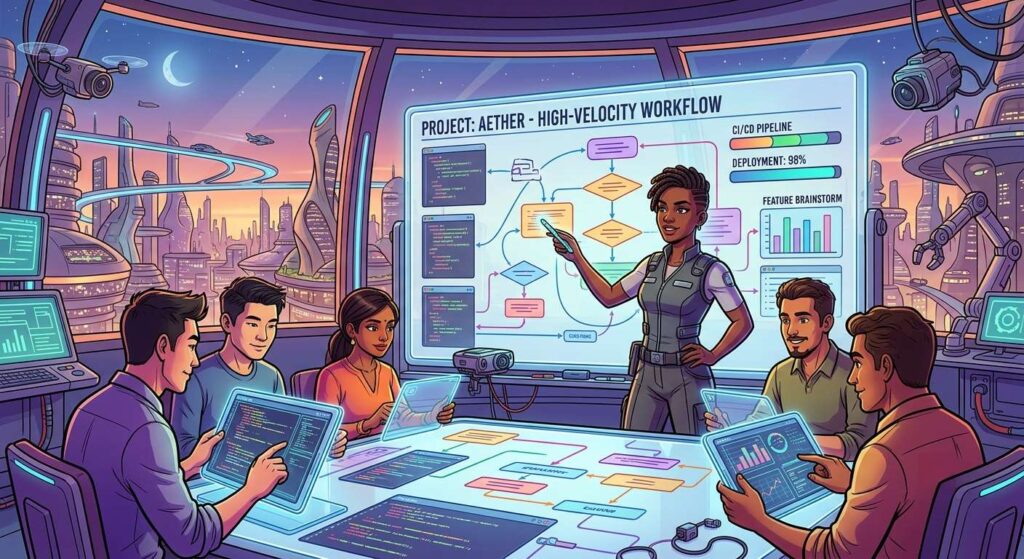
The software development landscape is undergoing a revolutionary shift with the emergence of AI coding agents. These intelligent tools are not only transforming the way we write code but also changing the game when it comes to AI quality assurance. With automated code generation, developers can now focus on higher-level tasks, such as strategy and design, while the agents take care of the tedious and time-consuming coding process.
One of the significant advantages of AI coding agents is their ability to produce high-quality code at a fraction of the cost. This is because they can work around the clock, without breaks or errors, and can churn out code much faster than human developers. As a result, the traditional bottleneck of software development – the cost and time required to write code – is shifting. This means that businesses and organizations can now develop software faster, at a lower cost, and with improved quality.
But AI coding agents are not just about speed and cost; they are also changing the way we approach quality assurance. Traditional methods of testing and verification are giving way to AI-powered quality assurance, which is more comprehensive, efficient, and effective. With AI quality assurance, developers can now automate testing, identify defects, and verify code quality with unprecedented accuracy. This means that software developers can now focus on delivering high-quality software, faster and at a lower cost, while the AI takes care of the testing and verification process. The game has indeed changed, and it’s time to rethink the way we generate and verify code.
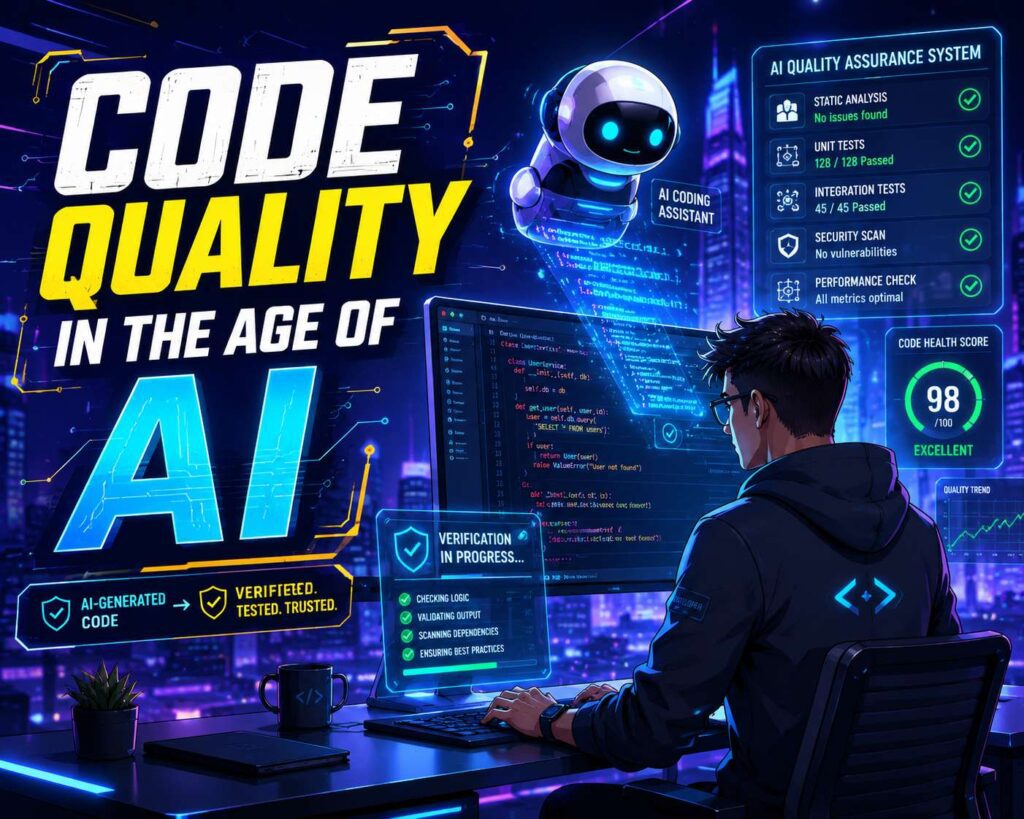
The Emerging Engineering Model
In the rapidly evolving landscape of artificial intelligence, a new engineering model is emerging that prioritizes collaboration and iterative improvement to ensure the highest standards of AI quality assurance. This innovative approach emphasizes the importance of humans and machines working together to develop intelligent systems that meet or exceed expectations.
At the core of this model lies the concept of humans defining intent and constraints, which serves as the foundation for the development and testing of AI systems. By clearly articulating the goals and limitations of a project, stakeholders can ensure that the resulting AI system aligns with their needs and operates within defined parameters.
Agents, on the other hand, are responsible for implementing, testing, and reviewing AI systems to ensure they meet the specified intent and constraints. This involves rigorous testing, feedback loops, and continuous iteration to refine the system’s performance and accuracy.
To facilitate collaboration and streamline the development process, environments are being designed to promote seamless communication and knowledge sharing between humans and AI agents. These environments prioritize engagement, ease of use, and a user-friendly interface to ensure that both technical and non-technical stakeholders can effectively collaborate and contribute to the development process.
By adopting this emerging engineering model, organizations can significantly enhance their ability to deliver AI systems that meet the highest standards of quality assurance, while also fostering a culture of continuous improvement and innovation. As the landscape of AI continues to evolve, it is clear that collaboration, iterative improvement, and a focus on AI quality assurance will be essential for driving success in this rapidly changing field.

Building a Strong Foundation
Verification becomes the product, not an afterthought. In the world of AI quality assurance, this mindset shift is crucial for delivering high-quality solutions that meet the needs of users. By incorporating verification into the development process, we can ensure that our AI systems are accurate, reliable, and meet the expected standards.
Tests are executable specifications that serve as a blueprint for our AI models. They provide a clear understanding of what we want our models to achieve and help us identify areas where we need to improve. By writing comprehensive tests, we can ensure that our AI systems meet the required quality standards and behave as expected in different scenarios.
Quality gates are another essential component of our AI quality assurance framework. These gates ensure that our AI systems meet the required standards of correctness and consistency. By implementing quality gates, we can catch errors and inconsistencies early in the development process, reducing the risk of downstream problems and costly rework.
Incorporating quality gates and tests into our AI quality assurance process helps us build a strong foundation for delivering high-quality solutions. By focusing on verification as the product, rather than an afterthought, we can ensure that our AI systems are reliable, accurate, and meet the expected standards. This, in turn, enhances the user experience, builds trust, and sets the stage for successful AI quality assurance. Effective AI quality assurance is not just about testing; it’s about creating a culture of quality that permeates every aspect of the development process.
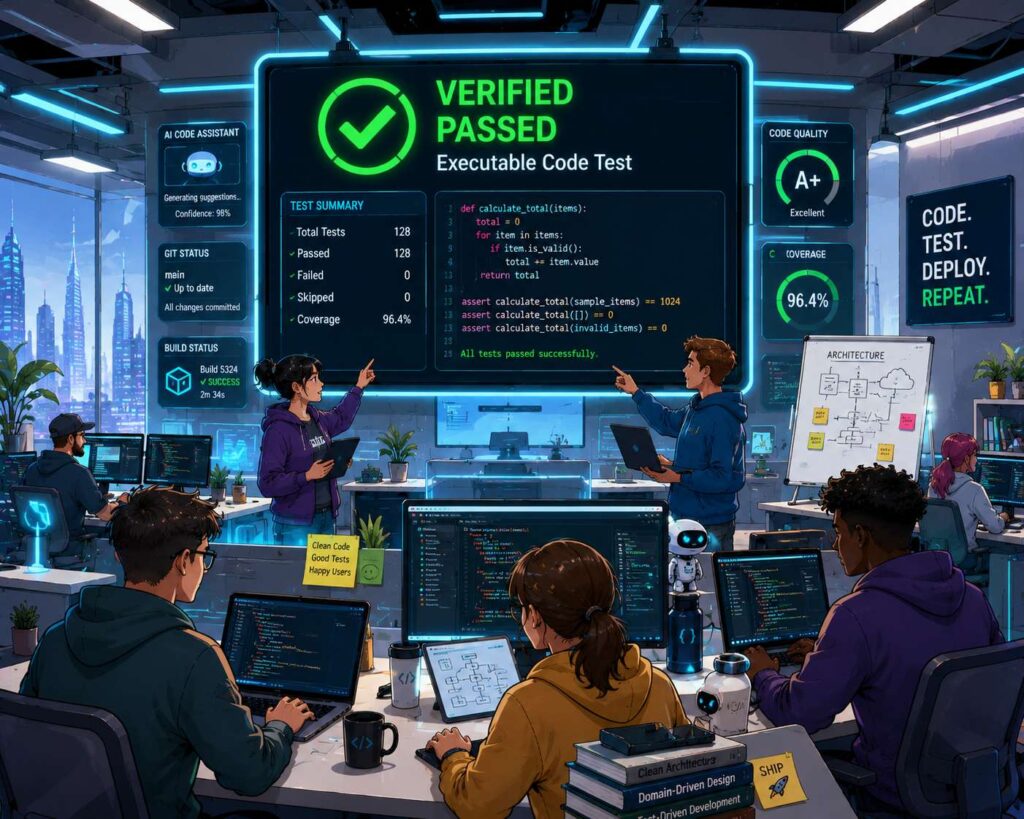
Creating a Layered Testing Pyramid
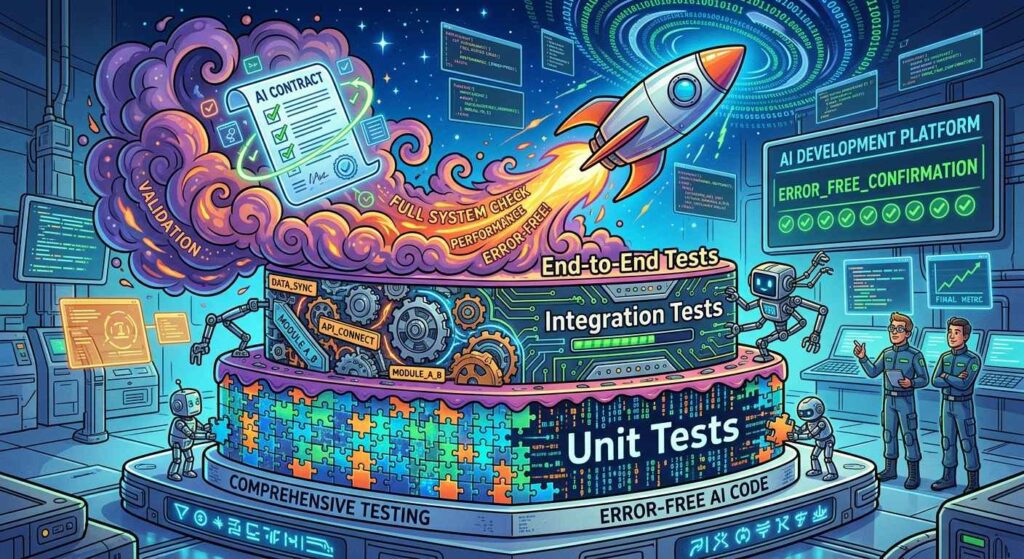
When it comes to ensuring the accuracy and reliability of AI-generated code, a layered testing approach is essential. This approach involves creating a testing pyramid with different layers catching different classes of mistakes.
The bottom layer of the pyramid consists of unit tests, which focus on individual components of the code. These tests verify that each unit of code performs as expected, catching small mistakes such as syntax errors or logical flaws. Unit tests are typically fast and efficient, making them ideal for catching low-level errors.
The middle layer of the pyramid consists of integration tests, which focus on how different components interact with each other. These tests verify that the code behaves as expected when different components are combined, catching mistakes such as data inconsistencies or communication failures. Integration tests are slower than unit tests but faster than end-to-end tests, making them ideal for catching mid-level errors.
The top layer of the pyramid consists of contract tests, which focus on the interfaces between different components. These tests verify that the interfaces between components are correct, catching mistakes such as data format errors or signature mismatches. Contract tests are slower than integration tests but faster than end-to-end tests, making them ideal for catching high-level errors.
For the ultimate layer of testing, we have smoke tests and end-to-end tests. Smoke tests verify that the code is functional and can run without errors, catching mistakes such as build or deployment failures. End-to-end tests, on the other hand, verify that the entire system works as expected, catching mistakes such as data integrity or performance issues.
By implementing a layered testing approach, you can ensure that your AI-generated code meets the highest standards of AI quality assurance, providing a reliable and accurate solution for your users. Eventually even code reviews will be automated with AI tools.
Designing an Effective Agent Harness
Context is critical when building an agent harness for AI quality assurance. It establishes the foundation upon which you will build your solution. Understanding the problem domain, the capabilities of the AI system, and the requirements of the users is essential. Permissions and access controls are also crucial as they determine who can interact with the AI system and under what conditions.
Permissions and access controls are not just about security; they are also about ensuring that the right people are interacting with the AI system at the right time. This can be particularly challenging when dealing with complex systems that require multiple stakeholders to collaborate. Tools such as access control lists, role-based access control, and attribute-based access control can help manage permissions and ensure that the AI system is being used in a way that meets the needs of all stakeholders.
Repository knowledge and feedback loops are also crucial when designing an effective agent harness for AI quality assurance. By capturing knowledge in a repository, you can create a centralized location for all information related to the AI system. This can include information about the system’s capabilities, its limitations, and how it should be used. Feedback loops are also essential as they allow you to monitor the performance of the AI system and make adjustments as needed. By combining these two elements, you can create a closed-loop system that is constantly improving and adapting to new information.
High-level requirements are turned into architecture and constraints in a way that is engaging, easy to read, and catchy. This is done by using clear and concise language, avoiding technical jargon, and focusing on the benefits of the solution rather than the technical details. By doing so, you can ensure that all stakeholders have a shared understanding of the solution and its capabilities.

The Future of Engineering: Mastering AI Quality Assurance
In the era of rapid technological advancements, the engineering landscape is undergoing a significant shift. Delegation is no longer just a management tactic but a new mastery for engineers. As teams grow and projects become more complex, effective delegation is essential to deliver correct software at high velocity.
Imagine having a team of skilled engineers working in perfect harmony, each contributing their expertise to create a masterpiece. This is the reality of reliable delegation in AI quality assurance. By entrusting tasks to the right engineers, you not only increase productivity but also accuracy. When each team member knows their role and is empowered to deliver, the outcome is a high-quality product that meets or exceeds expectations.
Effective delegation also fosters a culture of knowledge sharing, collaboration, and continuous learning. Engineers are no longer isolated silos, but rather, they become part of a dynamic ecosystem where ideas are exchanged, and skills are honed. This leads to a significant reduction in errors, as each engineer learns from their colleagues and grows in their expertise.
In the context of AI quality assurance, reliable delegation is crucial. It enables teams to tackle complex tasks with confidence, knowing that each engineer is working together towards a common goal. By mastering the art of delegation, engineering teams can unlock their full potential, deliver high-quality products, and drive innovation forward. As the field of AI quality assurance continues to evolve, one thing is clear: effective delegation is the key to achieving success in this rapidly changing landscape.