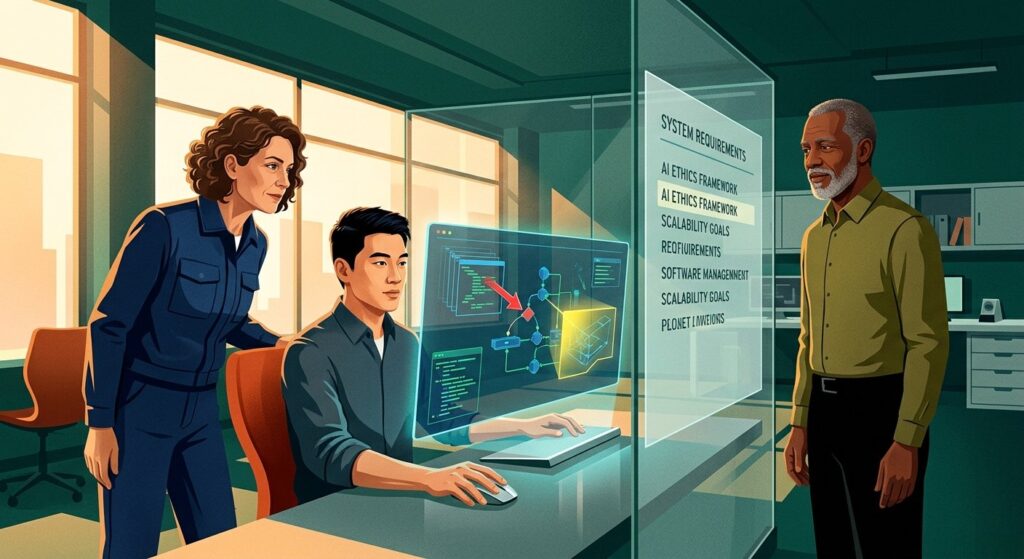
AI is rapidly making code generation cheaper. Implementation costs are plummeting.
This shift in AI software development costs is making a significant impact on the industry. As the cost of generating code decreases, more companies are able to take advantage of new technologies and innovate at a faster pace.
Smaller businesses and startups that previously couldn’t afford the high costs of software development are now able to compete with larger corporations. They can hire developers, implement new features, and bring products to market more quickly.
The lower costs also mean that companies can experiment and try out new ideas without breaking the bank. This freedom to experiment and pivot is a major advantage in an industry where the market can change rapidly.
However, the reduced costs of AI software development don’t necessarily mean that the end result is better or more efficient. Software delivery still depends on human capabilities. Human judgment, experience, and expertise are just as essential as they were before the cost of code generation decreased.
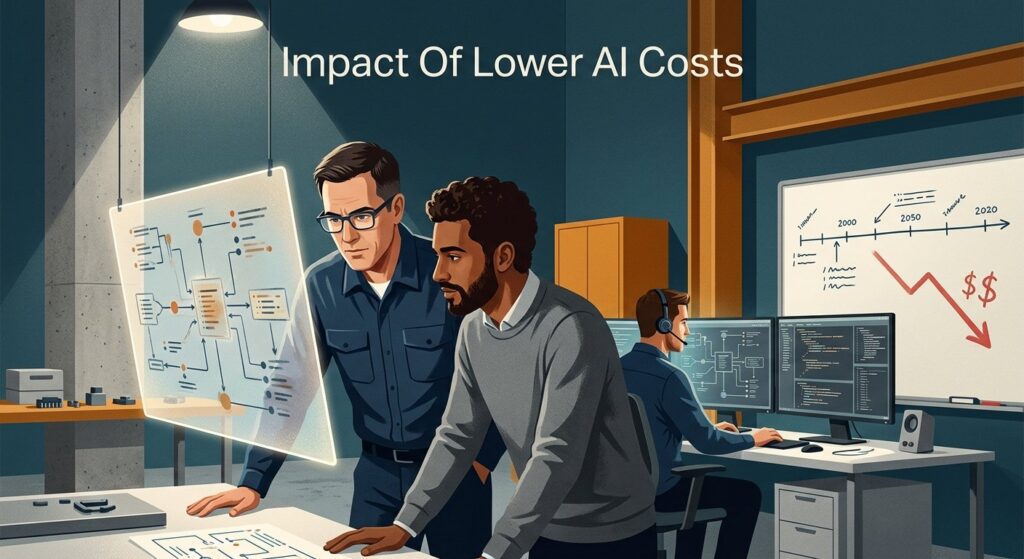
Economic Bottleneck Shifts
As AI adoption continues to rise, we’re seeing a notable shift in the economic bottleneck of software development. Commits are increasing at an unprecedented rate, but releases aren’t keeping pace.
The numbers tell a story of their own, but it’s not just about the quantity – it’s about the quality of code being generated. While AI can churn out lines of code faster than ever, the complexity of projects is only growing. Requirements, review, testing, and operational decisions remain stubbornly hard to automate.
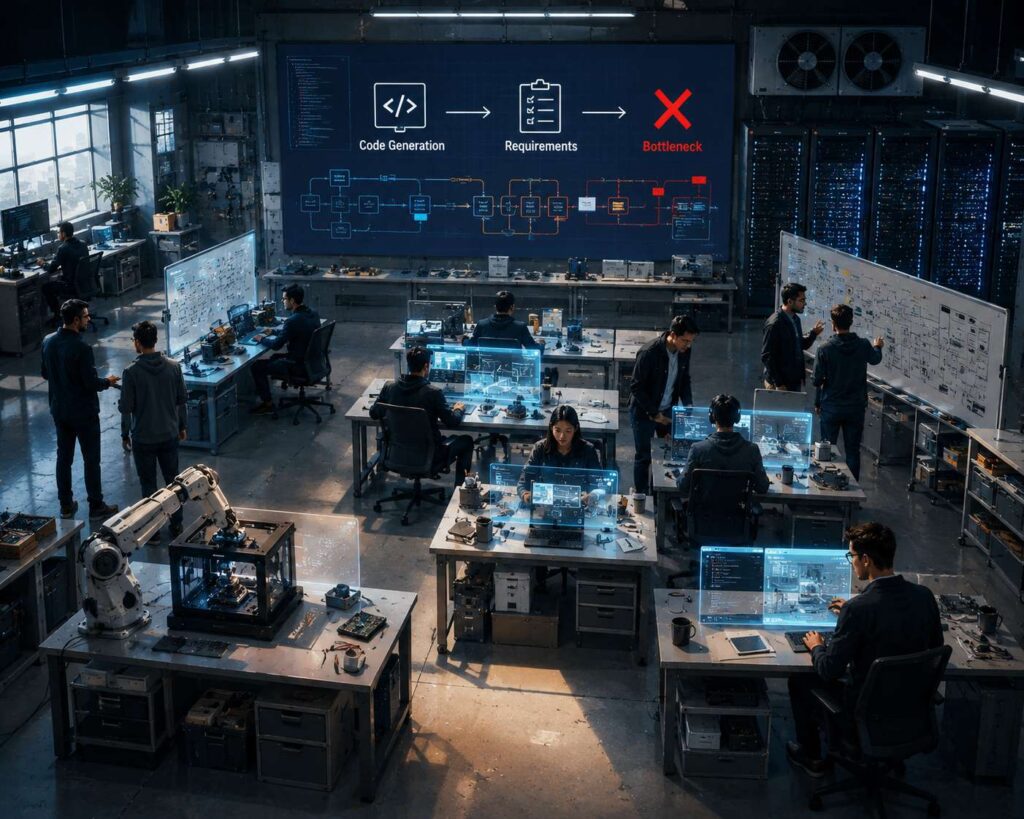
This shift in the bottleneck has significant implications for development teams. What was once a barrier centered around code generation is now being pushed to the front – requirements gathering and process design are taking center stage. As AI-assisted development tools become more prevalent, teams are struggling to keep up with the demands of a rapidly evolving landscape.
Requirements are no longer just about listing out features and functionalities. They’re now about creating a framework that can accommodate the complex, dynamic systems that AI is enabling. This means a deeper level of understanding, a more nuanced approach, and a willingness to adapt.
The bottleneck has moved, but the challenges remain. Development teams must navigate the intricacies of requirements gathering, balancing the need for speed with the need for accuracy. It’s a delicate balance, one that requires a deep understanding of the technology, the process, and the people involved.
Ambiguity Becomes Expensive
When the cost of a solution is low, the expectations for its quality and performance can be surprisingly high. This mismatch can lead to costly requirements ambiguity, where the true needs of the project are unclear or open to interpretation. In other words, the cheap implementation might have come with a hidden price tag – the risk of misaligned expectations.
Ambiguous requirements can be a major issue, especially when they’re not addressed early on in the development process. It’s not uncommon for project teams to struggle with defining clear goals and objectives, which can lead to confusion and disagreements down the line. This lack of clarity can be particularly problematic when working with AI, which is capable of producing results at scale.
The problem is that AI rapidly produces the wrong solution at scale, making it difficult to catch and correct errors. With each incorrect result, the project’s requirements become increasingly ambiguous, leading to a vicious cycle of miscommunication and misalignment. As a result, the project’s scope, timeline, and budget can all be affected in unpredictable ways.

Architecture Takes Center Stage
Architecture becomes a crucial component in ensuring the smooth operation of complex systems. Clear boundaries, contracts, and invariants let agents work independently.
When agents create integration and consistency problems without a well-defined architecture, it’s a recipe for disaster. Without architecture, development becomes a chaotic and unpredictable process. Agents struggle to communicate effectively, leading to costly delays and errors.
Architecture becomes a leverage multiplier, allowing agents to work together in harmony. By establishing clear guidelines and rules, architecture ensures that agents function as intended, reducing the likelihood of integration and consistency problems.
A well-designed architecture also plays a critical role in mitigating the impact of AI software development costs. By streamlining development and minimizing the need for costly rework, architecture can help reduce expenses and improve overall efficiency.
Ultimately, architecture is the backbone of complex systems, providing the necessary structure and organization for agents to work together seamlessly. By investing in a robust architecture, organizations can reap significant benefits and improve their overall competitiveness.

Verification Becomes Critical
Automated tests, quality gates, and security scanning are becoming increasingly valuable. Gone are the days when developers could just write code and move on. With faster code generation comes the need for more verification.
Faster code generation requires more verification. This is because the speed at which code is being created is now outpacing the ability to verify its quality. As a result, the verification process is becoming a critical bottleneck.
Verification is no longer a catch-all process. It’s a critical step that requires precision and attention to detail. Every line of code needs to be thoroughly checked to ensure it meets the required standards. This means that the verification process needs to be more thorough and rigorous than ever before.
As code generation speeds continue to increase, the verification process will only become more critical. It’s no longer a question of whether code is verified, but rather how thoroughly it’s verified. The stakes are high, and the consequences of a single mistake can be costly.
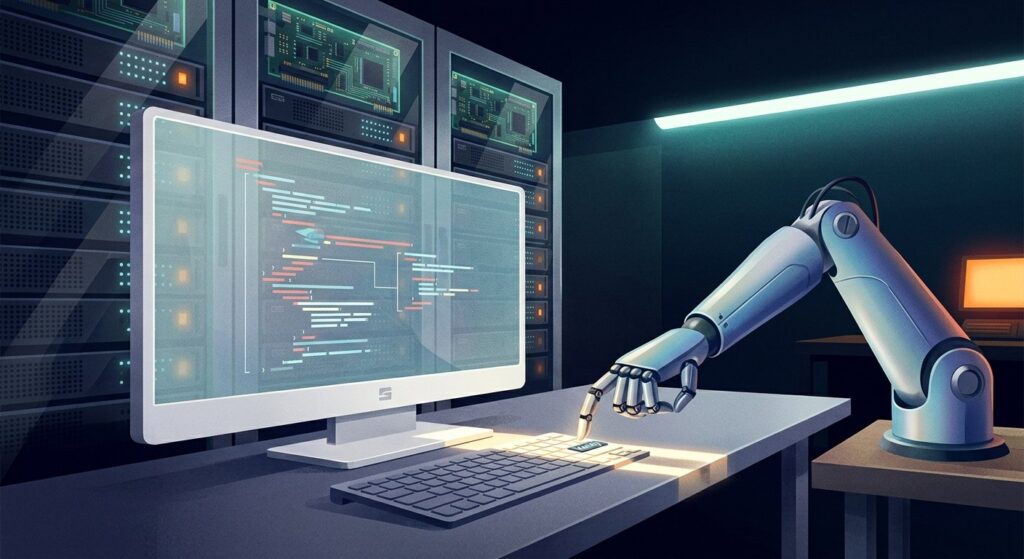
Operational Knowledge Gains Value
When code works in a development environment, it’s often seen as cheap. But the knowledge required to make it work in production is a different story altogether. It’s here that the challenges begin.
The truth is, understanding how your application will behave under real production traffic is difficult. You can’t replicate the complexity of a live environment in a test lab, no matter how hard you try. Add to that the uncertainties of load, degraded dependencies, and failures that only appear in the wild, and you’ve got a perfect storm of operational challenges.
As a result, operational knowledge becomes a premium resource. It’s the difference between a smooth-running application and one that’s plagued by downtime, errors, and a whole lot of stress. And it’s not just about having the knowledge, it’s about having the hands-on experience to apply it in a real-world setting.
The more you understand the intricacies of your application in production, the more valuable you become. Your colleagues start to rely on you to troubleshoot problems, and your team looks to you for guidance on how to optimize their work. And as you continue to hone your skills, you start to see the value in your own work, and the work of those around you, grow exponentially.

Human Judgment Remains Key
When we talk about the benefits of using AI in software development, one crucial aspect often gets overlooked – human judgment. As AI agents start producing software at an unprecedented pace, it’s essential to recognize the limitations of technology.
Choosing what not to build is a crucial part of software development. With AI handling the grunt work, human engineers need to focus on making strategic decisions about which projects to pursue and which ones to abandon. This requires a deep understanding of the market, the competition, and the potential return on investment.
Recognizing architectural risk is another critical aspect of software development that AI agents can’t replicate. They may be able to identify potential problems, but it takes a human engineer to evaluate the severity of those risks and make informed decisions about how to mitigate them.
Similarly, challenging requirements require human judgment. While AI agents can generate code quickly, they often struggle to understand the nuances of a project’s requirements. It’s not just about following a set of rules or guidelines; it’s about understanding the context and making informed decisions about how to meet those requirements.
As AI agents continue to produce software at high throughput, human attention and time become the scarce resource. This means that human engineers need to focus on high-value work – the kind of work that requires creativity, problem-solving, and strategic thinking. By moving up the stack and focusing on the high-level decisions, human engineers can add more value to their projects and create software that meets the needs of their users.