The repository itself is becoming a key part of the agent’s programming interface.
Practical shift from asking AI to ‘understand code’ to making it easy for machines to discover and reason about is unfolding.
Repository instructions are becoming standard infrastructure.
Reimagining the way we design and maintain repositories is crucial for creating an AI ready codebase. This shift in perspective is about more than just having code organized in a neat and structured manner.
It’s about making it easy for AI systems to learn from and understand our codebases, which in turn enables them to make informed decisions and take actions accordingly.
This requires a fundamental shift in the way we think about repositories, from mere storage containers to active participants in the development process.
By adopting this new mindset, we can create repositories that are not only more efficient but also more effective in supporting the development of AI agents.
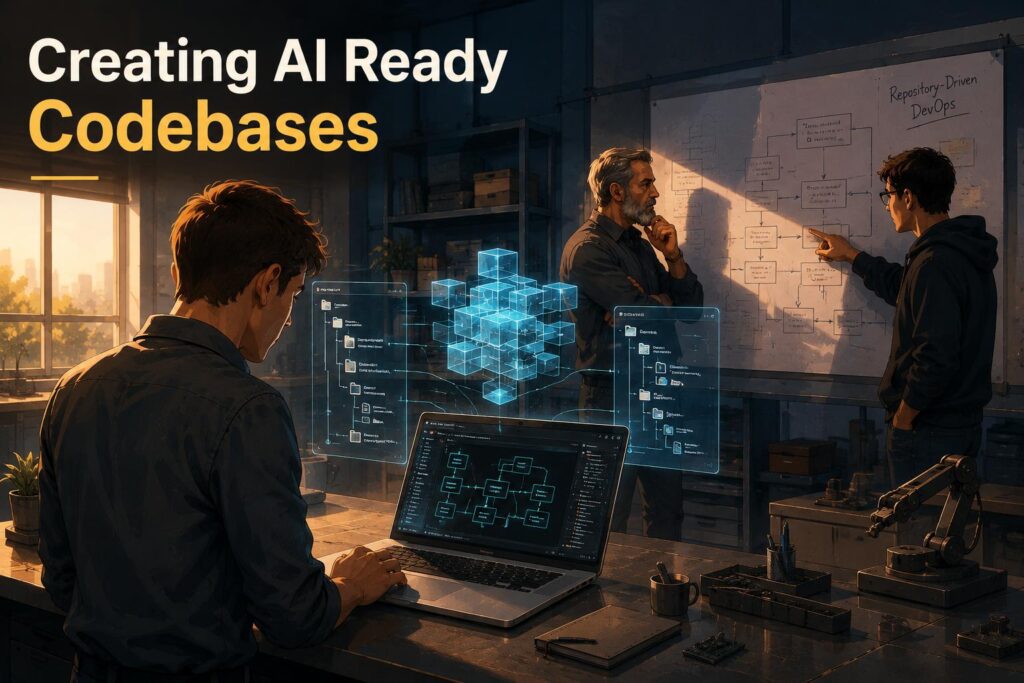
A Map, Not a Manual for AI Agents
Agents need directions, not a detailed guide. They require a clear understanding of their objectives and how to reach them. This means giving them a map, not a manual.
Executable documentation is key to creating effective entry-point instructions. It provides a clear and concise guide for agents to follow, ensuring they stay on track. By using code and examples, executable documentation makes it easier for agents to understand their role and how to perform it.
OpenAI’s experience with agent-first engineering has shown that short, focused instruction files are more effective than lengthy documents. When agents have a clear understanding of what is expected of them, they can work more efficiently and make better decisions.
Executable documentation eliminates the need for lengthy manuals and voluminous documentation. It provides a direct and straightforward approach to guiding agents, ensuring they have everything they need to complete their tasks.

Executable Documentation and Repository Structure
Clear module boundaries, predictable naming, and discoverable architecture are essential for reducing inference for agents. This means that the code should be organized in a way that’s easy for agents to follow, with each module responsible for a specific task.
Agents can verify documentation by running build commands, tests, and scripts. These commands help to ensure that the documentation accurately reflects the code and that there are no inconsistencies. With the right commands in place, agents can quickly identify any issues and make the necessary changes.
The repository structure becomes part of the prompt, allowing agents to easily understand the organization and layout of the code. This is particularly important when it comes to large and complex projects. By clearly defining the repository structure, developers can ensure that agents can quickly locate the information they need to complete their tasks.
Build commands, tests, and scripts provide a way to validate the documentation and ensure that it accurately reflects the code. This helps to prevent errors and inconsistencies, making it easier for agents to work with the codebase. By using these tools in conjunction with clear module boundaries and discoverable architecture, developers can create a robust and reliable codebase that’s well-suited to the needs of agents.

Encoding Architectural Rules for AI
Enforcing dependency directions, API contracts, and type boundaries through linters and structural tests ensures that code adheres to established architectural rules. This mechanical enforcement helps prevent inconsistencies that can arise from manual implementation.
By enforcing these rules mechanically, teams can focus on writing code that meets the requirements without worrying about adhering to specific architectural guidelines. Linters and structural tests can be used in conjunction with code analysis tools to provide a comprehensive overview of the codebase’s structure and adherence to rules.
The use of linters and structural tests also helps prevent irrelevant documentation from competing with the actual task. When code is written in accordance with established guidelines, documentation becomes redundant and can be streamlined. This, in turn, makes it easier for developers to understand the code and focus on implementing new features.
Creating an AI ready codebase is a crucial step in developing intelligent systems. By enforcing dependency directions, API contracts, and type boundaries, teams can ensure that their code is well-structured and easy to understand. This, in turn, makes it easier to integrate AI components and develop more complex systems.
As teams work towards creating an AI ready codebase, they can use linters and structural tests to ensure that their code adheres to established architectural rules. This mechanical enforcement helps prevent inconsistencies and makes it easier to develop complex systems.
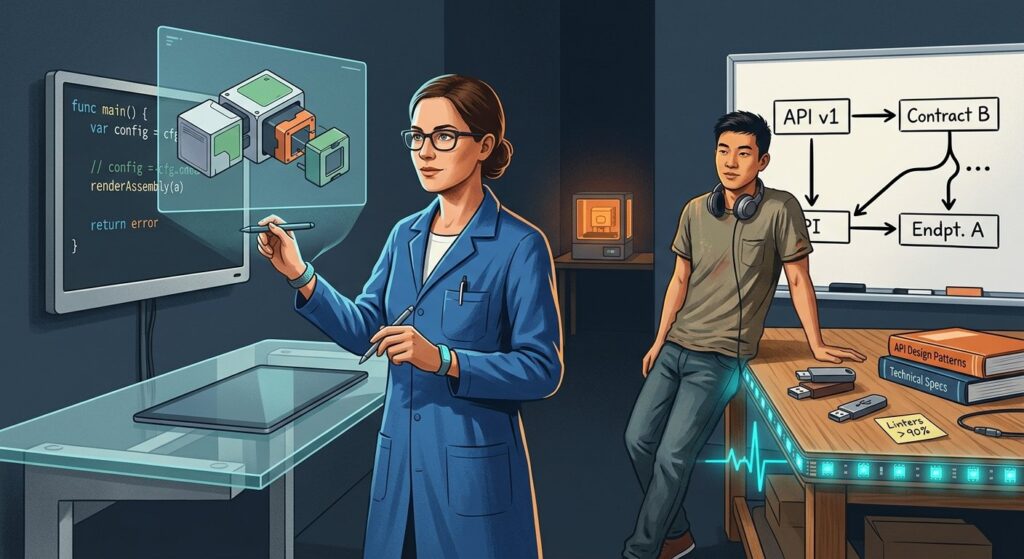
Context Disclosure and Knowledge Management
Agents start with a small stable context, a foundation from which they can build and expand their knowledge. This initial context is crucial as it serves as a starting point for further learning and exploration.
By starting with a small stable context, agents can gradually follow links to more in-depth, domain-specific knowledge. This approach prevents the overwhelming influx of information that can occur when agents are faced with a vast amount of unstructured data.
Progressive disclosure of context is key to preventing irrelevant documentation from competing with the actual task at hand. By gradually revealing more information, agents can focus on the essential details and avoid getting bogged down in unnecessary complexity.
Keeping knowledge inside the repository is essential for maintaining accuracy and consistency. This approach also enables agents to easily update and refine their knowledge as new information becomes available, ensuring that their understanding remains up-to-date and relevant.

The Future Repository: Self-Describing and Self-Checking
The strongest AI-native codebases are built on two key principles: machine-readable instructions and automated quality checks. By integrating these elements, developers can create systems that require less human intervention, freeing up time and resources for more strategic and high-level tasks.
Future repositories will be designed to be self-describing, meaning that they contain all the information needed for AI agents to understand the codebase’s structure and purpose. This includes metadata, documentation, and other relevant details that enable AI agents to work independently.
Self-checking is another crucial aspect of future repositories. Automated quality checks will be built into the codebase, ensuring that all components are functioning correctly and meeting the required standards. This minimizes the need for manual testing and verification, reducing the risk of human error and increasing the overall efficiency of the system. By combining machine-readable instructions and automated quality checks, future repositories will be able to operate with a high degree of autonomy, reducing the reliance on human input and paving the way for more sophisticated and dynamic systems.