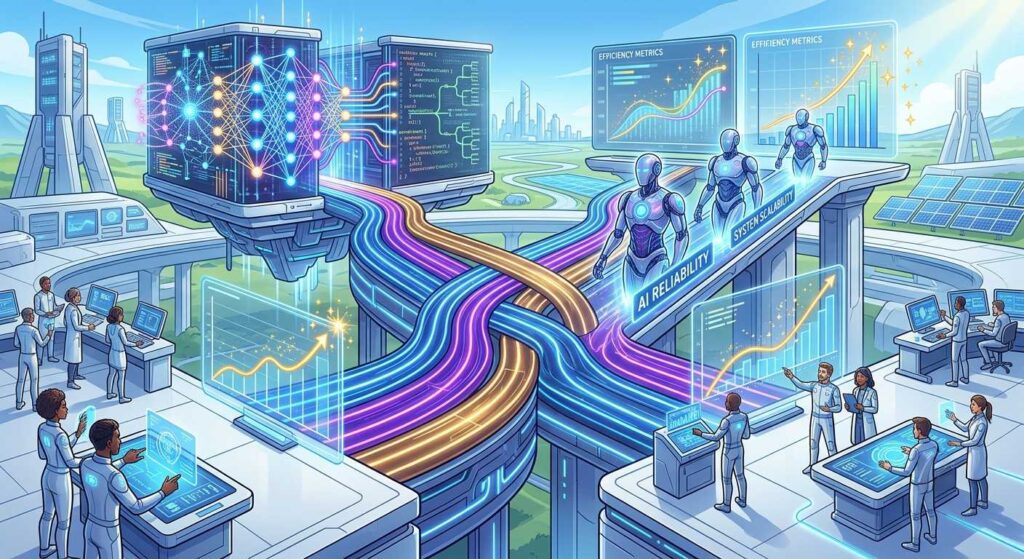
Harness engineering is emerging as the next evolution in AI development. It focuses on making AI coding agents reliable rather than just more capable. This discipline has the potential to significantly improve the consistency and reproducibility of AI-generated code.
While advancements in AI capabilities have been impressive, the reliability of AI-generated code has often taken a backseat. The growing need for trustworthy and maintainable code is driving the development of harness engineering. By focusing on the reliability of AI-generated code, it aims to bridge the gap between AI capabilities and real-world applications.
Harness engineering involves designing and implementing AI systems that can produce consistent and reliable results. This requires a deep understanding of the underlying algorithms and data that drive AI decision-making. By optimizing these factors, we seek to minimize errors and improve the overall quality of AI-generated code.
The benefits are multifaceted. Firstly, it enables developers to trust the output of AI-generated code, making it easier to integrate into complex systems. Secondly, it facilitates collaboration between humans and AI agents, allowing for more efficient and effective problem-solving. Lastly, harness engineering can help reduce the time and resources required to develop and maintain AI-powered systems.
As harness engineering continues to evolve, we can expect to see significant improvements in the consistency and reproducibility of AI-generated code. This, in turn, will enable developers to push the boundaries of what is possible with AI and unlock new opportunities for innovation and growth. By embracing harness engineering, we can create a future where AI and human collaboration is seamless, efficient, and reliable.
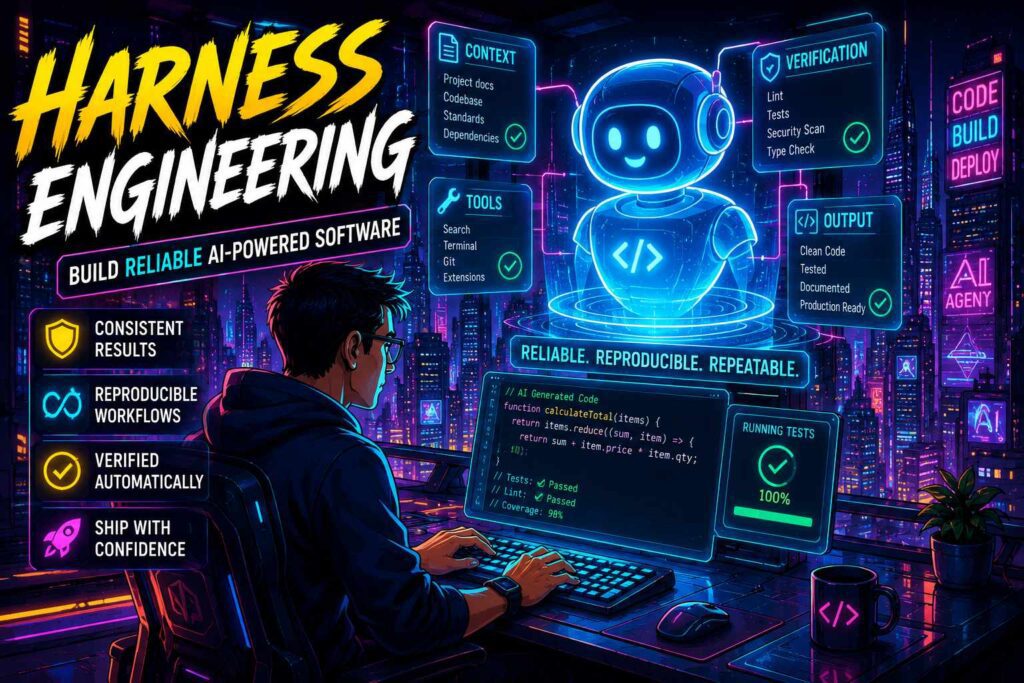
What is Harness Engineering?
Harness engineering is the discipline of designing the environment around an AI agent. It’s the secret sauce that ensures your AI model operates smoothly, makes accurate decisions, and bounces back from setbacks. By controlling how the agent operates, verifies its work, and recovers from failures, harness engineering helps maximize reliability and consistency in AI-generated code.
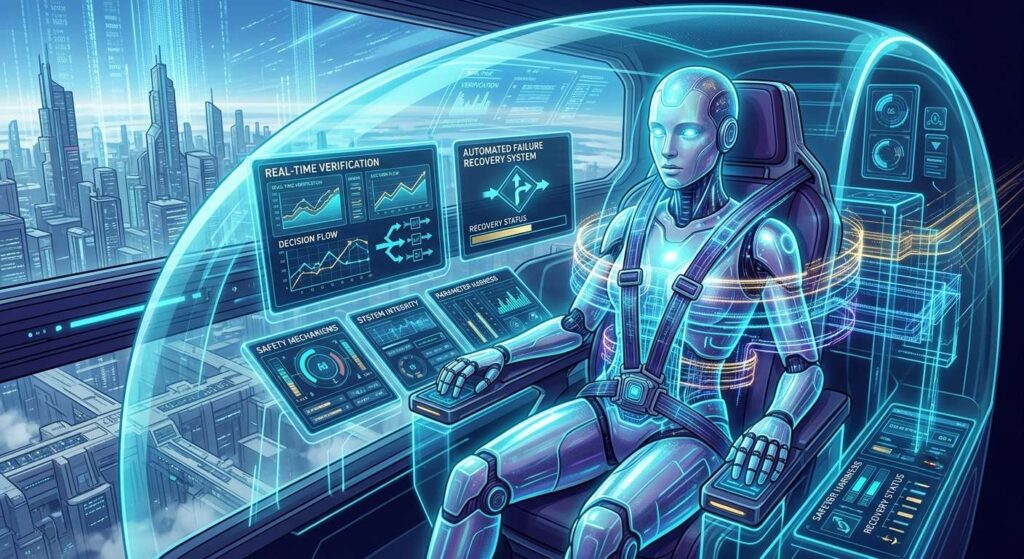
Imagine you’re a car owner, and your AI agent is like the driver. Without a skilled driver, the car might veer off course, stall, or even crash. That’s where harness engineering comes in – it’s the driving instruction manual, the seatbelt, and the emergency brake all rolled into one. By designing a robust environment, you can trust that your AI agent will navigate complex tasks with minimal errors.
The process of harness engineering involves several key components:
Agent Architecture: This refers to the underlying structure of the AI agent, including its decision-making processes, data inputs, and output mechanisms. A well-designed architecture is crucial for harness engineering, as it determines how the agent will operate and interact with its environment.
Verification and Validation: This involves testing and validating the AI agent’s output to ensure it meets the desired standards. By verifying the agent’s work, you can identify areas for improvement and make necessary adjustments.
Failure Recovery: No AI agent is perfect, and failures will inevitably occur. But with harness engineering, you can design a system that recovers smoothly from setbacks, minimizing downtime and ensuring business continuity.
By mastering harness engineering, you can unlock the full potential of your AI agents, enabling them to perform complex tasks with ease and precision. It’s time to take the wheel and drive your AI model to new heights!
Key Challenges in Harness Engineering
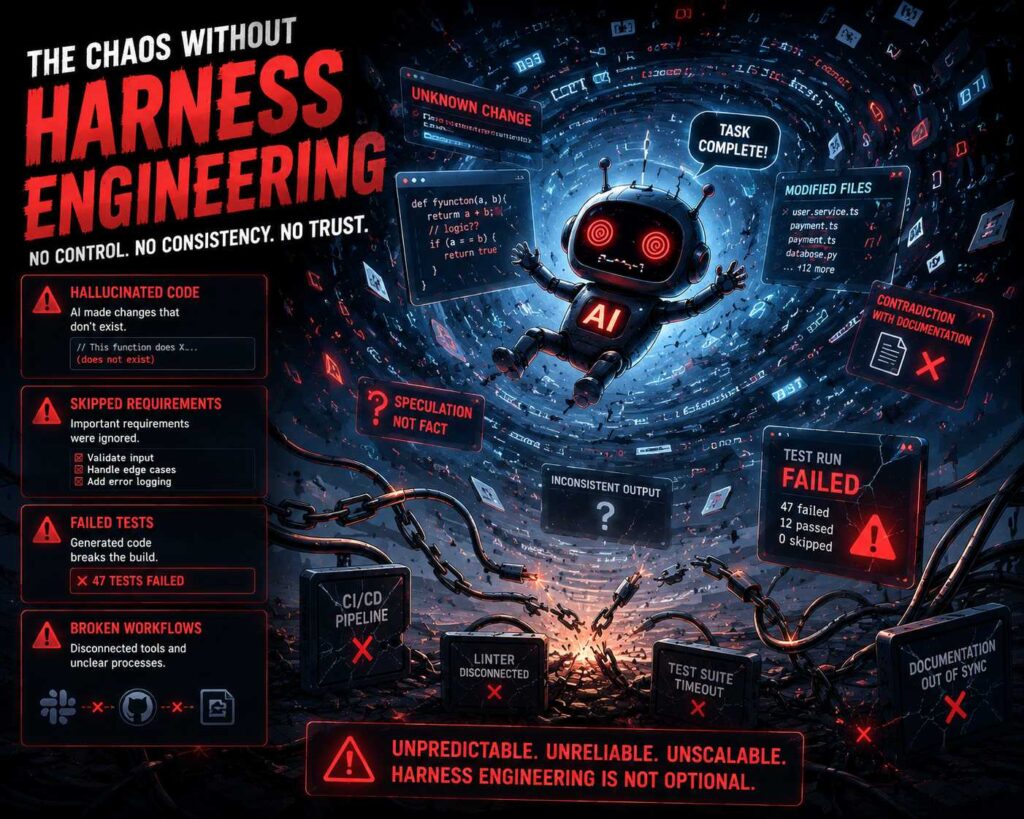
Without a harness, coding agents frequently skip requirements or misuse tools. They may also hallucinate changes, ignore conventions, or declare tasks complete despite failing tests. This lack of accountability and oversight can lead to a plethora of problems, from inconsistent code quality to increased testing time.
One of the primary challenges in harness engineering is ensuring that the tools and agents are properly configured and utilized. Without the right setup, even the most well-intentioned coding agents can cause more harm than good. For instance, if the agent is not properly trained on the project’s specific requirements, it may end up generating code that doesn’t meet the necessary standards.
Moreover, the absence of a harness can lead to a lack of traceability, making it difficult to identify and fix issues. Imagine having to manually review every line of code to detect errors or inconsistencies – it’s a daunting task that can quickly become overwhelming. This is where harness engineering comes in, providing a structured approach to mitigate these issues and improve overall reliability.
Harness engineering aims to bridge the gap between human developers and coding agents by creating a seamless and transparent workflow. By implementing the right harness, teams can ensure that their coding agents are working in harmony with their human colleagues, generating high-quality code that meets the project’s requirements. By streamlining the development process and reducing errors, harness engineering can help teams deliver projects faster and more efficiently.
Designing Effective Harnesses
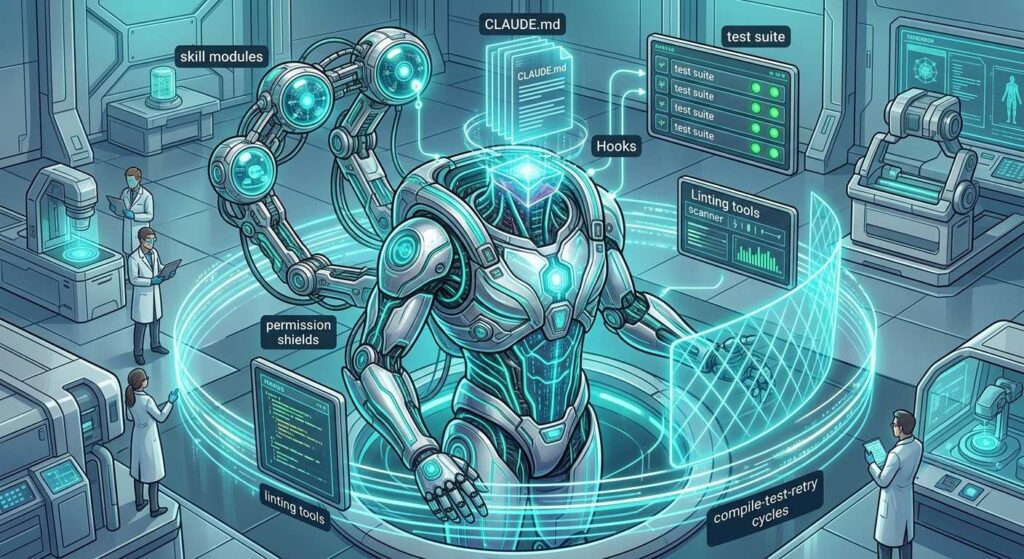
A practical harness combines several components, including CLAUDE.md, custom Skills, Hooks, permissions, project documentation, automated tests, and linting. These elements work together to ensure a seamless development experience, from initial setup to deployment. By incorporating these components, harnesses can significantly reduce the time and effort required to develop and maintain complex systems.
The most effective harnesses implement continuous verification loops. These loop engineering practices automatically compile, lint, test, evaluate, and retry changes until predefined success criteria are met. This ensures that the harness is always up-to-date and reliable, reducing the risk of errors and failures. By continuously verifying the harness, developers can have confidence in their code and focus on delivering high-quality features and functionality.
Harness engineering is a critical aspect of harness design, as it enables developers to create robust and scalable harnesses that meet the needs of complex systems. By applying harness engineering principles, developers can design harnesses that are adaptable, flexible, and easily maintainable. This approach also enables developers to leverage best practices and industry standards, ensuring that their harnesses are secure, reliable, and efficient.
Incorporating automated testing and linting into a harness allows developers to catch errors and bugs early in the development process. This reduces the risk of downstream failures and improves the overall quality of the system. By implementing continuous verification loops and harness engineering principles, developers can create effective harnesses that streamline development, reduce errors, and improve the overall efficiency of the development process.
Benefits of Harness Engineering
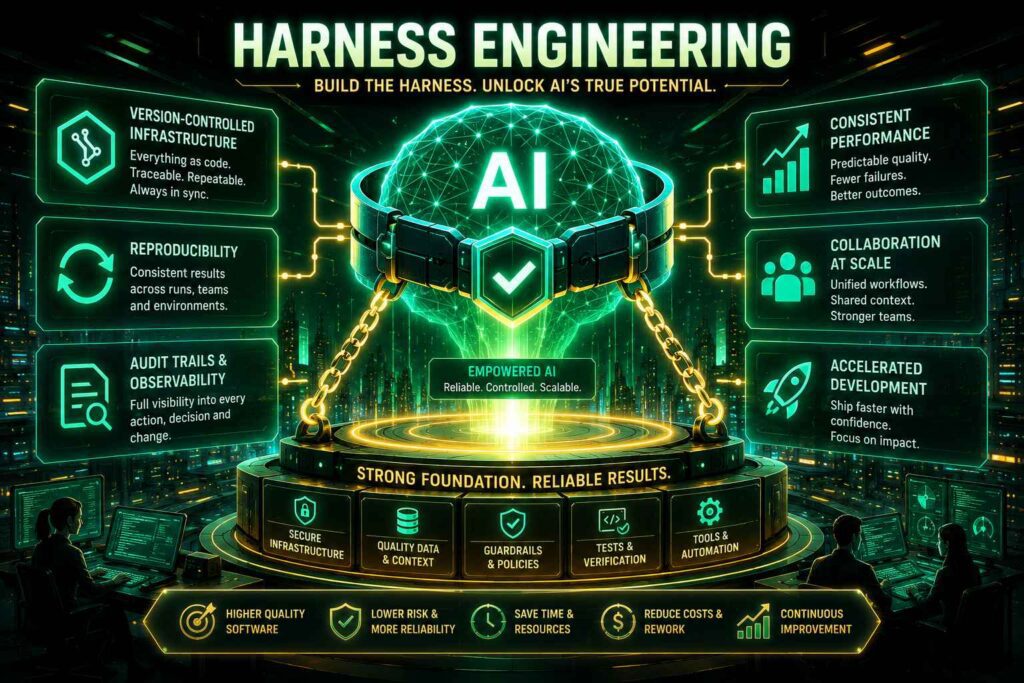
In the world of AI development, there’s a common misconception that upgrading to a stronger foundation model is the key to unlocking better performance and reliability. However, improvements in the harness can have a greater impact on reliability than switching to a stronger foundation model. This is because the harness is the unseen backbone of AI development, responsible for setting the stage for AI behavior and performance.
Harness engineering makes AI behavior reproducible, auditable, and consistent across developers and projects. This is achieved by treating the harness as version-controlled infrastructure that evolves with the codebase. This means that every change to the codebase is tracked and reflected in the harness, ensuring that AI behavior remains consistent and predictable.
With harness engineering, developers can pinpoint issues and debug their code with ease. They can also collaborate more effectively, knowing that the harness provides a standardized environment for testing and deployment. Moreover, harness engineering enables organizations to adopt a more agile approach to AI development, allowing them to quickly adapt to changing business needs and customer requirements.
By harnessing the power of harness engineering, organizations can unlock the full potential of their AI systems. They can improve the accuracy and reliability of their AI models, reduce the risk of errors and downtime, and increase the speed of development and deployment. In short, harness engineering is the key to unlocking better AI performance, and it’s an approach that’s worth adopting. By incorporating harness engineering into their AI development workflows, organizations can take their AI systems to the next level and achieve greater success in an increasingly competitive market.
Conclusion
Harness engineering represents a genuine shift for production AI systems. By focusing on reliability and consistency, harness engineering has the potential to revolutionize AI development. As this discipline continues to evolve, we can expect significant improvements in the quality and reliability of AI-generated code.
One of the most exciting aspects of harness engineering is its ability to bridge the gap between machine learning and software development. By integrating the strengths of both fields, harness engineering enables developers to create more robust and maintainable AI systems. This, in turn, leads to faster deployment times, reduced costs, and improved overall efficiency.
As harness engineering matures, we can expect to see a major shift in the way AI systems are designed and built. Gone will be the days of clunky, unreliable code that requires constant maintenance and updates. Instead, harness engineering will empower developers to create sleek, efficient, and highly scalable AI systems that can handle the demands of modern production environments.
The implications of harness engineering are far-reaching and profound. With the ability to generate high-quality, reliable code at scale, harness engineering has the potential to democratize access to AI development. This, in turn, could lead to a surge in innovation and entrepreneurship, as more developers and organizations are empowered to build and deploy AI-powered solutions.
Ultimately, harness engineering represents a new frontier in AI development. By harnessing the power of machine learning and software development, we can create a new generation of AI systems that are faster, more efficient, and more effective. As the field continues to evolve, one thing is clear: harness engineering is poised to revolutionize the way we build and deploy AI-powered solutions.