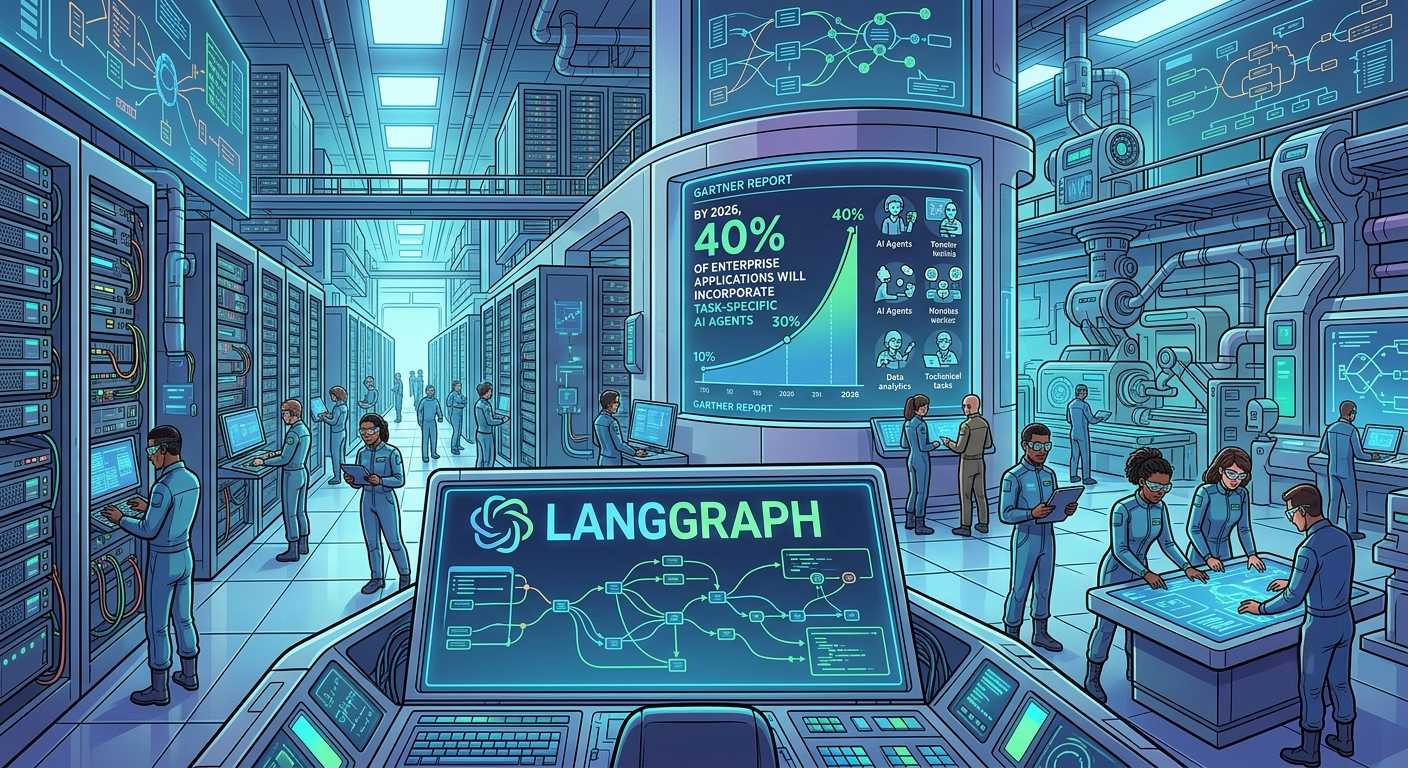
LangGraph is an open-source library for building stateful, long-running LLM agents as directed graphs. This innovative framework has revolutionized the way developers approach AI-driven applications. On October 22, 2025, LangGraph hit a major milestone by reaching stable version 1.0, solidifying its position as a leading player in the industry.
But what makes LangGraph so special? For starters, its versatility allows developers to create complex AI systems that can adapt to changing environments and requirements. By leveraging the power of directed graphs, LangGraph enables the creation of highly scalable and efficient AI agents that can tackle even the most demanding tasks.
One of the key reasons behind LangGraph’s massive adoption is its ease of use. With a comprehensive set of APIs and tools, developers can quickly get started with building their own LangGraph-powered AI agents. This, combined with LangGraph’s strong community support and extensive documentation, has made it the go-to choice for developers worldwide.
Today, LangGraph is the most widely adopted agent orchestration framework, with an impressive 47 million monthly downloads. This staggering figure is a testament to the library’s power and flexibility, as well as the trust that developers have placed in it. As the AI landscape continues to evolve, LangGraph is poised to play a leading role in shaping the future of AI-driven applications.
By harnessing the capabilities of LangGraph, developers can unlock new possibilities for their AI projects and push the boundaries of what is possible. Whether you’re building a conversational AI, a predictive model, or a complex decision-making system, LangGraph provides the perfect foundation for creating high-performance AI agents that can drive real-world impact.
Core Mental Model
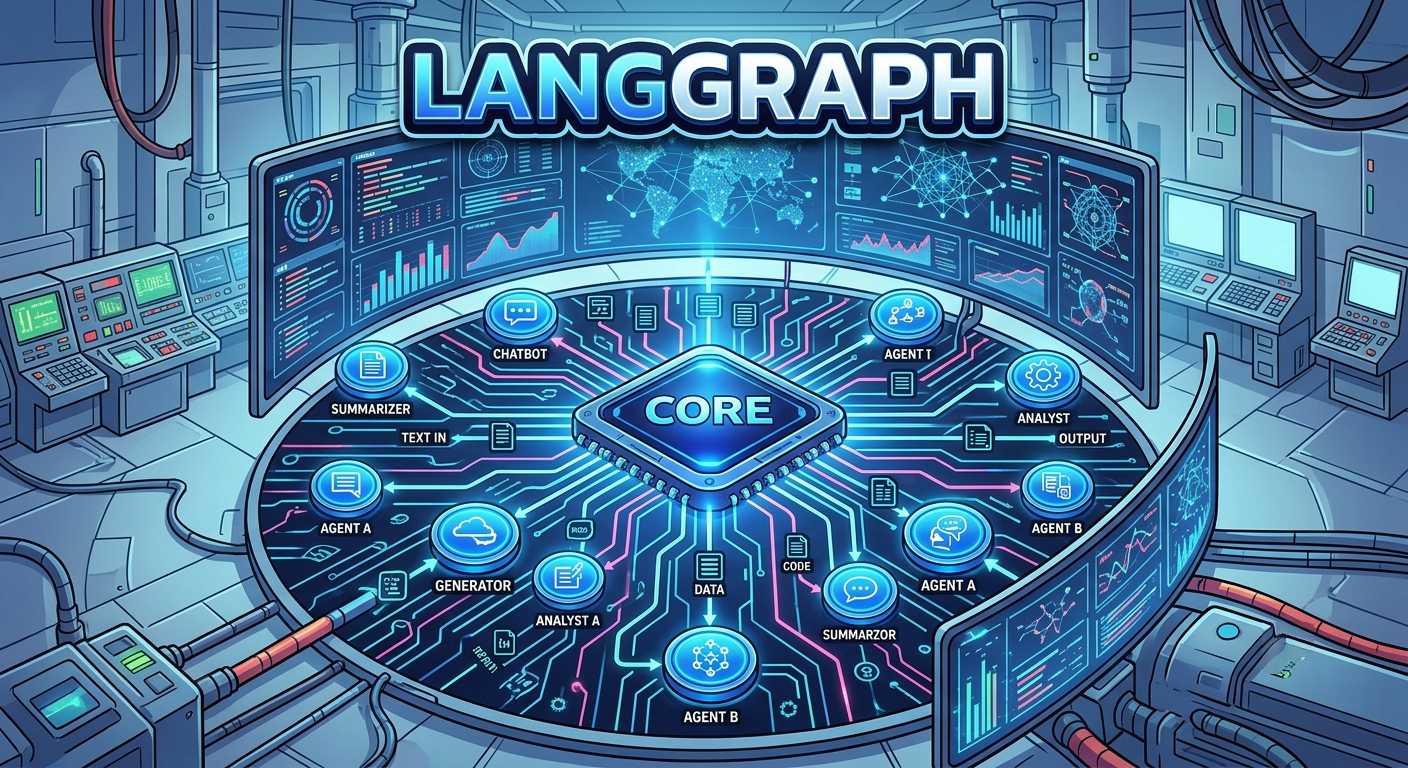
At its core, our system operates on a simple yet powerful concept: a shared state object that flows through the entire run, defining the behavior of our graph. This is where the magic happens, and the true potential of our LangGraph is unleashed.
The State TypedDict
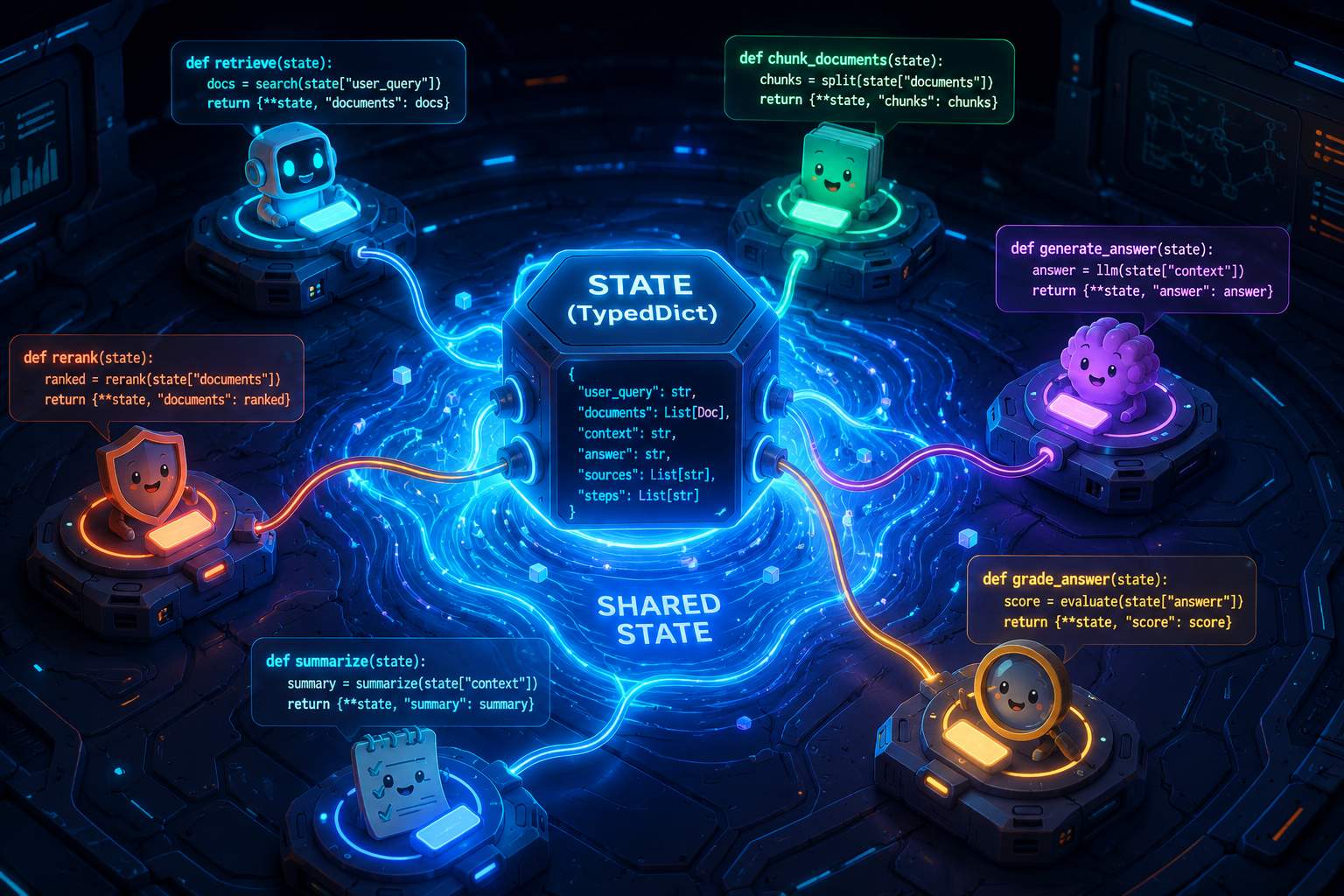
Imagine a container that holds all the relevant information about our system’s state. This container is what we call a State TypedDict. It’s a collection of key-value pairs that represent the current state of our graph, and it’s what makes our system tick. This shared state object flows through the entire run, influencing the behavior of each node and edge in our graph.
Nodes: The Building Blocks
Our nodes are simply plain Python functions that return partial state updates. They’re the building blocks of our LangGraph, and they’re what make it come alive. Each node takes in the current state of our graph and returns a new, updated version of that state. It’s a simple yet elegant concept that allows us to break down complex tasks into smaller, more manageable pieces.
Wiring the Nodes
But nodes are just the beginning. To create a runnable graph, we need to wire our nodes together with normal or conditional edges. This is where the real power of our system comes in. By registering our nodes and connecting them with edges, we can create complex workflows that are easy to understand and maintain.
As we build our LangGraph, we’re not just creating a simple collection of nodes and edges. We’re creating a living, breathing system that can adapt and evolve over time. With our shared state object and node-based architecture, we’re able to create a truly dynamic and scalable system that’s capable of handling even the most complex tasks.
Agentic Definition
Imagine a workflow where a Language Model takes the reins, guiding the process with its intelligence and flexibility. This is the concept of an agent, a powerful entity that puts the LLM at the center of the control flow. Unlike a classic chain, where the workflow is fixed and predetermined, an agent is designed to adapt and evolve as it progresses.
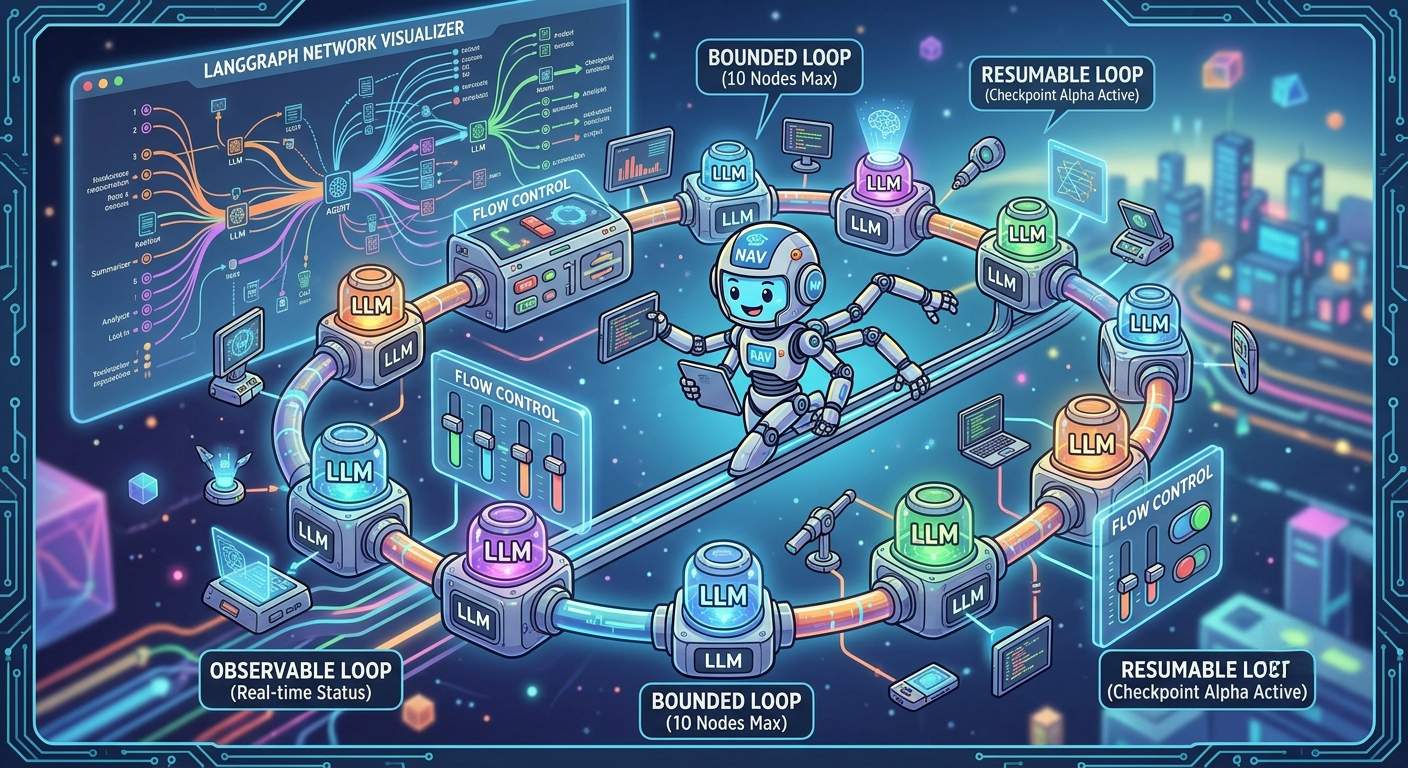
With an agent, the LLM is not just a passive tool, but an active participant that loops and iterates through the process. It calls upon other tools and resources to aid in its decision-making, and then selects the next node in the workflow based on its own insights and judgments. This non-deterministic approach allows for a level of creativity and experimentation that would be impossible with a rigid, fixed workflow.
But as flexible and powerful as an agent may be, it requires careful management to avoid getting stuck in a loop or running indefinitely. This is where LangGraph comes in – a tool designed to make the non-deterministic loop observable, bounded, and resumable. By providing a clear understanding of the agent’s progress and limitations, LangGraph allows developers to fine-tune their workflows and ensure that the agent remains on track.
With LangGraph, the possibilities for agent-based workflows are endless. By empowering the LLM to take control and make decisions in real-time, developers can unlock new levels of creativity, productivity, and innovation. Whether you’re building a chatbot, a content generator, or a complex decision-making system, LangGraph is the key to unlocking the full potential of your agent-based workflow.
Durable Execution
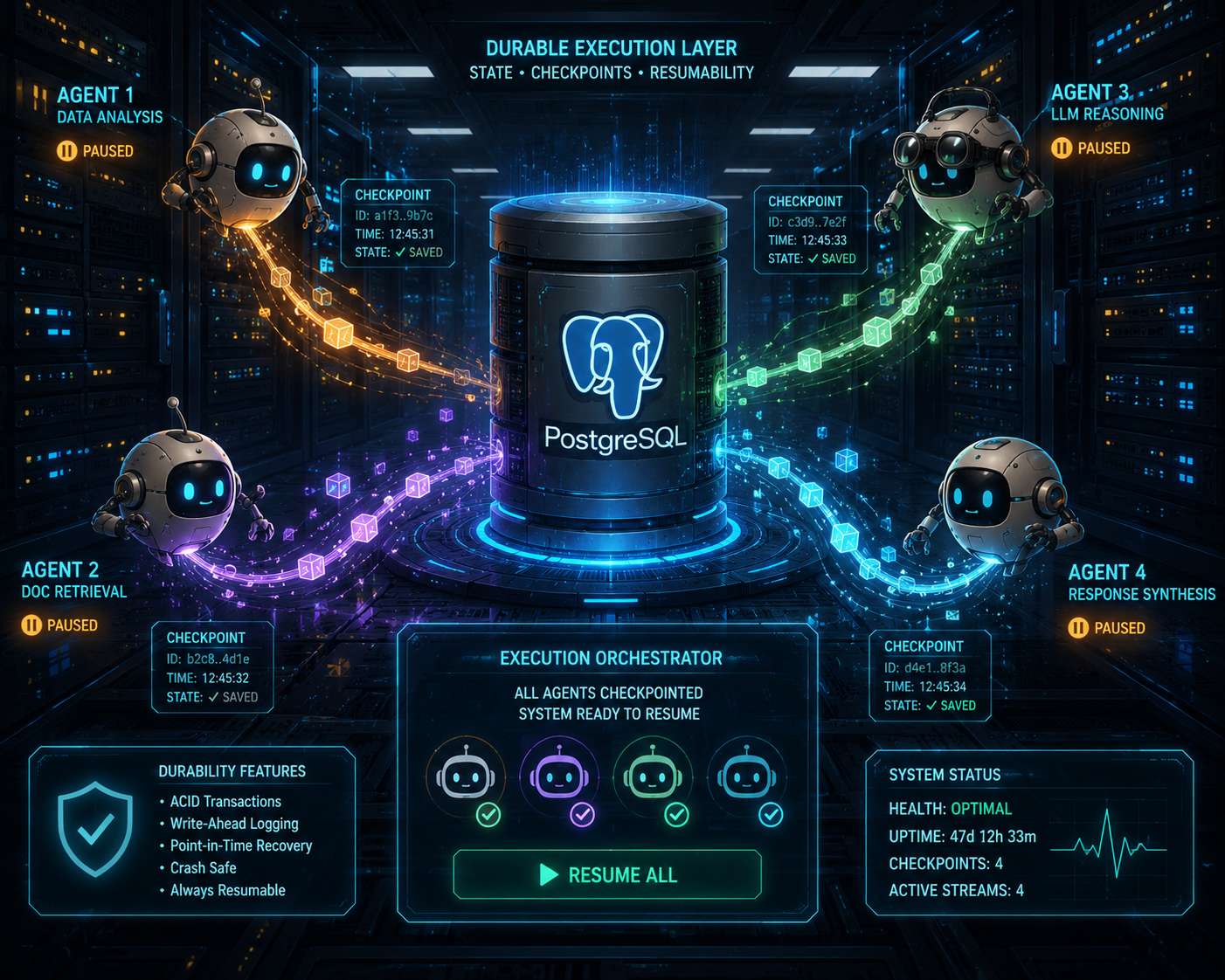
When it comes to ensuring the reliable operation of complex systems, durability is key. At its core, durable execution is about guaranteeing that your system can withstand disruptions and resume operation seamlessly. In the context of our platform, durable execution is made possible through a powerful pluggable persistence layer.
This layer automatically checkpoints every node transition, ensuring that all data is safely stored and can be recovered in the event of a failure. The beauty of this approach lies in its flexibility, allowing you to choose the best persistence solution for your specific needs. Whether you’re working on a project in development, deploying a lightweight solution, or scaling for production, our platform has got you covered.
For development and testing, our platform uses in-memory persistence, providing a fast and lightweight environment for experimentation and prototyping. When you’re ready to deploy, you can easily switch to SQLite, which offers a reliable and efficient solution for smaller-scale applications. And for larger-scale production environments, our platform is fully compatible with PostgreSQL, the industry-standard relational database management system.
One of the most significant benefits of our durable execution model is its ability to ensure checkpointed resumability. This means that in the event of a server restart or failure, agents can resume from the exact point they left off, minimizing downtime and ensuring seamless operation. This is particularly important for applications like LangGraph, which relies on complex node transitions to process and analyze large datasets. With our durable execution model, LangGraph users can rest assured that their applications will always be available and functioning as expected, even in the face of disruptions or failures.
Human-in-the-loop
In the world of machine learning, we’ve all been there – staring at a console, waiting for a model to finish training, only to realize that the output is completely unexpected. This is where the concept of Human-in-the-loop comes in – a revolutionary idea that lets you intervene in the machine learning process and steer it in the direction you want.
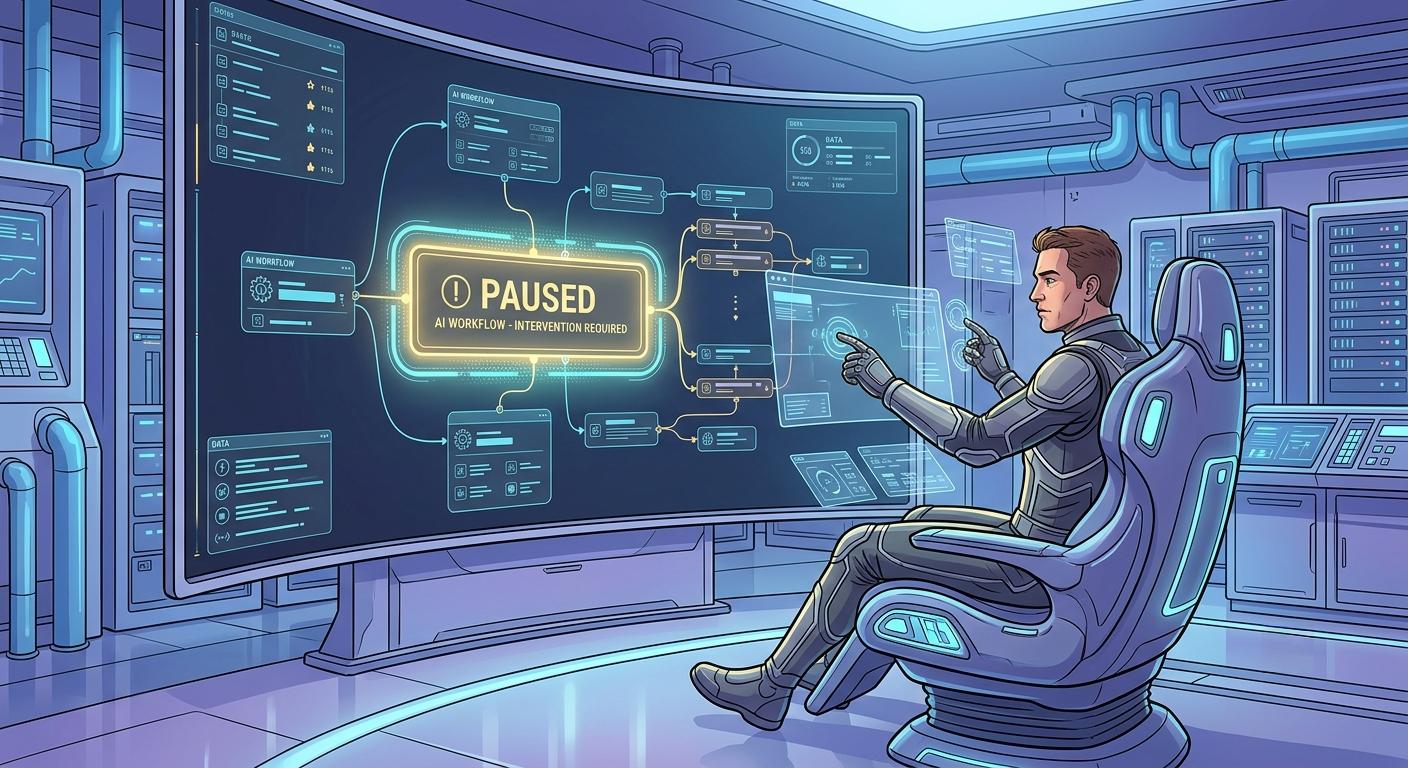
But what exactly is Human-in-the-loop? At its core, it’s a feature that lets the runtime pause execution, save the current state, and wait for human input without blocking threads. This means you can step away from your console, grab a cup of coffee, and come back to your model hours later – and it’ll pick up exactly where it left off.
But what’s truly exciting about Human-in-the-loop is that it’s not a hack – it’s a first-class primitive. This means you can integrate it seamlessly into your workflow, without worrying about workarounds or patches. Imagine being able to use tools like LangGraph to analyze your model’s performance, identify areas for improvement, and make data-driven decisions in real-time.
With Human-in-the-loop, the possibilities are endless. You can use it to fine-tune models, debug complex issues, or even create interactive experiences that let users contribute to the model-building process. The best part? You don’t have to sacrifice performance or scalability to get there. Human-in-the-loop is designed to work in harmony with your existing workflows, so you can focus on what matters most – creating intelligent systems that drive real value.
Real World Example
Imagine a support-ticket triage agent that’s not just a chatbot, but a smart decision-maker that classifies refund requests, auto-approves small amounts, and escalates large ones to a human. This isn’t just a hypothetical scenario – it’s a real-world example of what LangGraph can achieve.
LangGraph, built by LangChain Inc., is a powerful tool that enables developers to create such agents with ease. But here’s the best part – you don’t have to be affiliated with LangChain to use LangGraph. Its open architecture makes it accessible to anyone who wants to bring AI-driven decision-making to their workflows.
So, what makes LangGraph so special? For starters, it offers explicit control flow, which means you have complete control over how your agent behaves in different situations. This is particularly useful in high-stakes environments like customer support, where accuracy and fairness are paramount.
Another key advantage of LangGraph is its typed shared state. This ensures that your agent’s knowledge and memory are always up-to-date and consistent, even as it processes multiple requests simultaneously. And if your agent encounters an issue, don’t worry – LangGraph’s free retries and checkpointed resumability features let you restart from where you left off without losing any progress.
But what really sets LangGraph apart is its model-agnostic design. This means you can use it with any machine learning model, regardless of its architecture or complexity level. Whether you’re working with a simple linear model or a deep learning behemoth, LangGraph can help you unlock its full potential. By leveraging LangGraph’s strengths, you can create intelligent agents that make informed decisions, optimize processes, and drive business growth.
Here is the code for a similar solution in LangGraph:
from typing import TypedDict, Literal
from langgraph.graph import StateGraph, START, END
from langgraph.checkpoint.memory import InMemorySaver
from langgraph.types import interrupt, Command
from langchain.chat_models import init_chat_model

llm = init_chat_model("anthropic:claude-sonnet-4-5")

class Ticket(TypedDict):
    text: str
    amount: float
    decision: str

def classify(state: Ticket) -> Ticket:
    r = llm.invoke(f"Extract the refund amount as a bare number:\n{state['text']}")
    return {"amount": float(r.content.strip())}

def route(state: Ticket) -> Literal["auto_refund", "human_review"]:
    return "auto_refund" if state["amount"] < 50 else "human_review"

def auto_refund(state: Ticket) -> Ticket:
    return {"decision": f"auto-approved ${state['amount']:.2f}"}

def human_review(state: Ticket) -> Ticket:
    verdict = interrupt({"amount": state["amount"], "ask": "approve?"}) # pauses + persists
    return {"decision": f"human said: {verdict}"}

g = StateGraph(Ticket)
g.add_node(classify); g.add_node(auto_refund); g.add_node(human_review)
g.add_edge(START, "classify")
g.add_conditional_edges("classify", route)
g.add_edge("auto_refund", END); g.add_edge("human_review", END)
app = g.compile(checkpointer=InMemorySaver())

cfg = {"configurable": {"thread_id": "ticket-1"}}
print(app.invoke({"text": "Please refund my $120 order"}, cfg)) # -> stops at interrupt
print(app.invoke(Command(resume="approved"), cfg)) # -> resumes days later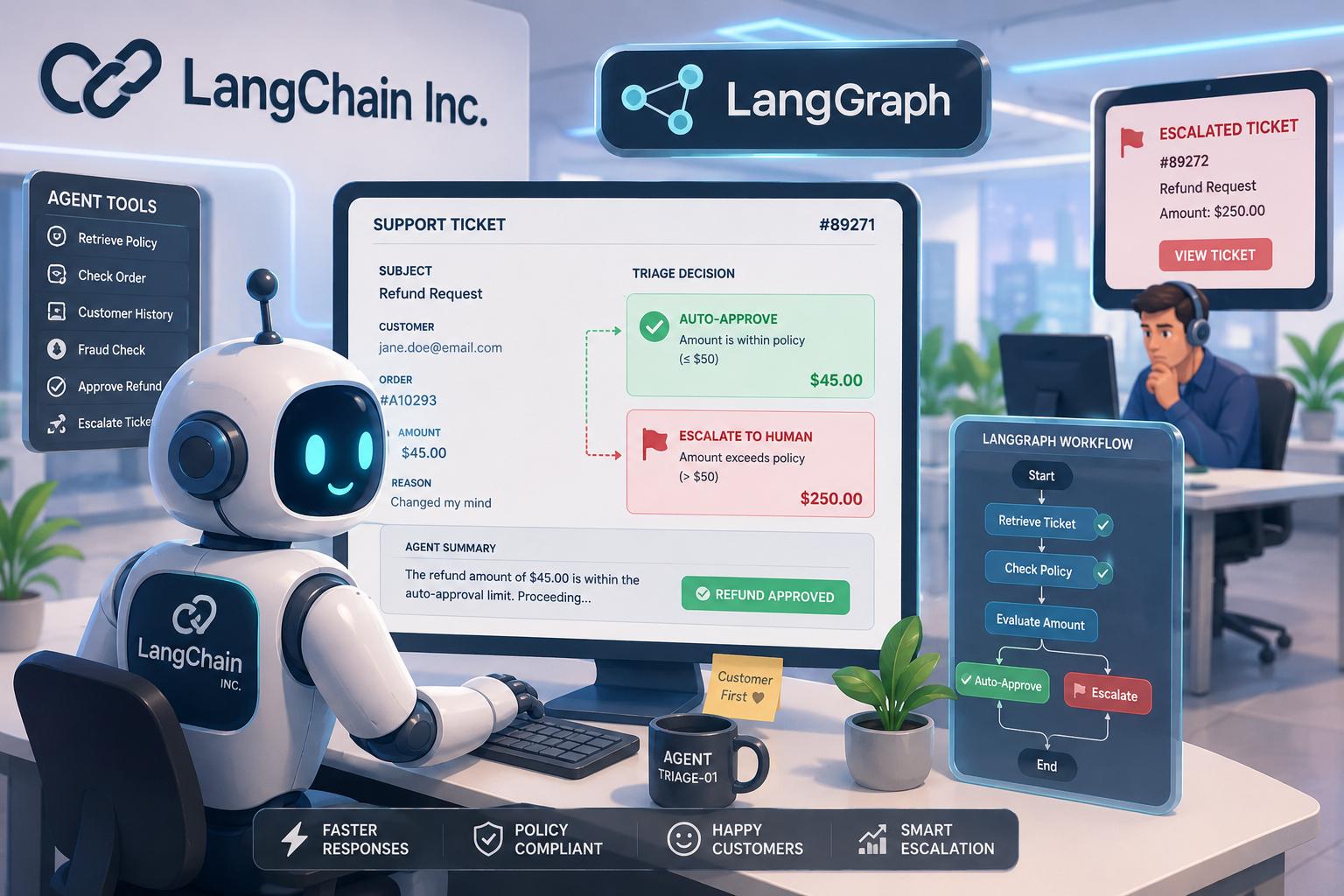
Summary
As we delve into the world of complex stateful workflows, one name stands out as the production leader: LangGraph. This powerful tool offers an unparalleled level of control, but it’s not without its trade-offs. Be prepared to invest 1-2 weeks into learning its ins and outs, and get ready to write more boilerplate code than you might be comfortable with.
However, the payoff is well worth it. LangGraph’s flexibility and customization options make it the go-to choice for developers who need a high degree of control over their workflows. And as we move further into the age of AI, LangGraph is poised to play a significant role in the development of task-specific AI agents.
Gartner predicts that by the end of 2026, a staggering 40% of enterprise applications will feature task-specific AI agents. This represents a significant shift towards more automated and efficient workflows, and LangGraph is well-positioned to take advantage of this trend. With its ability to handle complex stateful workflows, LangGraph is the perfect tool for developers looking to integrate AI agents into their applications.
As we look to the future of workflow development, it’s clear that LangGraph will be at the forefront of the industry. Its unique combination of control and customization options makes it an essential tool for any developer looking to stay ahead of the curve. Whether you’re working on a complex stateful workflow or simply looking to integrate AI agents into your application, LangGraph is the perfect choice. With its flexibility and customization options, LangGraph is poised to revolutionize the way we develop workflows.