As the final days of 2025 approach, we take a step back to evaluate the year’s AI landscape. Once again, Artificial Intelligence stole the show, leaving little room for any other trend in tech.
The industry’s leading players continued to dominate the market, while investors anticipated novel breakthroughs. But have expectations grown too high? Even with the hype, AI has undoubtedly delivered significant value across various sectors.
One of the main drivers of AI growth this year has been mainstream adoption. As the technology becomes increasingly accessible, its applications have expanded beyond the confines of tech-savvy circles.
This surge in adoption has been particularly evident in the for generative AI, where the models have been used to create everything from personalized content to complex visual art.
It’s also worth noting that chatting remains the primary use case for many AI models, but there is increased focus on multimodal AI capabilities. Text-based interfaces are still the most intuitive and accessible way to interact with AI, but image and video content becomes widely used as well.
As we look back at the top AI in 2025, it’s clear that the industry has made significant strides. From advancements across basically all industry sectors, AI has continued to push the boundaries of what’s possible.
But what does the future hold for AI? Will each industry continue to deliver on its promises or will expectations eventually come crashing down?
Generative AI Is No Longer Just an Experimentation
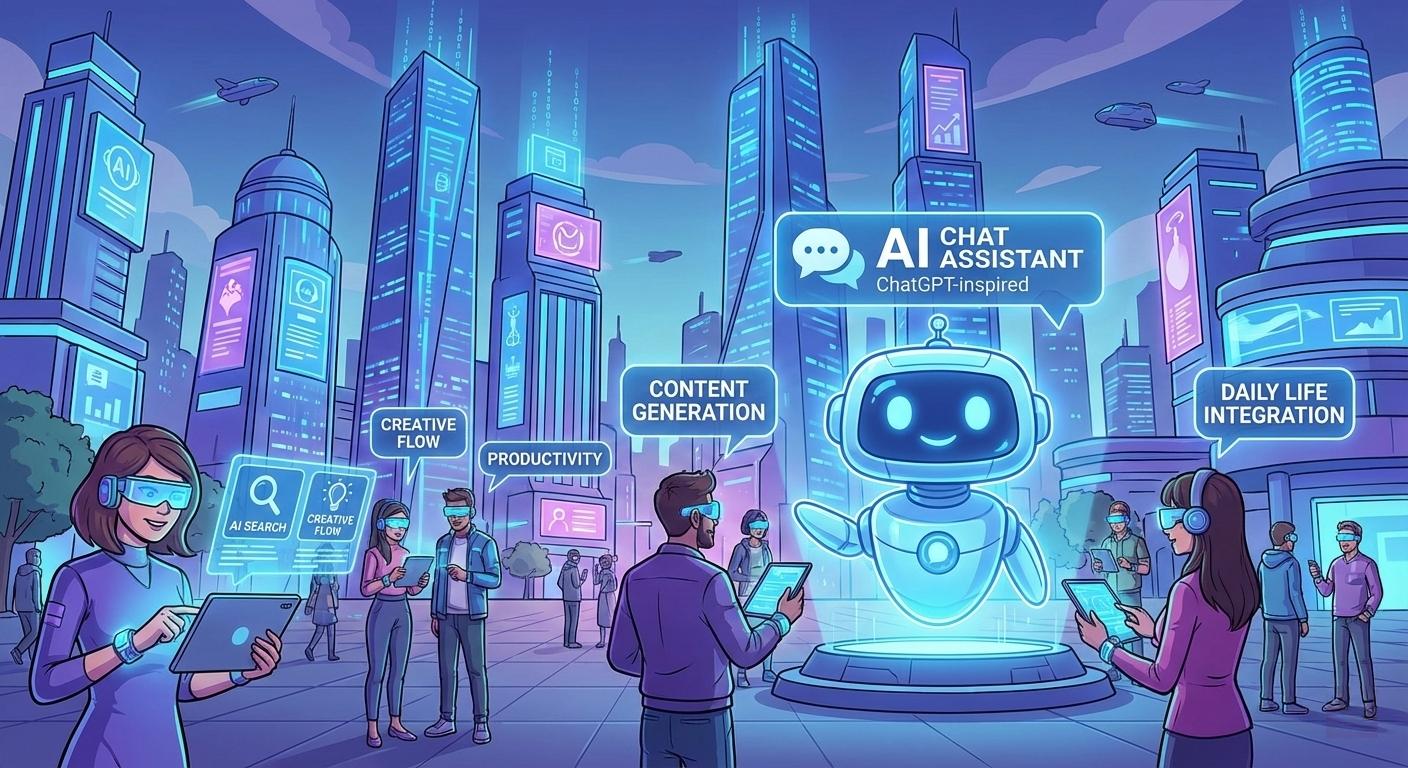
Generative AI is the new mainstream – embedded directly into productivity tools, customer support, creative workflows and beyond. It is a clear and major movement in tech – and it shows how quickly can technology transform if it has value.
Don’t forget that ChatGPT was introduced in late 2022, and only 3 years later it is clearly the top trend. It makes you wonder what will happen in another few years.
The pace of adoption has been astonishing. What was seen as a novelty just a few years ago has become an essential component of various industries. From generating high-quality content to assisting with complex coding tasks, generative AI has proven its worth. As we move forward, it’s exciting to think about the possibilities that this top AI trend from 2025 will bring.
In the area of content creation, the lines between human and machine-generated content have blurred significantly. AI-powered tools can now produce engaging text, images and videos that rival their human-made counterparts. This shift has significant implications for industries such as publishing, advertising and entertainment.
Moreover, the integration of AI into coding workflows has streamlined the development process, allowing developers to focus on higher-level tasks. As AI continues to evolve, we can expect to see further advancements in all areas that require software development – so basically everywhere.
But at the same time, the future is not only bright for generative AI. While it’s clear that it will continue to play a pivotal role in shaping various industries, companies need to be careful with the way they apply it. Customers are not happy when products or ads are created purely by AI as we already discussed in previous post.
As we look back on the top AI in 2025, one thing is certain – technology is transformed mainly by generative AI. The possibilities are endless, and the next few years will be exciting to witness.
Multimodal AI Takes Center Stage
Multimodal models are the next step of chatting tools. They can reason across text, images, audio and video in a single interaction.
ChatGPT and other similar services no longer just chat – images and video are included as well. This evolutionary step is paving the way for a new era of human-computer interaction. With the ability to process and analyze multiple forms of content simultaneously, these models are capable of producing more informative and engaging responses.
One of the key benefits of multimodal AI is its seamless integration with various forms of media. Users can easily upload images for analysis, editing or generation. This feature is not only convenient but also empowers creatives to produce high-quality content with greater ease.
Whether it’s generating artwork, editing videos or analyzing complex data, multimodal AI is making it all easily possible.
It’s exciting to think about the possibilities that these models will bring. With their ability to integrate and process various forms of content, we can expect to see even more innovative applications in the years to come. The future of AI is not just about processing power and computational speed, but about pushing the boundaries of human imagination.
The limit of multimodal AI is not really hardware, but rather the user’s imagination. The possibilities are endless for multimodal models as well and it’s exciting to be at the forefront of this technological revolution. Especially the future of content creation is going through the most significant changes.
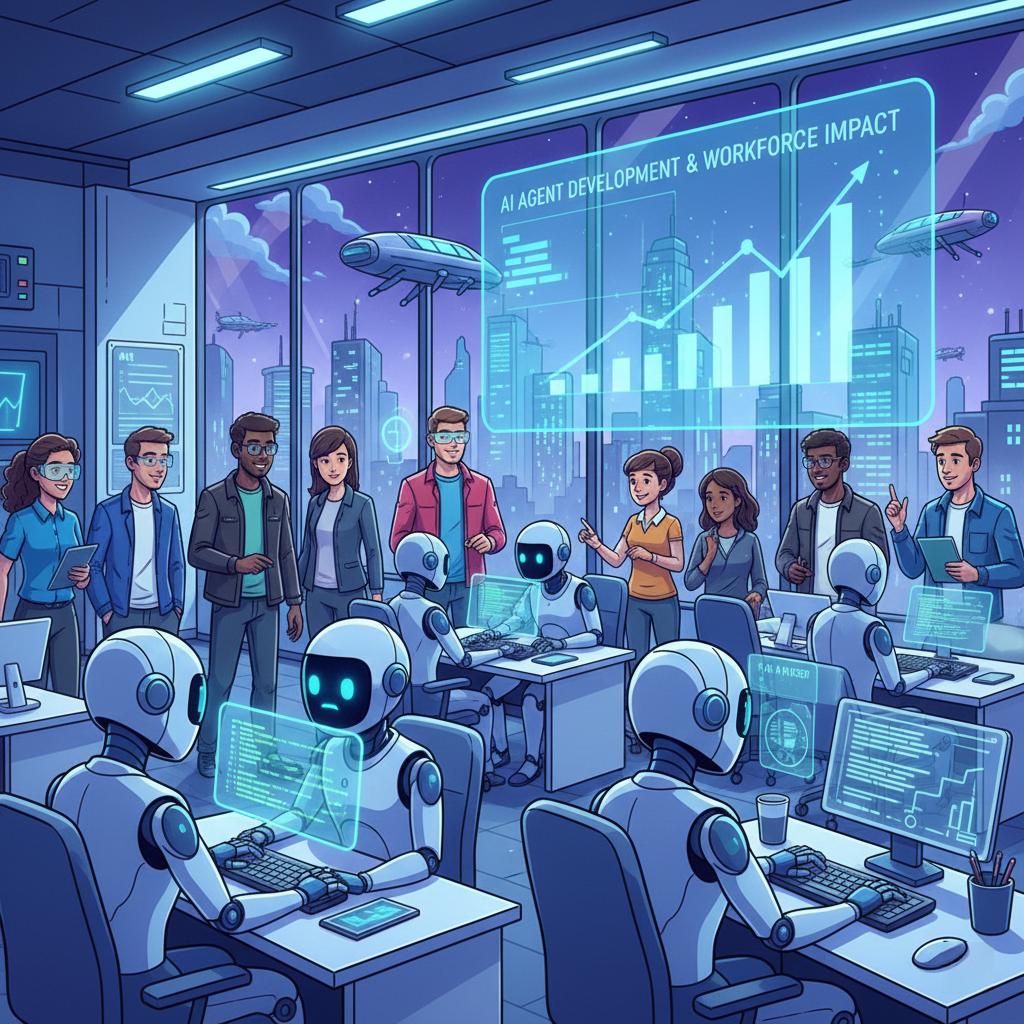
Autonomous Agents Emerge at Scale
Completing tasks autonomously is the clear focus for every company. If computers can handle end-to-end tasks like research, scheduling, coding,and content production with minimal supervision, it would be a game changer for many industries.
Chatting is nice, but the next clear step are the so called agents, the second stage of OpenAI’s blueprint of AI levels. They can bring the task from beginning to the end – not just support people on the way. If this becomes reliable, it will be a big change for the workforce.
If a task like coding can be completed reliably from end to finish, it would be the biggest change to software development since the start of the internet.
We’re already seeing the emergence of several contenders, with many companies investing heavily in their development. These autonomous agents are being designed to take on complex tasks that previously required human intervention, from start to finish in content creation or software development.
The potential implications are vast. With autonomous AI handling end-to-end tasks, the workforce could see a significant shift in the types of jobs that are available. While there may be concerns about job displacement, there’s also the potential for a whole new class of jobs to emerge – ones that focus on collaborating with and overseeing these AI agents.
Of course, getting to this point won’t be easy. Developing autonomous AI agents that can handle complex tasks with minimal supervision requires significant advances. But with many companies already investing heavily in this area, it’s clear that we’re on the cusp of a potential breakthrough.
As we look to the future, it’s exciting to think about the possibilities that autonomous AI agents could bring. From accelerating innovation to improving productivity, the potential benefits are vast. And we’re probably getting closer to making these possibilities a reality.
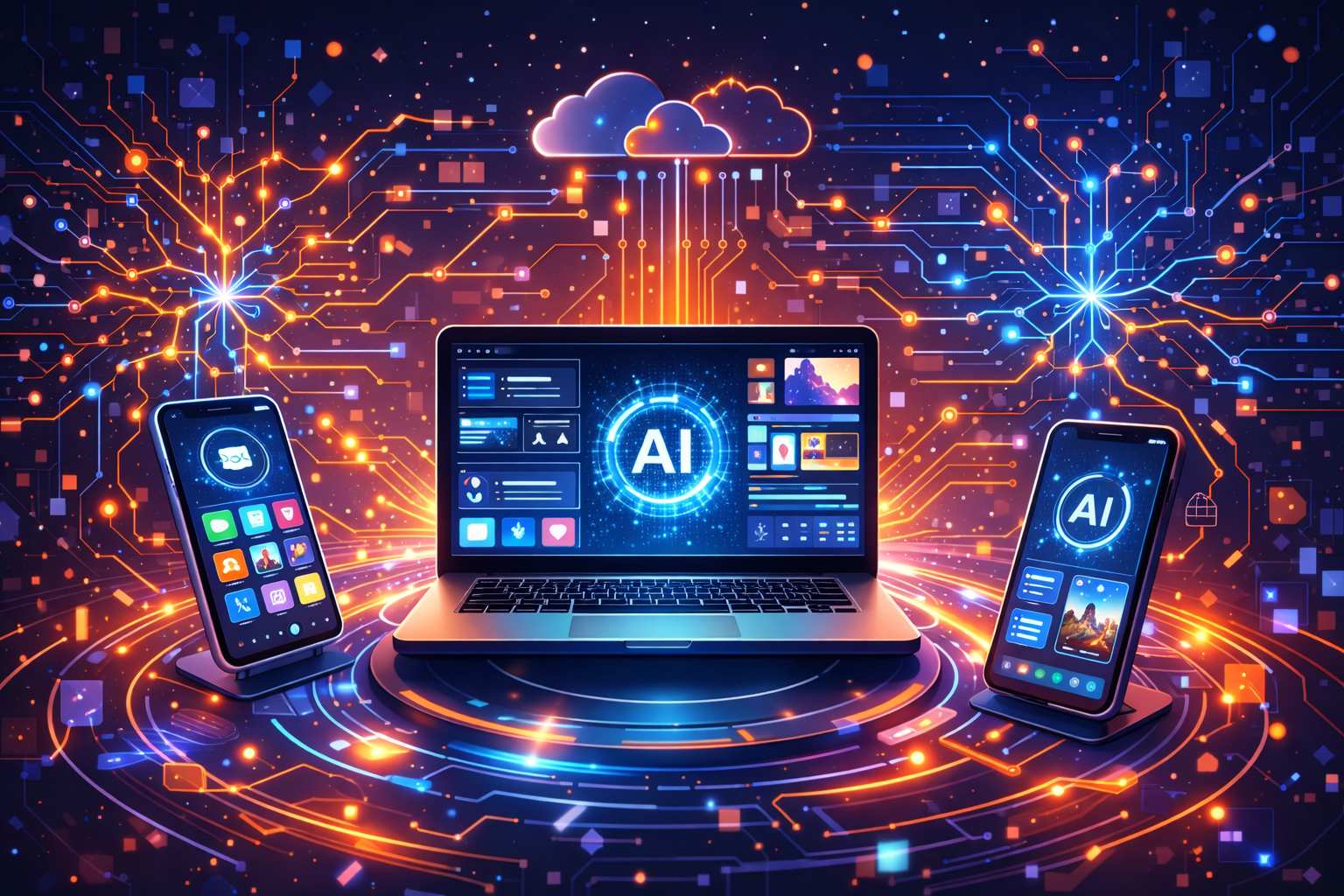
AI Moves Onto Devices – Edge AI
Edge AI is emerging as the new trend in tech sector. This technology allows for local, private and efficient processing, revolutionizing the way we interact with AI. Smaller, faster models can now run directly on our phones and laptops, providing unparalleled levels of privacy, speed and cost-effectiveness.
One of the key benefits of Edge AI is its ability to align and enhance the usability of AI systems. By processing data locally, we can reduce the risk of data breaches and ensure that our personal information remains secure. Moreover, Edge AI enables more efficient and fast AI development, allowing innovators to create and deploy cutting-edge solutions in faster times.
In recent years, devices like phones and computers have become increasingly powerful and their full potential has often gone untapped. AI can change this by using their processing capabilities. Cloud-based services, while incredibly powerful, can be energy-hungry and may compromise our data security.
As we look to the future, it’s clear that Edge AI will play a big role in shaping the next generation of AI. The top technologies will likely be those that seamlessly integrate Edge AI – enabling faster, more private and more efficient processing.
By harnessing the power of Edge AI, we can unlock new levels of innovation and creativity.
Education Transforms
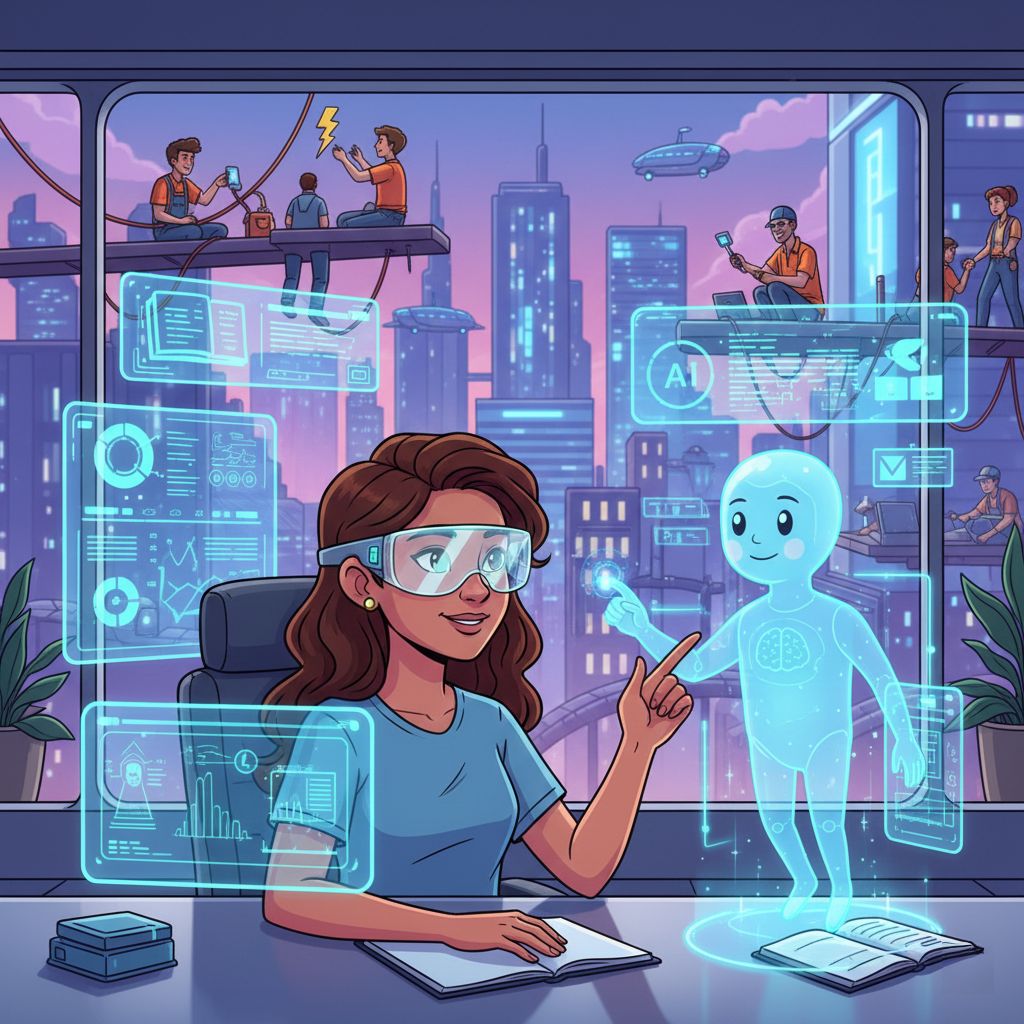
Personalized AI tutors and assistants transform education and upskilling, adapting content to individual learning styles. We have already discussed education in another blog post, but the reality is that AI is disrupting the traditional approach in many ways.
The skills required for students to succeed in the future will be vastly different from those of the past. With the internet at our fingertips, it’s become unnecessary to memorize facts as they can be easily found with a few clicks.
This shift means that the value of education lies not just in the content, but in the skills that students develop along the way. Unfortunately, this change also raises questions about the relevance of traditional diplomas and thesis projects.
Many pessimists argue that young people should focus on trade schools and vocational training, becoming electricians or plumbers to avoid the potential job displacement caused by AI. However, history has shown that technological advancements often create new job opportunities, rather than simply replacing existing ones.
Some predictions suggest that AI will only augment, not replace human capabilities, freeing us up to focus on higher-level tasks that require soft skills like empathy, something that is still not within reach of computers.
Education will remain valuable, not because of the specific skills or knowledge it provides, but because it equips students with the ability to adapt and innovate in a rapidly changing world. As AI assumes even complex tasks, humans will be free to focus on the creative and strategic work that drives progress and growth.
By embracing this shift, we can ensure that education continues to play a vital role in shaping the minds of future generations.
Still at the Beginning?
As we reflect on the incredible advancements in AI over the past year, it’s clear that this technology continues to transform industries and daily life in profound ways. The top AI in 2025 innovations that were discussed have not only opened up new avenues for growth but also raised important questions about the future of technology.
One of the key takeaways from this journey is the importance of human-AI collaboration. While AI has made tremendous progress in recent years, it’s still not capable of doing the work alone. The emergence of autonomous AI agents is poised to change that, but the results are still to be seen.
As we look ahead to the future, it’s essential to focus less on raw capability and more on meaningful human-AI collaboration. This shift in focus will enable us to harness the full potential of AI, leveraging its capabilities to create a better world for all.
The future of AI is exciting and filled with possibilities. We can expect to see AI applications expand into new industries and areas, transforming the way we live, work and interact with one another. The rise of autonomous AI agents will continue to shape the technological landscape, driving innovation and growth.
We can create a future where technology enhances our lives, rather than controlling them. What were your top AI in 2025? Let us know in the comment section below!